How a Phone Close-Up Made Layla Clark’s “Thunderstruck” Feel So Close
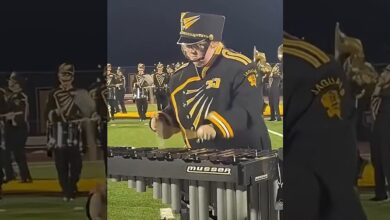
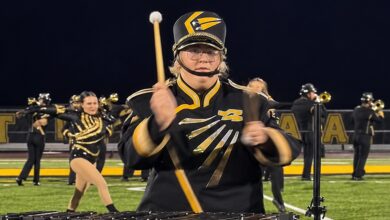
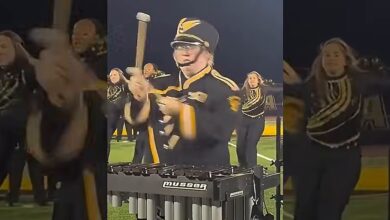
From a seat in the bleachers, you would hear the opening of AC/DC’s “Thunderstruck” and see the Thomas Jefferson Jaguars spread out across the football field. In the phone clip that went viral, you can see the tape on Layla Clark’s fingers. That difference in distance gives a short video its own point of view.
The recording starts near the percussion setup. The bars are large enough on screen to show how far Clark moves between notes, and the height of each lift is visible when the mallets come up into the light. It brings the viewer close to a part of the performance that someone in the stands would mostly experience through sound.
The tape turns up in that close view. A viewer who pointed it out gave others a precise place to look on a replay. Its purpose remains unconfirmed. The detail matters to the video because the camera is close enough for something so small to become part of what people remember.
Clark is working at the front of a much bigger scene. Behind the percussion station, there are uniforms, players and enough open field to suggest the size of the show. Those details stay in the background while her hands move across the instrument. The frame gives you a foreground and a sense of what lies beyond it.
The sound has a similar change of scale. At the opening you can follow the mallet part on its own. When more of the Jaguars enter, the sound grows even though the camera remains near Clark. For a few seconds the picture and the audio are telling you about different distances at once.
On the next replay, start with the corner of the frame that holds the bars. Look up at the wider field when the band comes in. The same recording gives you two views of a performance designed for a football crowd.
A separate wide recording of the Jaguars shows what a phone close-up has to leave outside the frame. From farther back, the field itself becomes part of the presentation. You can follow more people at once, and the smaller decisions a player makes with a pair of mallets recede into the show.
AC/DC’s original offers another comparison. It supplies the musical recognition the field video can count on. The phone footage adds an image that belongs to this version of the song, with a student’s hands close enough to become the focus.
The opening is familiar enough to recognize without looking. Turn your eyes back to the screen and you can see why a listener went looking for a detail that would have disappeared at football-field distance.