What Changes When Ann Wilson Takes Over the Story in Disturbed’s “Don’t Tell Me”
David Draiman has the first stretch of “Don’t Tell Me” to himself. He lets the phrases hang long enough for the hesitation in them to register. When Ann Wilson enters, the change sounds natural, but the effect is more substantial than a new voice singing the next lines.
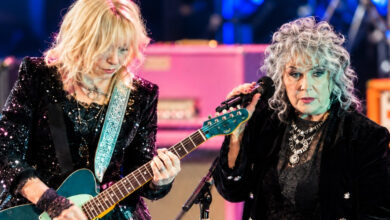
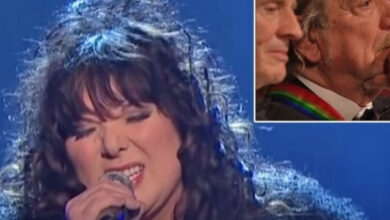
The song comes from Disturbed’s 2022 album Divisive. Its official video arrived later and puts the contrast between the singers in clear view. Wilson was 73 when that video was released. You can read the interaction on their faces, and you can also hear it with the screen turned off.
The first verse establishes how Draiman approaches the melody. His tone can sound firm even when he pulls the volume back. That quality leaves room for the uncertainty in the words. When the song eventually gives Wilson a verse, she has an approach of her own waiting.
Wilson knows how to hold a line long enough for its emotional color to change. Here she can sound direct at the start of a phrase and open the vowel at the end. She and Draiman each keep the phrasing that makes them recognizable, which is what gives the combination its character.
The shared passages are worth a second listen. An arrangement can ask two strong singers to occupy the same space, but the most interesting moments here come when you can still follow what each person is doing. Their voices carry different kinds of grain, so the unison sound stays alive.
Start with the official video and notice exactly where the second voice enters. The shift is audible before you have to put a name to it. From there, the chorus draws enough power from the structure that the singers can concentrate on what the lines mean.
A Disturbed arrangement that starts from restraint
“The Sound of Silence” is another place to hear Draiman begin from a quieter part of his voice. Its long rise gives listeners a useful point of comparison. In “Don’t Tell Me,” the register change that matters most is the arrival of another singer, and both songs ask the listener to sit with the quieter lines long enough for later force to make sense.
Another way the band puts grief into a song
The video for “Hold on to Memories” places the band’s softer dynamics alongside a different kind of lyric. It is a companion to the duet because it gives the word grief a different context. This time there is a direct appeal to remember people rather than two voices trying to talk through a shared hurt.
Hear the handoff on a replay
The duet’s clearest distinction is the space between those first solo verses. Hear how each singer follows the same basic contour and reaches an entirely individual sound. The record comes together when the voices share that space.