Rain Fell With the Song: Yungblud’s “Changes” Moment in Brisbane Becomes a 2026 Live Legend
Brisbane didn’t feel like it was simply hosting a tour stop on January 17, 2026 — it felt like it had been chosen as a pressure point. Riverstage, perched right by the river and built for nights where sound can spill into the humid air, spent the afternoon filling with people who weren’t there to “check out” YUNGBLUD. They were there to claim something. You could see it in the outfits that looked half punk, half carnival, the homemade signs held like personal letters, and the way strangers talked like friends because everyone already shared the same language: this music made them feel understood. Long before the lights dropped, the crowd had that specific kind of charge that says the main event is emotional, not just musical.
That mood didn’t come out of nowhere. This was the IDOLS World Tour rolling through Australia, and the Brisbane dates had been circled as a big deal, with Riverstage set up for a weekend double-header. The anticipation had been building across the country as fans watched clips from Sydney, Adelaide, and Melbourne, and by the time Brisbane arrived, the tour already had a story following it: YUNGBLUD turning arenas into communities, not just venues. You could feel it in the way people showed up early, determined to be close, and in how the crowd seemed unusually diverse for a rock show — ages, styles, identities — all packed together with the same goal: to scream, to cry, to laugh, and to leave lighter than they came.
The support slot helped turn that anticipation into motion rather than impatience. With Dune Rats on the bill for the Australian run, the early part of the night had teeth and speed, the kind of set that makes people stop standing politely and start moving like they mean it. Riverstage responded the way Brisbane often does when the energy is honest: they gave it back immediately. That mattered, because it set up the perfect runway for what YUNGBLUD does best. His show isn’t a straight line of bangers; it’s a rollercoaster of mood and message. Having the crowd already loud and loose meant he could hit the stage at full intensity without needing to “warm them up.”
When YUNGBLUD finally appeared, he opened with “Hello Heaven, Hello,” and it played like a declaration rather than a song choice. The moment had that theatrical jolt you get when a performer understands how to make an entrance feel like a plot twist. The first seconds didn’t just start the set — they snapped the audience into a single organism. You could see arms shoot up, faces change, and mouths already forming lyrics. It’s the type of opening that signals: tonight won’t be tidy. Tonight is about feeling things loudly. Riverstage instantly became a chorus, and the show took on that “we’re all in this together” sensation that can’t be faked.
He followed with “The Funeral,” and that’s where the night’s engine truly kicked in. The performance had the kind of urgent momentum that makes the front rows look like a tide rather than a group of people. What’s striking about YUNGBLUD live is how he balances recklessness with control — he throws himself into a line like it’s ripped from a diary, then pivots into precision like he’s steering the chaos by sheer will. Brisbane loved that push-pull. The crowd wasn’t just singing; it was responding, like every chorus was a call-and-response between the stage and the lawn. It felt less like entertainment and more like participation.
As the set moved into “Idols Pt. I” and “Lovesick Lullaby,” the show revealed its shape: big hooks, dramatic shifts, and an emotional undercurrent that never disappears even when the tempo spikes. YUNGBLUD’s charisma in these moments isn’t only in his voice — it’s in his constant communication. He talks like he’s in a room with you, even when he’s facing thousands of people. That intimacy is his superpower, and Brisbane leaned into it hard. Between songs, you could feel the crowd holding onto his words as much as his melodies, because he doesn’t speak like a distant rock star. He speaks like someone who has been where his fans are.
One of the night’s standout curveballs was “My Only Angel,” a collaboration track credited to Aerosmith & YUNGBLUD, and it landed like a flash of theatrical sincerity in the middle of the adrenaline. It’s the kind of song that can either feel like a novelty or a meaningful left turn, and in Brisbane it leaned meaningful. The crowd locked into the dynamic — a little surprised, a little delighted — and the performance emphasized how much he enjoys stretching his set beyond the predictable. Riverstage’s reaction wasn’t the casual cheer of recognition; it was the louder kind that says, “We didn’t expect this, but we’re glad you brought us here.”
And then came the moment you asked about: “Fleabag.” Live, it carries a sharp, restless energy that invites a crowd to yell the messy truths they normally keep private. Brisbane didn’t treat it like just another track on a setlist. They threw themselves into it. The chorus didn’t sound like a singalong; it sounded like a collective purge. You could see people punching the air on the beat, shouting every word with that half-smile, half-snarled expression that means it’s hitting somewhere personal. It was loud, but not empty loud — loud with meaning, the kind of noise that feels like it’s being used for survival.
“Lowlife” kept the momentum surging, and it also highlighted how well the show was paced. This wasn’t a night where the energy dipped and wandered. Every section seemed designed to either lift the crowd into chaos or pull them into something tender enough to feel dangerous. That’s what separates a good rock show from a memorable one: the sense that the artist is guiding the room’s emotional temperature. Brisbane stayed responsive through all of it, and you could feel the crowd’s trust growing — the willingness to go from shouting to silence, then back again, because they knew the next turn would be worth it.
The most cinematic moment of the night arrived with “Changes,” the Black Sabbath cover tied to Ozzy Osbourne’s legacy. It wasn’t framed like a gimmick; it landed like a tribute, and the crowd treated it with the kind of reverence that’s rare at a modern rock gig. Then nature added its own punctuation: multiple reports and reviews described rain beginning during the performance, turning the cover into something surreal, almost staged by the sky itself. The timing mattered because “Changes” already carries a heavy emotional weight. With the rain falling, it felt like the entire venue was inside a scene — not a concert, but a moment people would retell later as if it were impossible.
What made that rain story stick even harder was the way the night seemed to snap back the moment the song ended. The tribute didn’t linger as a downer; it acted like a turning point. You could sense the crowd exhale, the kind of communal breath people take after something intense. In Brisbane, “Changes” wasn’t only a beautiful performance — it became a shared memory, the kind that instantly turns into a legend among attendees because it’s so easy to describe and so hard to believe if you weren’t there. It’s a reminder that the best live moments often happen when you can’t control the environment at all.
From there, “Fire” reignited the room, and it did exactly what the title promises: it put heat back into the crowd’s limbs. The sequence after a heavy tribute is crucial — get it wrong and you lose people emotionally; get it right and you amplify everything. Brisbane got the right version. The energy looked different now, less chaotic and more focused, like the crowd had been bonded by what they’d just witnessed. People weren’t just screaming because it sounded good. They were screaming because they felt part of something. The venue’s openness made it feel even bigger — like the sound was expanding outward into the Brisbane night.
As the show pushed on, tracks like “Monday Murder” helped keep the sense of drama alive, and the performance style turned increasingly immersive. This is where YUNGBLUD’s reputation for living inside the crowd comes into play — he’s not a “stand at the mic and deliver” artist. The vibe is movement, proximity, and emotional immediacy. Brisbane responded with the same intensity, and the atmosphere started to feel less like an audience watching a performance and more like a crowd collaborating in one. That’s the secret ingredient in nights that go viral later: not the perfect note, but the perfect relationship between performer and room.
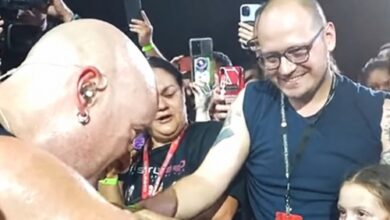
When “I Love You, Will You Marry Me” arrived, it did what it often does in his sets: it turned the venue into a conversation about belonging. Even people who try to play it cool tend to crack during that song, because the message is direct and the crowd usually carries the loudest parts. In Brisbane, the track felt like a cornerstone moment — the kind that makes strangers hug, makes people tear up unexpectedly, and makes the whole room remember why they came. Riverstage was full of people who might not feel safe being fully themselves in everyday life, and YUNGBLUD’s stage has always been designed as the opposite of that.
By the final stretch, the show felt like it had become a story with a clear arc: start with ignition, push into chaos, dip into tenderness, then climb into catharsis. “Ghosts” brought that soaring ache that makes people look upward and sing like they’re trying to send a message into the night. It’s the kind of song that turns phone screens into tiny lanterns, even if nobody explicitly asks for it. Brisbane held onto it, and you could feel the crowd’s volume shift from aggressive to emotional — the sound of people singing because they mean it, not because it’s a hook.
Then “Zombie” closed the night like a final emotional statement. This song, live, often hits harder than fans expect because it’s less about performance and more about shared release. Brisbane treated it as exactly that — a closing ritual where the crowd becomes the loudest instrument on stage. The chorus felt huge, and the feeling in the venue wasn’t “that was fun.” It was “we survived something together.” That’s why people walk out of nights like this slightly stunned, like the show rearranged their emotional furniture. The best concerts don’t just end; they echo.
And what made January 17, 2026 in Brisbane feel special wasn’t only the setlist or the vocals — it was the accumulation of small, human details that keep showing up in reports and fan recollections: the sense of safety in the crowd, the way the tribute to Ozzy turned the weather into part of the performance, the constant fan-first energy, and the simple fact that Riverstage looked built for this kind of night. YUNGBLUD doesn’t just “play Brisbane.” He meets it. That’s why attendees talk like they witnessed something singular, not just another concert. This show didn’t feel like a tour stop. It felt like Brisbane briefly became a world.