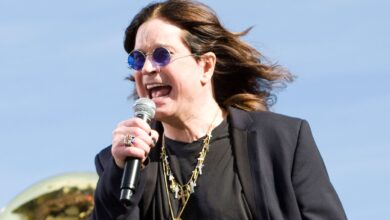
Bruce Springsteen’s Surprise First Avenue Appearance Turned a Benefit Concert Into a Moment Minneapolis Won’t Forget
JUST IN didn’t feel like an exaggeration this time. Minneapolis was already buzzing about a last-minute benefit show at First Avenue, but nobody walked in expecting the kind of headline that normally belongs to stadium tours and festival main stages. The room was packed with people who weren’t just there for music—they were there because something had happened in Minnesota that left a community shaken, angry, and grieving. The idea was simple: gather a crowd, raise money for families, and turn a concert into a public act of solidarity. Then the night took a sharp turn into the unforgettable.
First Avenue has always carried a certain electricity, the kind you can’t fake with lighting rigs or marketing copy. It’s the sense that history lives in the walls, that big moments have a way of finding the place when you least expect it. On this afternoon, the stakes felt heavier than a typical gig. The benefit was tied to outrage over an ongoing ICE operation in Minnesota and the deaths of Renée Good and Alex Pretti—names that had become symbols of a story people couldn’t stop talking about. You could feel it in the crowd: this wasn’t casual attendance. It was purpose.
The architect of the night was Tom Morello, a musician who has never treated the stage as a neutral space. Morello’s reputation for activism isn’t a side note—it’s part of his identity as an artist, and he framed the benefit accordingly. The show wasn’t presented as a vague “charity concert” with a polite mission statement. It was direct, urgent, and rooted in the moment Minnesota was living through. Even before a note was played, there was a sense that the event was designed to do more than entertain. It was meant to witness, to respond, and to make people feel less alone.
Because the concert came together fast, it carried the energy of a whispered secret that suddenly became public. Ticket details, time, and rules circulated with the kind of urgency normally reserved for once-in-a-lifetime club shows. That urgency did something powerful: it collapsed the distance between audience and event. People weren’t showing up weeks after buying seats—they were showing up because they cared right now. When you remove the slow machinery of typical touring cycles, you get something raw: an audience that arrives already emotionally plugged in.
Morello’s set helped lock that mood into place. He didn’t treat the afternoon like background music for a fundraiser; he played it like a rally with amplifiers. There’s a particular intensity to his presence—part rock guitarist, part organizer, part storyteller—and that intensity helped the room understand what they were participating in. Between the riffs and the roar, the cause stayed visible. The message wasn’t buried under production. It was carried openly, the way protest music is supposed to be: loud enough to compete with the noise outside.
Then came the moment that turned the benefit into a cultural flashpoint. The phrase “very special guest” can mean a lot of things, and most of the time it’s a marketing tease that leads to a mild surprise. Not here. When Bruce Springsteen was revealed as the guest, the room reportedly snapped into a different reality—like everyone understood at once that they were witnessing something they would be telling people about for the rest of their lives. It wasn’t just a famous name showing up. It was a legend stepping into a small room for a very specific reason.
Springsteen’s presence changed the emotional temperature immediately. He’s not an artist who drops in for novelty. His whole career has been built around the idea that songs can hold a mirror up to a country and force it to look at itself. When he appears at a benefit tied to political violence and fear, people read it as a statement, not a cameo. In that sense, the shock wasn’t only that he showed up. The shock was that he showed up there, at that time, in that context—at a club benefit in Minneapolis, not a televised stage designed for safe applause.
@startribune Surprised? 😮 Bruce Springsteen was the special guest at Tom Morello + Rise Against’s Defend Minnesota! benefit concert raising money for the families of Renee Good and Alex Pretti. Here he is performing his new song ‘Streets of Minneapolis’ on stage at First Avenue 🎸🎶 🎥: Chris Riemenschneider/The Minnesota Star Tribune
The performance that became the center of the story was “Streets of Minneapolis,” the protest song he released in direct response to the events surrounding Good and Pretti. In the room, it wasn’t just another new track being tested live. It was a fresh wound given melody. Springsteen’s writing often lives in the space between individual lives and national identity, and this song arrived with that familiar weight—grief, anger, and an insistence that the names of real people don’t get swallowed by headlines. When a song is that timely, the audience doesn’t “hear” it the usual way. They absorb it.
And because this was First Avenue, the performance didn’t come with the protective distance of a stadium. In a big arena, the artist is a figure in the distance and the crowd becomes a single blur of noise. In a club, everything is closer: the breath between lines, the texture of the guitar, the way a room holds silence before it explodes. That closeness made the afternoon feel intimate and confrontational at the same time. It was intimate because you could feel the human being singing. It was confrontational because the subject matter wouldn’t let anyone relax into pure entertainment.
What made the moment special wasn’t just the song—it was the collision of scales. Springsteen is a stadium force, a world-tour name, a symbol of American rock mythology. First Avenue is iconic, but it’s still a club that thrives on proximity. Watching those two scales collide created the kind of voltage you can’t reproduce on demand. It felt like a reminder that the biggest artists can still choose small rooms when the message matters more than the spectacle. In a world obsessed with “bigger,” the choice of “closer” becomes its own kind of power.
The crowd reaction mattered as much as the performance. People didn’t just cheer because a celebrity appeared. They reacted like a community that had been carrying something heavy and suddenly felt seen. There’s a difference between fandom and recognition. Fandom is admiration from a distance. Recognition is the feeling that someone with a massive platform is willing to stand next to you, not above you, when things are hard. That feeling travels fast online, which is part of why clips and reports spread so quickly after the show: people weren’t only sharing music; they were sharing proof.
Outside the venue, the story moved at internet speed. Headlines emphasized the surprise, the symbolism, the setting. The idea of Springsteen showing up at a Minneapolis benefit connected to protests and ICE operations was the kind of narrative that travels even among people who don’t normally follow concert news. It had every ingredient: urgency, politics, a legendary artist, a famous activist guitarist, and an iconic club. But beyond those ingredients, the hook was emotional. People clicked because they sensed the story wasn’t about entertainment. It was about an artist stepping into the mess of the moment.
A key part of what made the event resonate is that it didn’t pretend music can fix everything. The benefit didn’t solve the broader conflict or undo tragedy. What it did was tangible: it raised money for families and created a moment of collective attention. In activism, attention is currency. When attention turns into funds, and funds turn into support, you get a line from art to impact that doesn’t require cynicism. People often complain that celebrity activism is shallow. This felt like the opposite: a real place, real stakes, real people, and a show built to help.
Morello’s role also gave the day a unique authenticity. He’s been involved in political organizing for years, and he understands the difference between speaking about a cause and building something for it. Bringing a benefit together quickly, focusing proceeds, and using the stage to amplify a community’s reality is the kind of move that fits his legacy. And the Springsteen connection carries its own resonance because their worlds aren’t strangers—Morello has long been part of the broader ecosystem of politically engaged rock. The afternoon felt like a convergence, not a random pairing.
The symbolism of Minneapolis itself mattered. First Avenue isn’t just a venue with a famous name; it’s a cultural landmark tied to the city’s identity. When a national story lands in a local room, it becomes harder to ignore, because it’s no longer “somewhere else.” It’s right here. That’s what this afternoon did: it pinned a national conversation onto a specific street, a specific stage, and a specific crowd. It forced the reality of what people were protesting to exist in the same space as music, joy, and community—without allowing anyone to pretend those worlds are separate.
What people will remember most, years from now, won’t be every detail of the setlist or every quote from the coverage. They’ll remember the feeling of the reveal, the roar of the room, and the strangeness of seeing a rock legend choose a small stage for a cause that was still unfolding. They’ll remember that the show wasn’t a nostalgia trip—it was a live response to the present tense. And that’s rare. Most concerts are escapes from reality. This one was a confrontation with it, delivered through guitars, a crowd, and an artist who knows how to make a room listen.
In the end, the event became special for the simplest reason: it matched the moment. It didn’t overproduce grief or turn activism into a brand exercise. It used music the way it’s meant to be used in times like these—as a rallying point, a release valve, a megaphone, and a reminder that real people are behind every headline. Springsteen’s surprise appearance didn’t just create a viral story. It gave Minneapolis a scene that felt like solidarity made visible. And in 2026, when most of the internet is trained to scroll past everything, that kind of attention is its own quiet victory.