YUNGBLUD Takes Home the GRAMMY for Best Rock Performance With His Powerful Cover of Black Sabbath’s “Changes”
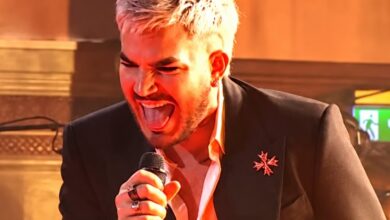
The win didn’t feel like a random trophy drop from the sky. It felt like the final chapter of a story that started with a lump in the throat and ended with a roar from the industry’s biggest stage. When Yungblud was announced as the recipient of Best Rock Performance for his cover of Changes, it landed with the kind of weight you usually only get when music is tied to something bigger than music. The category can be competitive, sometimes even chaotic, but this time the narrative was clean and sharp: a live moment, a tribute, and a performance that people kept replaying because it sounded like someone singing with their whole nervous system.
The performance at the heart of the win wasn’t cut in a pristine studio bubble. It came from a huge, emotionally loaded night at Villa Park, where the air already carried the feeling that history was being written in real time. On July 5, 2025, the “Back to the Beginning” concert framed itself as a career-spanning tribute to Ozzy Osbourne and the legacy of Black Sabbath, and that context mattered. You weren’t just watching another guest slot. You were watching someone step into a song associated with grief and transformation, then try to make it feel present-tense again, in front of people who came ready to measure every note against memory.
If you only knew “Changes” as a classic, it’s easy to forget how exposed it is. It’s not a riff-flex anthem. It’s not built to hide behind volume. The song is basically a confession that happens to have a melody. That’s why a cover can’t survive on vibes alone. You either commit emotionally, or you get swallowed by the original’s reputation. What made this rendition catch fire was how it walked that tightrope: respectful without sounding timid, dramatic without turning theatrical, and modern without sanding down what made the song ache in the first place.
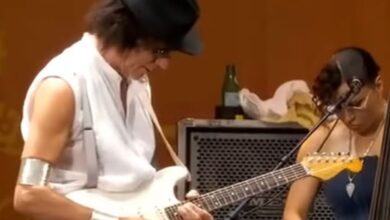
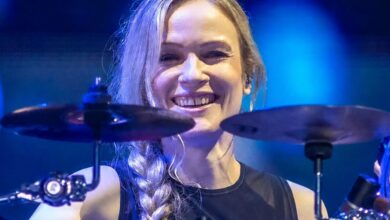
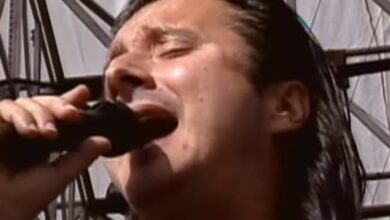
Part of the magic was the cast around him. This wasn’t a lone vocalist doing a tribute with anonymous backing. It was a supergroup-style lineup that gave the performance muscle and legitimacy: Nuno Bettencourt on guitar and Frank Bello on bass, plus other players that helped it feel like a real event rather than a cameo. The arrangement let the song breathe, but it also added a live-wire edge—those subtle swells and pauses that happen when musicians are listening hard and shaping the moment together instead of following a click track into safety.
By the time the recording was formally released afterward, it already had the glow of something people wanted to keep. That’s the key difference between “a cool cover” and “a performance that becomes a reference point.” The chatter wasn’t just “he did a good job.” It was more like: this is what the tribute should have felt like, and this is how you carry the spirit of a song forward without turning it into museum glass. Once it hit streaming and video platforms, the momentum didn’t fade. It multiplied, because the performance had that rare quality of sounding both gigantic and intimate at the same time.
Then came the nominations, and suddenly the story moved from fan emotion to official recognition. The Best Rock Performance category can be a bruiser, because it often stacks veterans against boundary-pushers and viral moments against slow-burn credibility. This year, the conversation around the nominees wasn’t just about who had the loudest guitars or the biggest campaign. It was about what “performance” should mean in 2026: technical execution, sure, but also presence, risk, and the sense that something real happened in the room when the mic went live.
On the day of the ceremony, the win unfolded in the part of the night that longtime fans know is secretly where the most passionate speeches happen: the pre-telecast. There’s something beautifully unguarded about it. Less stopwatch energy, fewer “keep it moving” vibes, more room for raw gratitude. When the announcement landed, it wasn’t treated like a routine category. It played like a culmination. Not because it was marketed that way, but because the backstory was strong enough that people already understood what it represented: honoring a legacy while proving you can stand on your own feet at the same time.
Acceptance speeches can be forgettable. This one wasn’t. The words were pointed toward the person at the center of the tribute, not toward a generic “we did it!” victory lap. It came across like someone trying to process the fact that a performance rooted in respect could also become a career milestone. That blend—fan first, winner second—hit the room in a way that felt more rock than red carpet. And when a moment like that breaks through the usual awards-show polish, it tends to spread fast, because audiences can smell sincerity from a mile away.
The emotional temperature got even higher with the presence of Sharon Osbourne, whose reaction became part of the story people repeated afterward. Awards shows thrive on clean narratives, and this one had a heart at its center: a song connected to change, performed as a tribute, winning recognition at the industry’s biggest event, with family and history hovering close by. That’s the kind of scene that turns a category win into something people describe like a movie moment—because it carries visible emotion, not just headlines.
What’s also fascinating is what this win says about how rock is being measured right now. The category didn’t go to the most complicated arrangement or the most aggressively produced track. It went to a live recording tied to a specific night, a specific stadium, a specific emotional purpose. That’s a big signal. It suggests that, at least for this moment, the industry is willing to reward rock when it acts like rock: messy, human, high-stakes, and rooted in the electricity of performance rather than the perfection of editing.
The performance title itself—presented as a live-from-Villa-Park moment—matters more than people think. It puts the emphasis on place, and place is everything in rock mythology. Stadiums, halls, famous nights that fans argue about for decades. This win essentially stamped that Villa Park tribute into the official timeline, turning it from “that insane performance everyone talked about” into “that performance that literally won.” You can already feel how that changes the way future fans will discover it: not as a random clip, but as a validated landmark.
And it’s not like the song’s original history is lightweight. “Changes” first appeared on Black Sabbath’s Vol. 4, and it has always existed as the band’s emotional left turn—proof that heaviness can be heartbreak, not just distortion. Covering it successfully means understanding that the song’s power comes from restraint as much as it comes from melody. This rendition worked because it didn’t try to out-clever the original. It tried to speak the same emotional language, in a different accent, for a different era, without losing the bruise under the skin.
There’s also the wider context of the 2026 ceremony itself, hosted at Crypto.com Arena and shaped by the usual awards-night mix of spectacle, surprise, and genre cross-talk. In that environment, rock can sometimes feel like a side room. This win didn’t. It cut through because it was easy to explain to anyone, even casual viewers: here’s a performance with history behind it, and here’s a singer who delivered it like it mattered. That kind of clarity is rare at an event designed to juggle a hundred storylines at once.
What made it special, ultimately, was the way it traveled. It started as a tribute to a legend, then became a shared fan moment, then turned into an official release, then walked into the Grammys carrying all that emotional residue. By the time it won, it didn’t feel like the industry discovered it. It felt like the industry caught up to something audiences had already crowned as meaningful. And in a world where so much music gets consumed and discarded at speed, a performance that builds a genuine arc like that is a victory in itself.
If rock is a genre that survives on moments, this was one of those moments that got everything: the right song, the right night, the right emotional stakes, and a delivery that didn’t flinch. Years from now, people won’t just say “he won a Grammy.” They’ll say: remember that Villa Park “Changes” performance—the one that made the tribute feel real, then took Best Rock Performance and turned a cover into a milestone. That’s the kind of storyline rock fans live for, because it treats a song like a living thing, not just a catalog item.