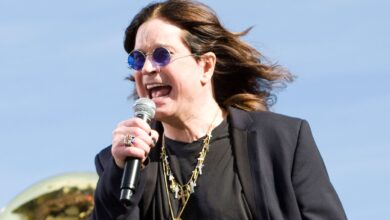
Kid Rock Headlines Turning Point USA’s Alternative Halftime Show During Super Bowl
The alternative halftime show didn’t start with fireworks or a flashy countdown. It started with a mission statement. While Super Bowl LX drew the usual tidal wave of viewers, Turning Point USA positioned its own “All-American Halftime Show” as counter-programming—part memorial, part protest, part digital rally. The premise was simple: if the NFL’s halftime headliner represented a direction they opposed, they would build an entirely separate stage and invite the internet to watch somewhere else. In the hours leading up to kickoff, the branding spread across social platforms like a pop-up festival announcement, promising a patriotic, country-and-rock-heavy lineup and a tribute to their late founder, Charlie Kirk.
As the game approached halftime, the alternative show leaned into the feeling of a live event you had to catch in the moment. Supporters treated it like a watch party with a purpose, sharing links and screenshots, posting reaction clips, and telling friends to switch screens when the halftime clock hit. The production wasn’t trying to look like the NFL’s stadium spectacle; it felt more like a streaming-era concert broadcast with an overt message. Hosts framed it as “for the fans who felt ignored,” and the show’s tone stayed consistent: proud, loud, and intentionally symbolic. The more the official halftime build-up trended online, the more this rival broadcast gained momentum as a parallel cultural lane.
One of the big storylines unfolded even before the first song: a last-minute streaming obstacle that forced quick improvisation. Turning Point USA supporters complained that they couldn’t stream the show where they originally expected, and the organization redirected attention to a different platform, pushing viewers toward a YouTube stream instead. That switch turned into part of the narrative—proof, to them, that the alternative show was being challenged or constrained. But the pivot also helped consolidate viewership in one place, creating a single main link that spread fast. By the time the show was fully underway, the comment section moved like a live stadium crowd, with rapid-fire chants, flag emojis, and tribute messages flooding in.
Then came the emotional centerpiece: the tribute to Charlie Kirk. The show framed itself in his memory, and the host language made that clear immediately, dedicating the moment directly to him. The memorial content didn’t feel like a brief acknowledgment; it was treated as a foundational reason the show existed. For supporters, the halftime show wasn’t only counter-programming—it was also a public remembrance during a night when the country’s attention was already locked on one broadcast. That tension created a powerful effect: even people who weren’t watching felt the story spreading through reposts, headlines, and reaction clips that traveled far beyond the original audience.
Kid Rock’s presence was the headline hook, and the performance leaned into what his fans want from him: swagger, familiarity, and a “this is ours” kind of energy. The staging emphasized Americana aesthetics and crowd-facing moments designed for clips. In the streaming era, a halftime show doesn’t just happen live—it becomes a series of short, shareable sequences, and Kid Rock’s set delivered exactly that. He performed with the confidence of someone who understands the moment isn’t only about music; it’s about signaling identity. In the chat, viewers treated every chorus like a political chant, and every pause like a chance to repeat the show’s central theme: patriotism as entertainment.
The lineup expanded the show into a broader country-rock event, with additional artists stepping in to keep the momentum high. Brantley Gilbert, Lee Brice, and Gabby Barrett were part of the mix, and the show used them to maintain a steady emotional arc: toughness, uplift, and “heartland” storytelling. The pacing was deliberate, making sure there were multiple peaks, not just one. It wasn’t a short cameo-style performance; it played like a full halftime concert built to stand on its own. Even viewers who didn’t agree with the framing could recognize the strategy: create an alternative that feels substantial enough that people don’t feel like they’re “missing” the Super Bowl experience.
Patriotic imagery wasn’t subtle—it was the show’s language. There were tributes, anthem-style moments, and visuals meant to communicate “traditional American” values as the show defined them. At points, it leaned into cinematic cues: dramatic camera pushes, crowd shots that felt like rally footage, and emotional beats positioned to land as viral clips. One detail that caught attention online was a guitar-driven approach to patriotic music, turning ceremony into performance. It was a conscious choice: keep the energy concert-level while still signaling reverence. The show wanted to feel celebratory, but also serious—like a cultural stand being taken in real time.
The alternative show’s rise can’t be separated from what it was reacting to: the official halftime headliner. Bad Bunny’s performance—rooted in Puerto Rican pride and Spanish-language global pop power—was already guaranteed to draw big conversation. That’s the modern halftime formula: choose someone with massive reach, let the internet argue, and watch the viewership multiply. What Turning Point USA did was ride the exact same wave of attention, but redirect it. Instead of trying to stop the halftime conversation, they created a second channel for it. The result wasn’t silence; it was a split-screen culture moment where both sides fed off the same collective spotlight.
Online debate spiked even harder when Donald Trump posted his own critique of Bad Bunny’s halftime performance. Whether people agreed or disagreed, the post acted like gasoline on an already hot fire, because it pushed the halftime show out of entertainment pages and into political conversation instantly. Suddenly, the halftime wasn’t just “good or bad.” It became a symbol. For Turning Point USA’s audience, the reaction validated their alternative show. For Bad Bunny’s supporters, it reinforced why representation matters on a stage that claims to be “for everyone.” And for everyone else, it created that familiar modern spectacle: pop culture, politics, and identity all fighting for the same headline.
What made the night unusual wasn’t that there was controversy—controversy is practically a halftime tradition now. What made it unusual was the scale and organization of the counter-response. This wasn’t just angry tweets or a boycott hashtag. This was a planned, branded broadcast with a celebrity headliner, additional major performers, and a strategy aimed at pulling real-time attention away from the NFL’s show. In other words, it treated the halftime slot like contested territory. And because it happened during the biggest live television moment of the year, it turned the entire halftime window into a competition for the national mood.
Viewership became part of the bragging rights. Supporters circulated big numbers and screenshot evidence, celebrating the fact that millions were watching the alternative stream. Opponents questioned what those numbers meant, how they were counted, and whether the buzz was being amplified. But the core reality remained: enough people tuned in that major outlets had to cover it, and the clips spread widely across social feeds. That alone is a victory in the modern attention economy. In 2026, “winning” isn’t only about who has the bigger stage—it’s about who owns the conversation afterward, whose clips travel farther, and whose framing becomes the default summary of the night.
The show’s memorial element added a gravity that standard counter-programming usually doesn’t have. By centering Charlie Kirk—killed in 2025—the broadcast didn’t just argue about culture; it invoked loss, loyalty, and legacy. That raised the emotional stakes for viewers who felt personally connected to his work and persona. It also complicated the story for outsiders, because it wasn’t only entertainment commentary anymore. It became a public grieving ritual packaged inside a media event. That blend—mourning plus message plus music—helped explain why the alternative show wasn’t simply a novelty stream. It felt, to its audience, like a purposeful stand and a communal moment.
Meanwhile, on the official halftime side, Bad Bunny’s supporters framed the performance as exactly what the Super Bowl stage should do: reflect the reality of America’s cultural mix and the global reach of modern music. That contrast—one show emphasizing a multicultural, Spanish-forward celebration, the other emphasizing an “All-American” identity—created a clean narrative line for headlines. Two halftime shows. Two visions. One night. And because both were built for the internet, the aftermath didn’t fade when the game resumed. It stretched into the next day, with people arguing over what “belongs” on the biggest stage, who gets to define “American,” and why language itself keeps becoming a flashpoint in national entertainment moments.
In the end, what made the Turning Point USA alternative halftime show “special” wasn’t the setlist alone or even the star power, though both mattered. It was the timing and the audacity of building a parallel broadcast during the most-watched live moment of the year—and actually pulling a crowd. It captured a new reality: halftime is no longer a single shared cultural experience. It’s a choose-your-own broadcast moment, where different communities can create their own stages, their own heroes, and their own highlight reels. And that may be the most 2026 thing of all: even the Super Bowl halftime can now be divided into multiple realities—each one loud, emotional, and convinced it represents the “real” America.