Nothing Else Matters on Ice: The Routine That Looked Olympic and Went Viral Worldwide
The performance that’s been traveling the internet under “Team USA’s Olympic skaters” headlines isn’t actually an Olympic broadcast moment, but the confusion makes sense: it looks and feels like something produced for prime time. The viral routine is most closely associated with U.S. sibling ice dancers Oona and Gage Brown, filmed in a way that turns a free dance into a short film—tight close-ups, floating tracking shots, and edits that catch the exact fraction of a second when a lift locks in and the music swells. That cinematic look is a big part of why it spread so fast. When people see it out of context, the polish reads like Olympic coverage, and the emotional weight reads like a medal event.
What makes this version different starts with the choice of song. Metallica’s “Nothing Else Matters” has always lived in a strange, powerful middle space: heavy enough to carry grit, soft enough to hold tenderness, famous enough to spark instant recognition, and personal enough to make a crowded arena feel quiet. It’s also a song that invites interpretation. It doesn’t demand pyrotechnics; it demands honesty. In skating terms, that’s a dangerous brief. The music leaves so much room that any wobble, any forced “acting,” any choreography that tries to decorate the song instead of listening to it will get exposed immediately. When it works, though, it doesn’t just entertain—it lingers.
The Browns’ routine leans into that risk and builds a narrative with restraint. Instead of stuffing every measure with tricks, they let the edges breathe. Long, clean glides become part of the storytelling rather than dead time between elements. Their turns arrive like punctuation, not noise. Lifts don’t feel like “look what we can do” stunts; they feel like sentences in the same language as the music—rising, suspending, releasing. That’s why viewers who don’t follow ice dance still get pulled in. You don’t need technical vocabulary to understand when something looks secure, when two skaters are moving as a single unit, and when a choreographic idea lands exactly on a musical change.
Then there’s the setting and the timing, which became part of the legend. The most circulated fan-shot style video was filmed at Bryant Park’s Winter Village rink at an hour when the city is still half-asleep, giving the ice a kind of private, early-morning hush. The channel that posted it notes the shoot time as 6:45 in the morning, which explains the atmosphere: fewer distractions, softer background energy, and a sense that you’re watching something that isn’t trying to “perform” for a stadium so much as exist inside the song. That mood is hard to manufacture, and it’s one reason the routine feels unusually intimate for a piece that ultimately went massively viral.
The camera work is the other engine. It doesn’t just document; it choreographs. The angles are chosen to make the viewer feel the speed of a step sequence and the height of a lift, but also to catch the human details—breath, focus, that quick micro-smile when a transition hits clean. Online reactions have fixated on how “movie-like” it is, and that’s not accidental. The framing keeps returning to faces at the moments the music opens up, which makes the routine feel less like a sports clip and more like a story being told in real time. The edit is disciplined, too: it doesn’t cut just to be flashy; it cuts to emphasize rhythm, matching movement accents to musical accents so the whole thing feels inevitable.
The choreography team behind the Browns has been credited across related posts and releases, and the names matter because they explain the program’s identity. When a routine can satisfy hardcore skating fans and casual viewers simultaneously, that’s usually the result of experienced hands shaping it—people who know how to make difficulty look effortless without sanding away the emotion. In credited materials tied to the Browns’ performances, the choreography list includes Romain Haguenauer, Sam Chouinard, Inese Bucevica, and Joel Dear, reflecting a collaborative build rather than a one-person concept. That collaborative feel shows on the ice: the piece doesn’t have one “signature trick” it relies on; it has a sustained aesthetic that stays coherent from the opening glide to the final release.
The song itself adds another layer of why this travels so well online. “Nothing Else Matters” was written and recorded in the early 1990s, but it’s been reabsorbed by culture again and again—weddings, memorials, stadium singalongs, orchestral collaborations, and covers that reshape it into different emotional colors. Officially, it was released as a single in 1992 from Metallica’s self-titled “Black Album,” which is part of why it has that massive cross-generational reach: it’s old enough to be classic, but it never stopped being present. So when skaters use it effectively, they’re tapping a song that already has emotional “memory” in the audience. People arrive pre-loaded with feeling, and the skating either earns that feeling or gets rejected instantly.
The view count story—whether it’s quoted as 28 million, 31 million, or climbing beyond that depending on when someone checks—also shows how skating clips can behave like music videos when they hit the right combination of song, performance, and filming. The Browns’ routine has been cited in skating communities specifically as an example of “untapped potential” for building wider audiences, precisely because it broke out of the sport’s usual bubble. That’s the hidden significance of this moment: it’s not just that the skating is strong. It’s that the package is shareable to people who normally never click skating content, and once they click, they stay.
In the wake of that viral surge, a lot of the mythology formed around the clip: the “Olympic” label, the idea that it was a once-only broadcast moment, and the way people described it as “history” rather than simply “a great skate.” What’s interesting is that the exaggeration doesn’t come from malicious hype so much as genuine disbelief. The routine feels too polished to be casual, too emotionally direct to be “just another competition program,” and too cinematically shot to be a typical rink recording. That’s the paradox: it’s a high-level performance presented with a pop-culture delivery system, so the brain files it next to halftime shows and award-show performances, not next to judging protocols and technical panels.
Putting the original song next to the skating clarifies why the program works. Metallica’s official video carries the band’s early-’90s seriousness—grain, sweat, rehearsal-room intensity—and the track’s structure is the real blueprint. The quiet opening establishes intimacy; the chorus expands without turning sentimental; the final stretch builds into something bigger while still feeling personal. The Browns’ choreography mirrors that architecture: the routine doesn’t try to “out-drama” the song; it rides the song’s natural escalation. That’s why the skating never feels like it’s begging the music for meaning. It’s already there. The skaters simply translate it into edges and body lines, which is the best-case scenario for a music-driven sport.
Seeing the Browns perform “Nothing Else Matters” in a more traditional competitive environment adds a useful contrast. On a championship ice surface, the priorities shift: spacing is different, the tempo can feel slightly more urgent, and the performance exists under the pressure of judging. That pressure often makes programs either tighten up or sharpen into something even more precise. In this case, the core identity of the routine still reads: the same controlled pacing, the same willingness to let a moment breathe, and the same sense that the pair is trying to connect rather than merely impress. It also highlights why the Bryant Park filming felt so special—the rink video turns the routine into a shared secret, while the competition version turns it into a statement.
A gala setting brings yet another shade. Galas are freer; the performance can lean more theatrical, less constrained by the need to hit every checkpoint perfectly for a score. When a routine already carries emotional gravity, a gala context can make it feel even more “story-first,” because the audience isn’t watching with a judge’s mindset. That’s where “Nothing Else Matters” becomes almost unfair as a soundtrack—it invites the room to quiet down. When the skating is confident enough to handle that silence, the result is a kind of collective attention you can feel even through a screen. The Browns’ ability to keep the piece grounded across contexts is part of what elevated it from a viral clip into a signature moment for them.
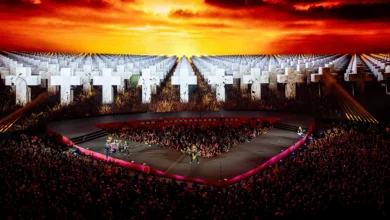
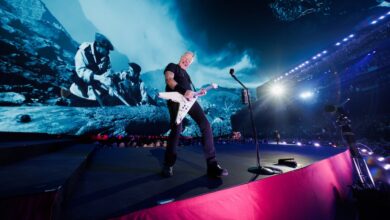
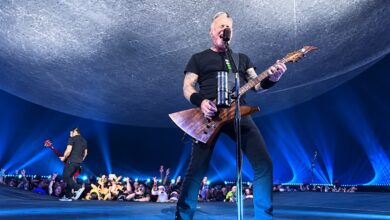
Finally, comparing the skating to a modern live stadium rendition of “Nothing Else Matters” shows how elastic the song really is. In a concert setting, the track becomes communal: thousands of people projecting their own memories onto a familiar melody. In the skating clip, the same song becomes intimate: two skaters narrowing that communal emotion down into a private conversation told through movement. That tension—between “this belongs to everyone” and “this is happening right here, just for this moment”—is exactly why the routine landed. Plenty of skaters have used rock ballads. Fewer have made one feel like a miniature film while still respecting the song’s simplicity.
If the internet wants to call something “legendary,” it usually needs more than technical excellence. It needs a hook, a mood, and a delivery format that feels native to how people actually consume culture now. This “Nothing Else Matters” routine had all three: a globally recognized song with built-in emotional resonance, a performance that reads as authentic even to non-fans, and a cinematic presentation that makes the viewer feel like they’re inside the ice with the skaters. That’s the real reason it keeps getting reposted years after it was filmed. It isn’t just that it’s beautiful. It’s that it’s shareable beauty—crafted well enough to hold up under endless rewatches, and human enough to still feel fresh every time the first notes return.