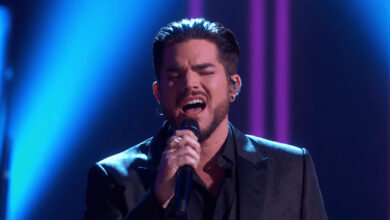
When Rock History Met the Present: Nancy Wilson and Chappell Roan Ignite “Barracuda” in 2025
The first thing that made this collaboration feel bigger than a standard guest spot was the contrast in momentum. Nancy Wilson represents the kind of legacy that helped define arena rock’s vocabulary, while Chappell Roan has been building a modern pop universe that’s theatrical, fearless, and hyper-present tense. When those two worlds met, it didn’t flatten into nostalgia. It sparked. “Barracuda” is already a song built on attack and attitude, so it was the perfect bridge between generations: a riff that still bites, a groove that still drives, and a chorus that invites a crowd to shout its lungs out without needing to know a single deep cut.
Forest Hills Stadium has a particular electricity for moments like this because it’s large enough to feel monumental but intimate enough that surprises land immediately. On September 21, 2025, the atmosphere was already tuned for drama, with Roan staging the night like a full-scale pop spectacle rather than a casual concert. That kind of setting matters, because “Barracuda” isn’t polite music. It needs a room that can handle volume, swagger, and a little chaos. When Wilson walked out, the crowd reaction wasn’t just excitement; it was recognition of a real rock figure stepping into a new era without asking permission.
Roan’s relationship with the song was also part of why it hit so hard. This wasn’t a random cover pulled out to please older fans; it had the feel of a long-held obsession finally getting its perfect payoff. There’s a difference between performing a classic and inhabiting it. Roan delivered the vocals like someone who understands the song’s attitude as performance, not just pitch, leaning into the bite and the bravado. The result was less “pop star tries rock” and more “pop star weaponizes rock,” which is exactly why the collaboration felt like an event instead of a gimmick.
Then there was the guitar conversation happening in real time. “Barracuda” is famously riff-driven, and the riff is the hook as much as the chorus is. Having Nancy Wilson there makes the entire song feel re-licensed by history. What stood out wasn’t just that she could still play it; it was how naturally she carried the original spirit of the track into a modern stage environment. At 71, Wilson didn’t perform like she was preserving something fragile. She performed like she was reminding everyone that the blueprint still works, and that the riff can still dominate a stadium.
The performance also landed because it wasn’t overly sanitized. A lot of “special guest” moments are rehearsed to the point where they feel like corporate content. This one had the edge of live risk. Roan’s set that night included its own human factors and imperfections, and those details can actually make a rock cover feel more authentic, not less. When a show is a little volatile, “Barracuda” feels at home. It’s a song about pressure, confrontation, and refusing to be underestimated, so a performance with real heat behind it will always feel more true than something flawlessly polished.
It helped that both artists brought different kinds of charisma. Wilson’s presence is all focus: minimal movement, maximum authority, the calm confidence of someone who has played massive stages for decades. Roan, by contrast, is expressive and theatrical, the kind of performer who turns a song into a scene. Put those together and you get a visual story: the originator and the modern storyteller sharing the same weapon. You could feel the crowd switching gears in real time, from “this is a fun cover” to “this is one of those clips people will send around for years.”
Another reason the moment resonated is that “Barracuda” carries a particular cultural weight as a song written with a sharp point of view, not just a catchy riff. Even without turning the performance into a history lecture, the song’s attitude reads instantly: it’s defiant, skeptical, and unapologetically aggressive. That emotional clarity plays well in 2025 because audiences are drawn to performers who don’t dilute their personality. Roan’s persona thrives on big emotion and bold framing, and Wilson’s playing has always been about precision with punch. Together, they made the song feel like it belonged to the present tense, not a museum.
What fans often describe as “the best live moments” usually share one trait: they feel like a door opening. This did. It suggested a world where classic rock isn’t something newer artists borrow from like a costume, but something they can collaborate with directly, with the original architects still alive and capable of lighting the fuse. That’s the difference between tribute and collision. A tribute is respectful. A collision is memorable. This performance landed as a collision, the kind that reminds you why rock songs survive: they keep finding new voices who can carry the attitude forward.
Once you’ve seen the crowd reaction and the way the performance moves, it becomes clearer why “Barracuda” is such a powerful vehicle for a cross-generational moment. The song doesn’t ask politely for attention; it takes it. That’s why it can handle being sung by someone outside the original band without losing its identity, as long as the vocalist commits to the song’s sharp edges. Roan’s delivery didn’t soften the track into pop-rock. She leaned into the bite, and that gave Wilson room to do what she’s always done: make the guitar the central character, the thing that tells the audience exactly how to feel before the first lyric even lands.
Going back to the original recording after watching a modern stadium cover is like snapping a photo into focus. You remember how lean the track is, how quickly it gets to the point, and how much of the song’s power is built on rhythm as much as volume. “Barracuda” has always been an endurance test for swagger: it requires tightness, not just loudness. That’s why it still feels modern nearly five decades later. When people call it timeless, they’re reacting to the architecture of the riff and the refusal to relax. It’s a song that doesn’t wander. It strikes, repeats, escalates, and leaves you charged.
Watching an older live performance like Cal Jam 2 makes the lineage feel even more direct. You can see how “Barracuda” was never just a radio single; it was a statement piece designed to dominate big outdoor crowds. The tempo has that relentless push that keeps a festival audience locked in, and the riff has enough identity that you recognize it instantly even if you only half-remember the lyrics. This is the context that makes Nancy Wilson’s 2025 appearance so striking: she isn’t borrowing from a legacy she can’t touch anymore. She is the legacy, still capable of stepping into a new artist’s world and making the song feel dangerous again.
There’s also something revealing about hearing the song across eras: the best performances aren’t necessarily the ones with the most pristine sound, but the ones where the band plays like the riff is a dare. That’s what the 2025 version shares with the classic live takes. Roan’s presence adds a new kind of theatrical confidence, but the spine of the moment is still the same old engine: a riff that insists on intensity. The collaboration works because it doesn’t treat Wilson like a ceremonial guest. It treats her like the co-owner of the moment, and it lets the guitar speak in full sentences, not polite fragments.
The broader takeaway is that this performance didn’t just flatter nostalgia; it made a case for a kind of musical continuity that audiences actually crave. Fans talk about “eras,” but great songs ignore that framing. They survive by staying useful: useful for expressing anger, defiance, confidence, hunger. “Barracuda” is useful. Roan has built a career on dramatic emotional clarity, and Heart built a legacy on songs that hit with purpose, so the overlap is real. That’s why the clip spread so fast: it doesn’t feel like a marketing move, it feels like a genuine musical want being fulfilled on a big stage, with the originator right there to validate it.