Grandma’s Led Zeppelin Solo Turns A Pub Jam Into Instant Legend
The clip hits like a scene from a music movie: a cozy pub stage, colored lights washing the room in blues and purples, and a woman who looks like she came for a relaxed night out quietly stepping into the spotlight with a guitar strapped across her shoulder. Nothing about the moment screams “viral.” There’s no grand introduction, no big speech, no theatrical buildup. And that’s exactly why it lands so hard. The room’s energy flips not because someone tells the crowd to get excited, but because the first confident notes do the talking. In a world where flashy is everywhere, this moment feels rare: pure skill, pure surprise, and that delicious split-second when everyone realizes they’re watching something special.
What makes it instantly compelling is the contrast between expectation and reality. People still carry unconscious stereotypes about age, about who “should” be shredding a classic-rock solo, about what a “pub guitarist” looks like. Then this grandma figure leans into a Led Zeppelin passage with the calm focus of someone who has lived with this music for decades. The hands don’t look hesitant. The timing doesn’t wobble. The phrasing isn’t random noodling. It’s intentional, musical, and confident—like she’s not trying to impress anyone, she’s simply expressing the song the way she hears it in her head. That authenticity is the spark that makes a room go quiet before it erupts.
The story circulating around the video identifies the host musician as the viral guitarist Dovydas, with the surprise guest often referred to as “hard rock grandma Paula.” The framing is simple and irresistible: a working performer doing his set, and then this unexpected powerhouse steps in and steals the night with a Zeppelin moment no one saw coming. Even if you’ve watched a thousand “guest jumps on stage” clips, this one feels different because it doesn’t rely on novelty alone. The playing itself carries the weight. The crowd reaction becomes the proof. When people in a pub stop chatting and start watching, you don’t need a narrator to explain why.
Zoom in on the details and you can see why viewers replay it. Her posture says she’s not there to pose; she’s there to play. She watches the fretboard the way serious musicians do—eyes locked, shoulders relaxed, right hand working with economy instead of theatrics. The guitar tone is classic bar-stage: not overly processed, not studio-polished, just honest and direct. And the phrasing has that crucial quality Zeppelin fans instantly recognize: it’s not just “the notes,” it’s the feel between the notes. That’s the part most casual players miss. The solo sections that survive across generations do so because feel is the real language, and she speaks it fluently.
The Led Zeppelin choice matters, too. Zeppelin isn’t background music. It’s sacred territory for a lot of listeners—songs people associate with youth, rebellion, heartbreak, long drives, first bands, first guitars. When someone plays that material well, it can trigger an emotional reaction that’s bigger than the room. It becomes memory, identity, and fandom all at once. And Zeppelin solos especially carry a reputation: they’re iconic, but they’re also deceptively hard to deliver convincingly without sounding stiff or messy. This is why the pub “goes wild” idea feels believable. When a player nails the vibe of a legendary solo in a small room, the crowd feels like they’ve stumbled into a private concert.
Part of the magic is the social dynamic onstage. Moments like this can easily become awkward—either the guest overplays, or the host looks territorial, or the chemistry isn’t there. Here, the energy reads like mutual respect. It feels less like a challenge and more like a handoff: “Go on, show them.” That’s a powerful thing in live music culture, especially in bars where the line between performer and audience is thin. People love seeing the “hidden legend” emerge because it reinforces a romantic idea: talent isn’t always on the poster. Sometimes it’s sitting in the crowd, waiting for the right song, the right night, and the right level of fearlessness.
The online chatter adds another layer, because viewers aren’t only reacting to the playing—they’re reacting to what the moment represents. It’s intergenerational rock culture in real time. It’s proof that the classic-rock canon didn’t vanish; it moved into living rooms, garages, and small stages. It’s also a reminder that “grandma” doesn’t automatically mean “gentle” in musical taste. Plenty of people who grew up with Zeppelin still carry that fire, and some of them kept practicing long after the world stopped expecting them to. The clip becomes a small rebellion against the idea that passion has an expiration date.
There’s also something quietly joyful about how unmanufactured it feels. The lighting is imperfect, the angles are casual, and the stage setup looks like any working pub’s corner. That ordinariness is the secret sauce: it tells you this could happen anywhere. A random Thursday. A local night out. A musician doing his job. And then—boom—a moment that reminds everyone why live music exists in the first place. Not for perfection, but for surprise. Not for algorithms, but for the shared experience of watching someone take a familiar song and make it feel brand new in front of your eyes.
One reason this performance has such replay value is that it flips the usual “viral musician” formula. Instead of the performer chasing attention with speed and flash, the attention arrives because the crowd senses control. The video is commonly shared under the title “Grandma Guitarist Starts to Play Led Zeppelin and Shocks The Crowd,” and discussions around it explicitly connect that clip to “Stairway to Heaven,” which frames the moment as a kind of living-room myth brought to life in a pub. That context matters, because “Stairway” isn’t just another rock tune—it’s a cultural landmark, and stepping into its solo space is basically stepping into a global audition.
Hearing the studio version right after the pub clip is like stepping from a barroom into a cathedral. The original recording’s dynamics are carefully sculpted—the slow build, the gradual thickening of texture, the way the solo rises like a cresting wave. That’s why it’s such a powerful test piece: it demands patience as much as technique. The pub performance feels special partly because it borrows that cathedral energy and drops it into a human-scale room where you can see every decision in the player’s hands. It’s the same emotional architecture, just stripped of studio distance, delivered at arm’s length under stage lights.
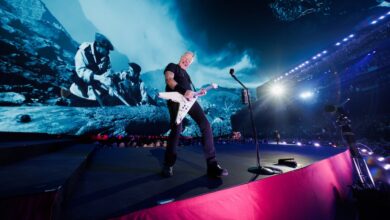
Comparing this kind of pub eruption to an official live performance highlights what “different” really means. On a massive stage, “Stairway” becomes spectacle—history reenacted with all the grandeur it deserves. In a pub, it becomes intimacy—history happening to you. The contrast makes the grandma moment feel almost like a secret: a legendary solo, not behind barricades and ticket tiers, but right there in front of a few dozen people who suddenly realize they’re in the presence of someone who can actually deliver it. That’s the alchemy of small rooms. They turn iconic music into something personal again, like the song belongs to whoever has the nerve and the feel to play it that night.
It also helps to pull another Zeppelin cornerstone into the comparison, because it shows how different types of “Zeppelin energy” land in a room. “Whole Lotta Love” is swagger and electricity—riff-first, body-moving, impossible to ignore. “Stairway,” on the other hand, is narrative—built like a story that slowly climbs until it can’t hold back anymore. The grandma clip feels especially powerful because it taps into that narrative build. She isn’t just playing a set of licks; she’s stepping into a moment the audience already understands emotionally. And when the crowd recognizes that she understands it too, the reaction becomes less about surprise and more about respect.
What makes the pub version stand out, ultimately, is that it turns a world-famous piece of music into a community event. The internet can argue forever about “best solos” and “greatest players,” but a packed room reacting in real time is a different kind of truth. It’s not a ranking; it’s a feeling. The clip captures that exact point when everyone stops being separate people on a night out and becomes one audience watching one story unfold: a grandma with a guitar stepping forward, owning a classic-rock peak, and reminding everyone that legends don’t always arrive with a tour bus. Sometimes they arrive with a calm expression and a strap over their shoulder, ready to make a pub lose its mind.