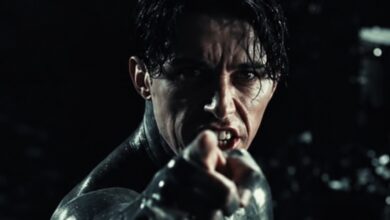
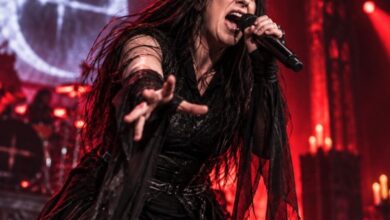
Yungblud Ignited Liverpool With A Fierce “The Funeral” At M&S Bank Arena On April 12, 2026
On April 12, 2026, Yungblud stepped onto the stage at Liverpool’s M&S Bank Arena with a kind of restless energy that felt impossible to contain. The venue, packed with thousands of fans, buzzed with anticipation long before he appeared, but the moment he did, the atmosphere shifted instantly. This wasn’t just excitement—it was ignition. Liverpool crowds are known for their intensity, and from the very beginning, it was clear that this would not be a passive audience. Every movement, every sound, every flicker of light seemed to feed into something larger than the performance itself.
The structure of the night played a huge role in how everything unfolded. With doors opening early and support acts warming up the crowd, the energy inside the arena had been building for hours. By the time Yungblud finally emerged, the audience was fully locked in, ready for something explosive. The stage design, filled with towering visuals and dramatic lighting, set the tone before a single note was played. It felt like the beginning of a story rather than just a concert.
Opening with a cinematic statement, Yungblud didn’t rush into chaos immediately. Instead, he built tension, pulling the audience into his world step by step. That slow burn made what came next hit even harder. When the transition into “The Funeral” arrived as the second song of the night, it felt like a switch had been flipped. The calm gave way to impact, and the arena erupted almost instantly.
“The Funeral,” originally released in 2022 as a defining track of his third album, carries a unique blend of pop-punk urgency and emotional release. Live in Liverpool, that energy was amplified tenfold. The opening beats landed like a shockwave, and within seconds, the entire arena was moving as one. It wasn’t just a song—it was a release of everything the crowd had been holding onto since the doors opened.
As the chorus hit, the reaction was immediate and overwhelming. Thousands of voices rose together, shouting every word back toward the stage with a force that filled every corner of the arena. The floor bounced, the stands shook, and the sound became almost physical. It was one of those rare moments where the audience doesn’t just respond—they take over. For a few minutes, it felt like Yungblud was leading something much bigger than a performance.
Visually, “The Funeral” became one of the most striking moments of the night. The lighting exploded into bright flashes and rapid shifts, perfectly synced with the track’s intensity. Screens behind the band pulsed with movement, adding layers of chaos and color to the already overwhelming energy. At times, it felt almost cinematic, like a scene unfolding rather than a song being played. The production didn’t just support the music—it magnified it.
Yungblud himself was at the center of it all, moving relentlessly across the stage. There was no stillness, no hesitation—just constant motion and interaction with the crowd. He leaned into the front rows, shouted into the mic with raw intensity, and fed off every reaction the audience gave him. It wasn’t a controlled performance—it was a collision between artist and crowd, each pushing the other higher.
What made this moment stand out even more was its placement in the set. Coming early in the show, “The Funeral” acted as a turning point, transforming anticipation into full-blown chaos. It set the tone for everything that followed, establishing a level of intensity that carried through the rest of the night. From that point on, the concert wasn’t building anymore—it was already at full speed.
The Liverpool crowd played a massive role in shaping that energy. This wasn’t a passive audience watching from a distance. Every lyric was shouted back, every beat met with movement, every pause filled with noise. The connection between stage and crowd became immediate and constant. It created a feedback loop where the energy never dropped, only evolved.
One of the most impressive aspects of the performance was how controlled the chaos felt. Despite the explosive energy, everything remained tight and intentional. The band hit every transition perfectly, the visuals aligned with the music, and Yungblud maintained command of the stage even in the most frantic moments. It’s a balance that’s difficult to achieve, especially in a venue of this size.
As the song reached its final stretch, the intensity somehow climbed even higher. The crowd pushed harder, the vocals became more aggressive, and the entire arena seemed to peak at once. It was the kind of moment that defines a concert—the point where everything aligns perfectly and creates something unforgettable. You could feel it happening in real time.
When the final note hit, there was no immediate drop in energy. Instead, the reaction came as a wave, crashing through the arena in the form of cheers, screams, and applause. It wasn’t just appreciation—it was release. The kind of reaction that only comes when a performance truly connects on a deeper level.
From that moment forward, the show carried a different weight. “The Funeral” had set a standard, and everything that followed had to live up to it. Instead of fading, the energy stayed elevated, fueled by what had just happened. It gave the entire concert a sense of momentum that never fully disappeared.
In the context of the full setlist, which included tracks from across his catalog and the Idols era, “The Funeral” stood out as one of the most explosive highlights of the night. It bridged the gap between older fan favorites and newer material, showing how his sound has evolved while still maintaining that raw edge.
What made Liverpool special wasn’t just the scale of the show—it was the way moments like this felt personal despite it. Even in a massive arena, there was a sense of closeness, of shared experience. “The Funeral” captured that perfectly, turning thousands of people into a single voice for a few unforgettable minutes.
By the time the night came to a close, fans weren’t just talking about the biggest visuals or the loudest moments. They kept coming back to that early explosion—the point where everything changed. It wasn’t just one of the highlights of the night. It was the moment that defined it.
On April 12, 2026, in Liverpool, “The Funeral” wasn’t just performed—it was unleashed.