Lanie Gardner’s Stunning ‘Dreams’ Cover Reaches 75 Million YouTube Views
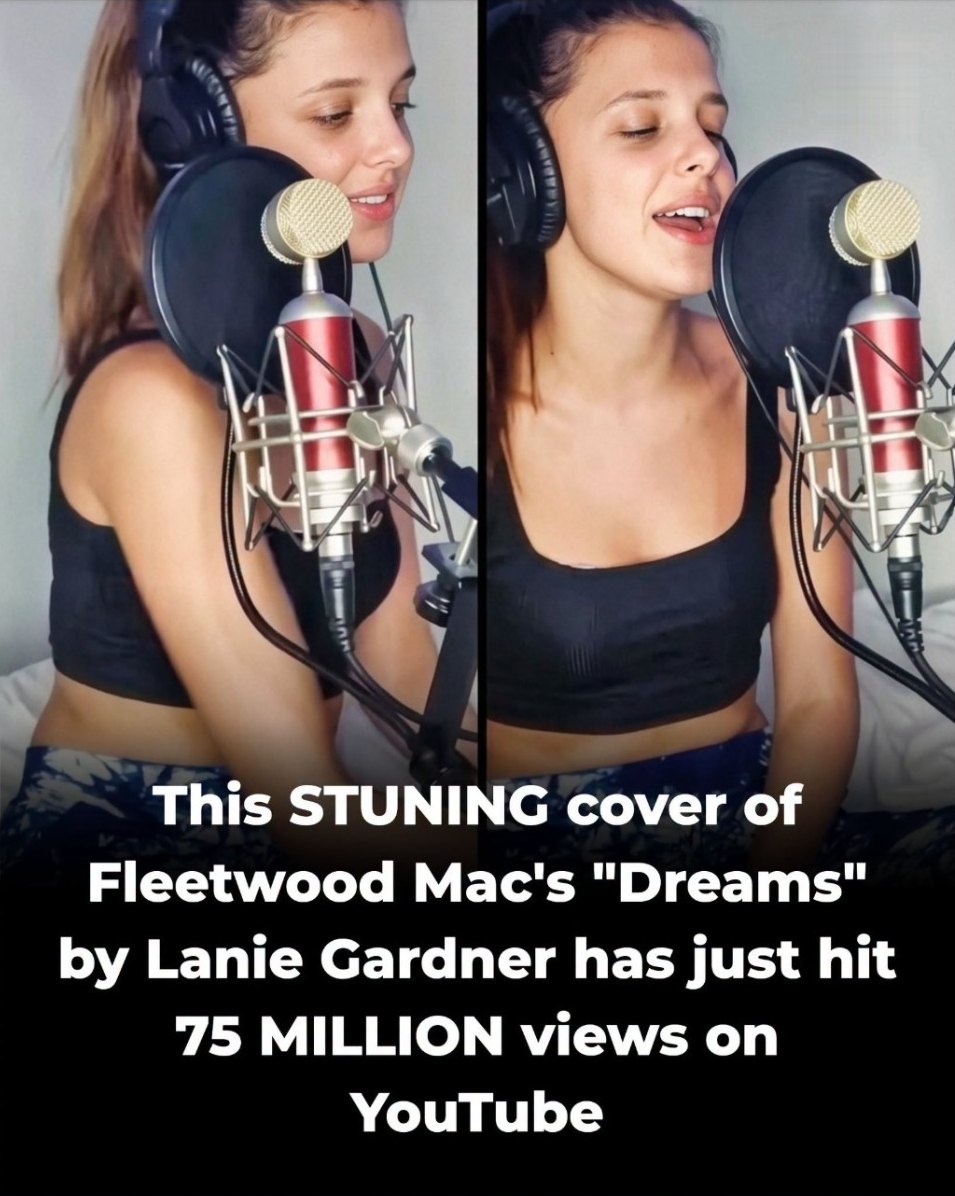
Lanie Gardner’s cover of Fleetwood Mac’s “Dreams” turns a modest recording setup into the setting for a striking vocal performance. Wearing headphones beside a red-and-gold microphone, she draws the listener into a familiar song with a relaxed delivery and a voice that combines warmth, grain and a clear melodic focus.
The video has reached an audience far beyond the scale of its surroundings. Gardner’s original upload on her own YouTube channel now displays roughly 75 million views, showing how a performance made for the internet can keep finding listeners years after its first appearance.
Part of the attraction is the immediate connection between singer and song. “Dreams” has a recognisable atmosphere before its vocal arrives, and Gardner understands how to enter that atmosphere without rushing to its largest moments.
Her phrasing gives the melody room to settle. The ends of lines are especially important in a song like this: a slightly extended sound or an unhurried release can preserve the mood while giving the singer a recognisable presence.
The close framing makes those choices easy to follow. Listeners can watch her concentration shift through the phrases, with the microphone and pop filter providing the familiar visual language of a home recording session.
The performance is a recorded cover, and the finished sound belongs to that setting. Its appeal comes from the vocal character, the arrangement and the way those elements meet a song that already has a powerful place in popular memory.
Fleetwood Mac’s “Dreams” carries a distinctive combination of softness and resolve. Gardner responds to that emotional balance with a delivery that feels comfortable within the groove, allowing the words to remain direct even as the melody stretches around them.
The lower passages give her tone a grounded quality. When the melody opens up, the contrast becomes more noticeable because the performance has already established that quieter centre.
That sense of proportion helps explain why the cover works beyond its first attention-grabbing seconds. A compelling voice can make someone stop scrolling, but sustaining interest across a full song depends on how the phrases connect.
Gardner’s version keeps that connection close. The performance has space to breathe, while the familiar musical backing gives the listener a steady frame for hearing the texture of her singing.
The video also illustrates the particular intimacy of an online cover. An audience encounters a singer in a small, recognisable room, and the distance between discovery and repeated listening can be no more than a replay.
“Dreams” is particularly suited to that experience. Its mood is strong enough to establish an identity quickly, yet the song leaves room for listeners to notice details in a voice over several visits.
A useful comparison is Fleetwood Mac’s own official video. Hearing the two recordings together makes it easier to appreciate the source of the song’s atmosphere and the different vocal colour Gardner brings to the same melody.
Another perspective comes from the David Guetta and MORTEN version featuring Gardner. The electronic production places her voice in a different musical environment, showing how the song can travel between a restrained cover and a more forceful dance arrangement.
The enduring pleasure of Gardner’s original cover is its combination of familiarity and discovery. Listeners arrive knowing “Dreams,” then stay to hear how a different voice inhabits it—a simple encounter that has grown into an extraordinary online audience.
More performances to enjoy
Fleetwood Mac’s official “Dreams” video offers the original musical reference point for Gardner’s interpretation.
David Guetta and MORTEN’s “Dreams,” featuring Lanie Gardner, brings the vocal into an electronic arrangement with a different scale and rhythmic emphasis.
Social Media Image