How Layla Clark’s ‘Thunderstruck’ Gives New Listeners a Way Into AC/DC
A reaction about a 76-year-old grandmother becoming an AC/DC fan offers a different entry into Layla Clark’s “Thunderstruck” performance. Most of the discussion begins with an instantly recognizable rock opening. This one begins with the possibility of a listener discovering that music through a school percussionist.
The response is a personal expression of enjoyment, not a survey of who listens to AC/DC. Its wider point is accessible in the footage: Clark gives people something to follow even if the song, the instrument or the school-band setting is new to them.
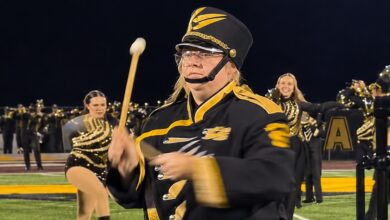
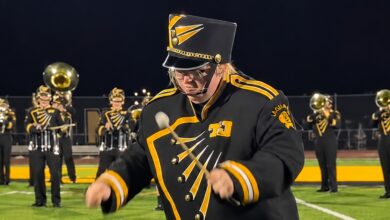
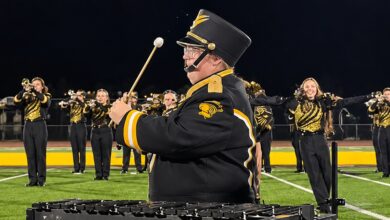
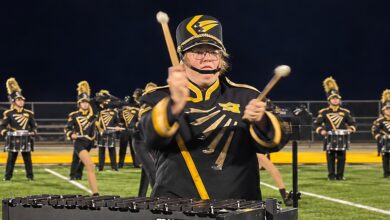
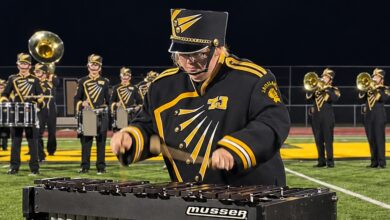
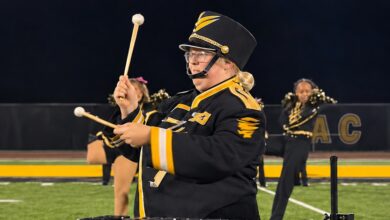
The camera makes the process unusually clear. A mallet moves toward a bar, the note sounds, and the next movement is already on its way. The repeating figure becomes a sequence the viewer can anticipate. Recognition of the original recording is helpful, but it is not the only reason to keep watching.
The uniform and the football field add a welcoming context. The person at the center is a student performing with her school, surrounded by other young musicians. The attention can begin with the music and turn into the simple pleasure of seeing someone give a performance their full concentration.
Clark’s bandmates are part of that experience. The close-up invites an individual connection, while the ensemble broadens the sound. A listener who first follows the hands can then hear the arrangement open around them, giving the short recording a beginning, a build and a shared payoff.
Watch the primary clip before moving to the companion recordings. It is the most direct way to understand the reaction: a familiar rock song has become a performance whose visible movement can draw in someone who did not arrive looking for an AC/DC video.
A listener can start with the person
Music often reaches someone through a performer before it reaches them through a catalogue. The interest here might begin with Clark’s focus, the mallets or the pleasure of the school setting. The song then supplies a phrase that stays in the listener’s head after the video has ended.
That does not require a story about the grandmother beyond the reaction itself. There is no need to invent her musical history, her family or the circumstances in which she watched. The comment’s appeal is the delight of an unexpected connection, expressed in a single sentence.
The short profile below introduces the musician behind the circulating performance. Beside the playing, it gives viewers another route into the story: meeting the student whose work has prompted so much encouragement. A named person can make a widely shared clip feel less anonymous.
The school band gives the song another setting
The Jaguars’ recording at Chartiers Valley is a separate field performance, useful for seeing the group beyond the close camera position. The viewer can take in the ensemble and the setting, with the music presented as part of a full school program rather than an isolated social-media moment.
Changing the view also changes the kind of attention available. The close-up favors detail. The field recording favors the relationship between the players and the overall shape of a show. Both can help a new listener find something enjoyable without requiring a technical introduction.
The grandmother reaction is memorable because it puts the outcome in human terms. Someone enjoyed the music enough to describe becoming a fan. Clark’s playing offers a route to that response through movement, concentration and the shared sound of the Jaguars—one school performance giving a rock song another way to be heard.