‘My Rock ’n’ Roll Heart’: The Warmth Behind Layla Clark’s AC/DC Reaction
One listener’s response to Layla Clark’s AC/DC performance is less a technical review than an expression of affection for rock music. Posting beneath the performance, @SeasonedCitizen described the marching-band version of “Thunderstruck” as something that made the music feel especially good to hear.
The comment had about 1,000 likes when checked on November 7. Its warmth is directed toward the combination on screen: a recognizable rock opening, a mallet instrument and a school marching band. The surprise is not that listeners know the song, but that this setting gives them another reason to enjoy it.
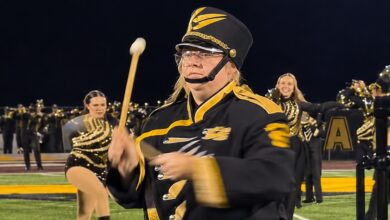
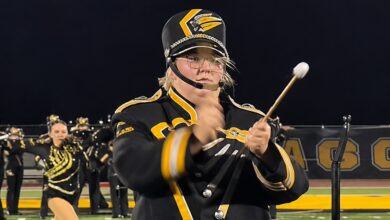
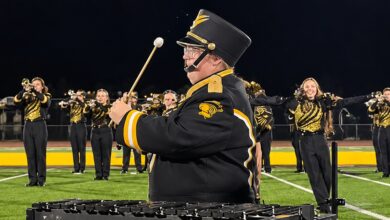
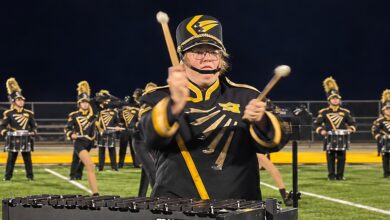
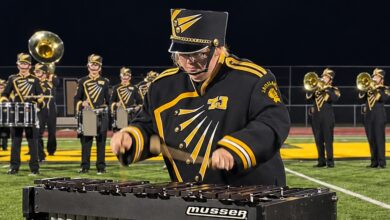
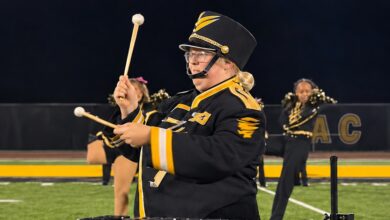
Clark is the immediate visual focus. The recording follows her at the front of the Thomas Jefferson Jaguars, making the repeated movement between the bars part of the experience. Hearing the tune and watching the work become connected, rather than arriving as separate parts of the clip.
The song’s familiarity leaves room for that attention. Once listeners identify the opening, they can notice the strikes, the changing expression and the players around her. Recognition is the invitation to watch more closely, not the end of what the performance offers.
The continuing phrase also gives the arrangement a sense of expectation. Something has been established and is still moving forward. As the ensemble contributes more of the sound, the recording grows from a close view of a repeated part into a more expansive school-band moment.
Listen through that change before returning to the opening. The pleasure described by the commenter comes partly from the arrival: the song you recognize is carried somewhere different, and the people delivering it remain visible enough to cheer for.
Rock recognition with a different visual language
In a guitar-led performance, the audience expects a familiar instrument and a familiar kind of stage movement. Here the bars and the mallets alter what the viewer follows. The notes still signal AC/DC, while the visible action makes the part feel newly specific.
That difference explains why the response can be nostalgic and fresh at once. The listener brings an existing connection to rock music, then finds that connection reflected in a younger school ensemble. Enjoyment comes from the recognition as well as from seeing the tune take another form.
A separate Jaguars recording at McKeesport offers a wider perspective on the group. It is another school performance, not a synchronized alternative angle. The camera gives more of the field to the ensemble, helping the close-up register as part of a broader musical program.
Another instrument, the same invitation to listen
The official 2CELLOS arrangement makes a useful companion because it also changes the instrument associated with the opening. Luka Šulić and Stjepan Hauser present the song on cellos, using a deliberately different visual setting from a conventional rock performance. The familiar phrase is the bridge between those settings.
Clark’s performance has its own character: the school uniform, the open field and the surrounding Jaguars give it a sense of community. The comparison is not a claim that one cover outranks another. It shows how a recognizable piece of rock writing can support distinct kinds of musical pleasure.
The viewer’s encouragement is directed at that pleasure. There is no complicated argument to settle before enjoying the clip. Follow the opening, wait for the band and watch the musician at the center remain involved in the sound. A favorite kind of music has found another person and another setting to bring it to life.