A Grammy-Stage Wish for Layla Clark Starts With a School Football Performance
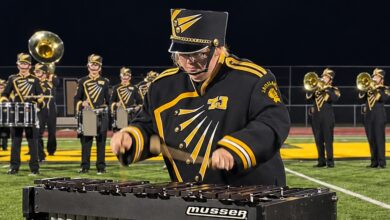
A school football performance prompted an unusually large-stage compliment for Layla Clark. On X, @ColMoeDavis imagined the Thomas Jefferson percussionist opening the Grammy Awards after watching her take on AC/DC’s “Thunderstruck.” The suggestion turns a few minutes on a field into a much bigger musical possibility.
The post had 1,300 likes when checked on November 7. It is an expression of admiration, not an announcement of an invitation or an appearance. The enthusiasm has an identifiable starting point: a musician whose playing gives a familiar song a clear and unexpected visual focus.
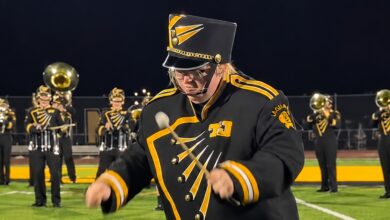
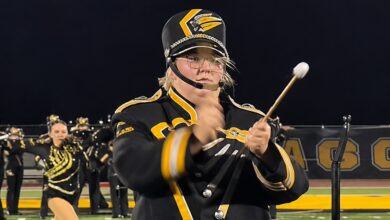
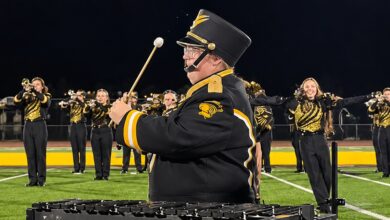
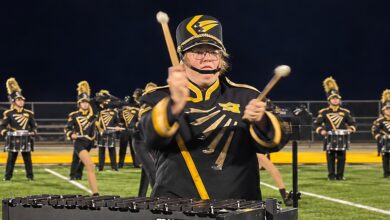
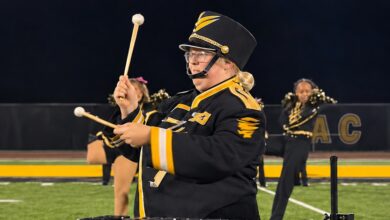
Clark stands behind the mallet instrument at the front of the Jaguars. The audience can watch the phrase being made, with the hands moving between notes while the repeated figure stays recognizable. The field and uniform establish the school setting before anyone needs an explanation of the performance.
That clarity helps the opening hold attention. Viewers can identify the music, follow the movement and wait for the surrounding arrangement to expand. It has the immediate appeal that makes a listener think about how the same moment might read in front of a much larger crowd.
The wish also recognizes more than novelty. An unexpected instrument can create a first glance; the continuing passage gives a reason to stay. The rest of the band supplies the next development, turning the close-up into the beginning of an ensemble performance.
Watch the primary clip as a complete little musical sequence. The recognizable beginning, the continuing part and the broadening sound explain why someone might imagine it opening a show. The bigger-stage idea is the compliment; the performance is what gives it substance.
An opening that tells the audience what to follow
A strong musical introduction gives a listener a point of orientation. In this case, the repeating figure does that quickly. The audience knows where to direct its attention, and the visible mallet work gives it something specific to follow while the arrangement develops.
The attraction is not dependent on a large production around Clark. The school setting makes the concentration and movement especially readable. A phone recording can preserve that directness, allowing a viewer far from the field to respond to a passage that originally belonged to the local crowd.
The Jaguars’ recording at Avonworth offers a different full-show perspective. It is a separate performance, listed on the band’s channel as part of its field program. Watching a wider ensemble recording beside the close-up makes clear how much musical activity surrounds the part that attracted the individual compliment.
A musician inside a continuing school program
The band’s Kennywood recording provides another change of setting. It is useful here as a look at the Jaguars beyond the viral clip, not as a claim that the same “Thunderstruck” performance happened again in that footage. The group has musical life outside the few minutes that travel most widely online.
That wider context gives a bigger-stage wish a grounded subject. Clark is a student playing within an ensemble, and the ensemble has an ongoing program. The attention generated by one recording can lead audiences to discover more of the musicians rather than reduce their work to one repeating highlight.
The Grammy suggestion remains a fan’s imaginative response. What can be enjoyed now is already available: an exposed opening carried with conviction, a recognizable song arriving in a different form and a school band bringing the sound into a larger frame. The desire for a bigger audience starts with appreciating that existing performance.