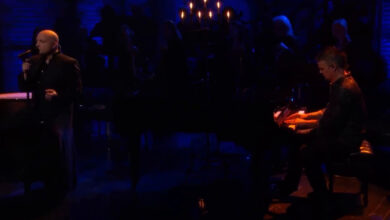
Listen to the First Line Ann Wilson Sings in ‘Don’t Tell Me’
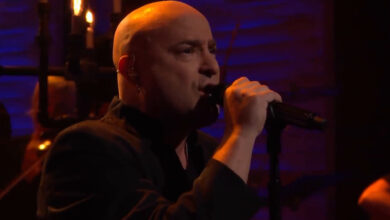
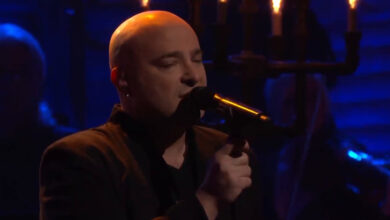
David Draiman gets the first verse of “Don’t Tell Me” to himself. There is hurt in the delivery, but there is also space after the words. By the time Ann Wilson comes in, the song has established a way of speaking. The change in grain is immediate, and the way she places the ends of her lines makes the contrast clearer.
Wilson was 73 when the official video was released. You can hear her approach in the first phrase: she starts with enough focus to hold the melody and lets the end of the line widen. Draiman has a different way of carrying weight through a phrase. Their parts give the same song two emotional perspectives.
Go back to the shared section once you have heard each of them on their own. Both voices remain easy to follow, even as the band grows around them. That clarity is why the duet rewards a second listen. The easiest detail to miss is also the simplest: once Wilson has entered, Draiman’s voice sounds different because there is finally another voice to answer it.
The setup belongs to Draiman
The most effective trick in “Don’t Tell Me” happens before the guest singer arrives. David Draiman gets enough time to make the melody sound like an individual thought. The band supplies a frame and he decides how much of the sound to fill. There is a kind of firmness in his voice even when he sings under the full size of the arrangement. That combination makes the opening feel unsettled. You can hear the tension without needing to know anything about the credits. More to the point, it is something another singer can answer.
Take the first verse as a series of small pauses. The words tend to stay present because the sound does not leap forward after every line. There is room for a listener to hear the question in a phrase, then wait for the next phrase to try to resolve it. This becomes useful when Wilson comes in. The listener already knows the shape of the section and has heard one way of delivering it. Wilson changes what that shape feels like simply by being herself inside it.
What changes in the first line
The first thing to listen to in Wilson’s entrance is the attack at the start of a word. Then stay for its last vowel. A voice can give a line a fixed shape or let the shape alter as it goes, and this is a passage where the difference matters. Wilson builds a different motion into the phrase from the one Draiman has just established. You can hear a shift before you have followed the entire sentence. If you are checking the song against the image in the video, that is an excellent place to look away from the screen.
Watch the performance
Official duet
Wilson was 73 when the official video was released. Listeners often bring her career and the big moments from Heart to the music, which is understandable. For this particular track, the place to hear the experience is in the control at the entrance. She gives a line enough weight to take hold of the melody and enough elasticity to let it move. Turning this into a question of who can hold the largest note would miss much of what the arrangement gives her to do. The setup works because it has already created a quieter kind of pressure.
How the shared lines stay clear
There is a point at which both voices have to occupy the same passage. If you have followed the change of speaker in the verses, that is where the comparison becomes easiest. You can switch your attention between the two singers without losing the shape of the tune. Concentrate on the grain in Draiman’s voice, then come back and follow Wilson through the same passage. It is the kind of duet where you can hear a pair of deliberate performances inside the joined sound, and that is why the melody still has a sense of movement.
There is also an emotional reason to keep that detail audible. The opening has given us a person thinking through a painful situation. A second singer gives us a person who could have a different experience of the same situation. When the two performers are audible as individuals, those two experiences can stay in the music even when the melody brings them together. The growing arrangement lets the song get bigger without reducing the duet to a wall of sound. The recording has to carry both the weight of the band and the small changes in the way the singers phrase a line.
A live comparison and a listening cue
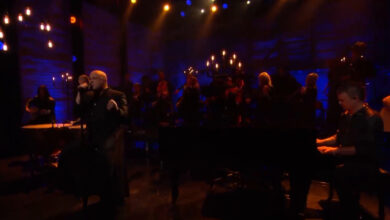
The audience recording from Welcome to Rockville offers a good way to follow the same arrangement outside the studio. There is more space around the performers and more sound around the voices. You can watch the transition in a way that makes the division of the verses feel natural: someone is delivering a line while the other person is there to answer. The comparison is useful even if you prefer the cleaner sound of the official version. It shows how well the song’s change of perspective survives without the close visual framing of the video.
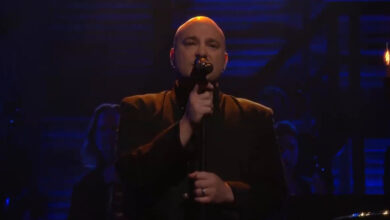
Disturbed’s recording of “The Sound of Silence” makes the opening worth hearing again from a different starting point. That performance shows how much Draiman can communicate at a restrained volume and how much force he can leave in reserve. He uses some of the same patience in the opening of “Don’t Tell Me.” In the duet, the payoff is partly in what Wilson adds before the song has reached its biggest sound. A useful order is to hear the two recordings side by side, then go back to the first line Wilson sings. The arrangement has prepared for her, but the change you hear is something the two singers create themselves.
Try one final pass through the song without reading the comments or watching the image. Listen for the moment you become aware of a second point of view. Different listeners may pick a different word or a different stretch of melody. That is part of the interest of the track. By the time Draiman and Wilson have joined voices, it is hard to go back and hear the opening as though the answer were never coming.
Related videos
The duet live at Rockville
Disturbed’s The Sound of Silence