The Conan Cover That Won Over a 79-Year-Old Simon & Garfunkel Fan
One listener under the Conan video said they were 79 when they discovered David Draiman. Simon & Garfunkel’s “The Sound of Silence” had been a favorite for years, and this new voice made them choose a different version. There’s a useful story inside that short remark. The listener could bring a full memory of the old recording to the clip and still encounter something unexpected. A familiar melody can make the differences easier to hear, and Draiman gives this listener differences to notice from his first line.
The original is built around a relationship between voices. The way Paul Simon and Art Garfunkel sing together is part of what people mean when they say they know the song. Their harmony helps the melody settle into memory and gives even a stark lyric a quality that can bring people back to it. The Conan arrangement puts most of that interpretive weight on one singer. Draiman has to change the color of his own voice over time to give the song its changing point of view.
He begins in a register where there’s warmth and a trace of speech in the sound. There is time to hear him shape a word before the next one comes. The listener who knows the old recording has a way to measure this almost immediately. They know the melody and can pick out where a line is headed. The surprise comes from the weight Draiman gives the route there, the way he holds back enough sound that a tiny increase can register as an event.
A cover can ask its audience to make a quick judgment about how much the familiar parts matter. Disturbed keep the underlying tune clear while making the space around it darker and more expansive. When the strings grow, the voice has to get stronger without making the early phrases feel unimportant. That gives the listener several chances to change their mind over the course of one performance. They can recognize the song at the opening and find out how far the new version will carry it by the end.
The 79-year-old commenter singled out Draiman’s range. A large range is easy to think of as the distance between notes. What distinguishes the Conan performance is also the range of size and texture he fits into a single phrase. There’s a gradual change in the roughness of the sound and the amount of weight he gives the vowel. Those are details a listener can hear immediately, even if they couldn’t name the highest note afterward. The voice sounds like it has moved a long way across four minutes.
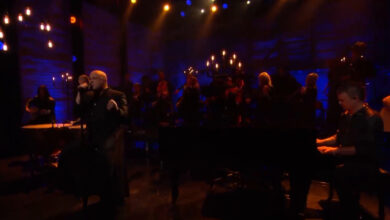
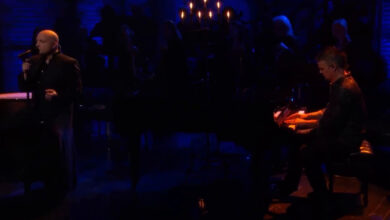
The surrounding musicians make that movement possible. The piano offers clear points of contact with the melody. Strings can gather force from behind the voice, which allows Draiman to keep the words up front even when the room begins to sound full. That is an especially persuasive part of the result for a listener who just came to the band. The effect of the bigger arrangement is audible without anybody having to explain Disturbed’s history or how far outside its better-known catalogue the song might sound.
Watch the performance
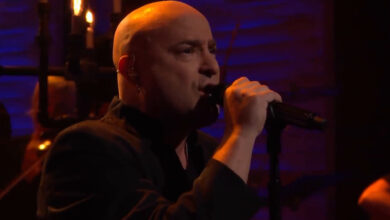
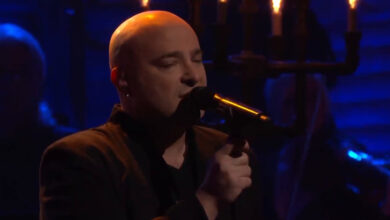
It’s worth going back to the studio cover after watching Conan. In the recorded version from Immortalized, the arc is already there. The mix lets you follow the progression of the instruments with great clarity and puts the quiet voice at an intimate distance. The television recording brings the physical event into the comparison. Draiman’s face and body help you anticipate the amount of sound he’s about to give a phrase. You can see him making decisions with consequences for what you hear.
The songwriter’s response offers some further context without deciding the question on anybody’s behalf. Paul Simon shared the Conan performance on his official site in 2016 and praised the rendition. The clip therefore reached listeners who had a close relationship with the old song from very different directions. A fan who had lived with that song for decades was hearing the same basic opportunity as somebody coming to the melody through Disturbed. Both could recognize a songwriter’s material carrying a different singer’s experience.
There’s a useful way to put the versions next to each other. Start with a place where Simon & Garfunkel’s voices sit clearly together, then start Conan again at the piano introduction. Listen for which words tend to catch your attention at the beginning. A familiar line might make you wait for a harmony in one version and give you time to hear a consonant or a breath in another. Finding a new place to pay attention is one of the most direct pleasures a cover can give.
You don’t have to trade away any of the years spent with a version to get something from a new one. The 79-year-old listener’s reaction is memorable because that history is exactly what made the change meaningful. Draiman’s range gave an already familiar song a sound they had never heard before. The Conan clip catches the shift from a small voice to a room-filling one, and that progress gives a newcomer to Disturbed a better introduction to him than any single high note would have done.
The next time the last verse comes around, pay attention to a detail from the start that has survived the buildup. Draiman still has to make a line into a thought, even when he’s using a very different amount of sound. The same care with the words helps explain how a listener following a song they’ve known for decades can recognize it all the way through and still be surprised. The song carries that recognition with it while the new performance earns the space to mean something else.
Watch the end with the memory of the first verse still in your ear. Draiman’s voice is larger, and the phrase still has a clear direction. That connection gives a lifelong listener a recognizable song even at the point where the cover is furthest from the texture they remember. It helps explain how a person can suddenly prefer a rendition encountered late in life. The new performance gives them a fresh experience of a melody that already had a lasting place in their story.
Related videos
Disturbed’s official music video
Simon & Garfunkel live in Central Park