The Moment David Draiman’s Last Verse Turned Into a Warning
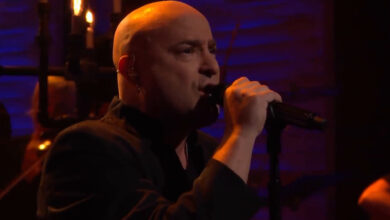
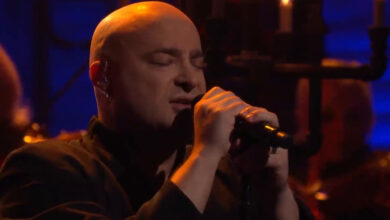
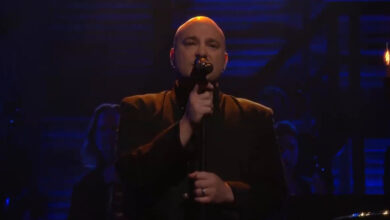
The last verse of Disturbed’s “The Sound of Silence” has a physical feature you can see before you know exactly what your ear is hearing. On Conan, David Draiman draws his free hand into a fist as the music gains weight. His face and the tightening edge of his voice give the gesture its meaning. A lyric that began like a quiet observation is now being delivered with the pressure of a warning. The strings have been preparing for the change, and the singer makes it feel like the consequence of every verse that came before.
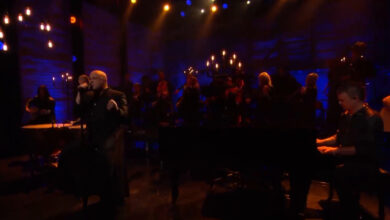
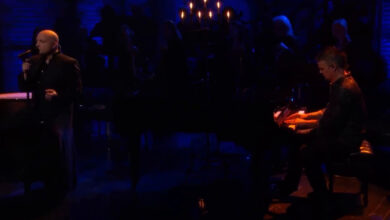
There is no need to skip to the gesture to understand it. The beginning is a demonstration of how little Draiman needs in order to get a word across. The piano leaves room, his lines stay close, and even the ends of the words have a clear shape. When you remember that texture, the fist in the final verse makes more sense. There’s much more happening in the room, and the voice is applying a new kind of force to a melody you’ve been able to follow from the start.
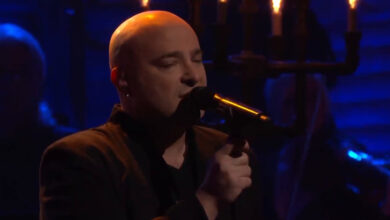
What makes the warning feel convincing is the tightening sound at the front of a note. A vowel can begin with a defined edge and then open into a more sustained tone. Draiman allows traces of rasp into that opening. The sound remains pitched, so the note can keep its musical function while the edge of it suggests something more urgent. It’s a small distinction before the whole room is loud, and the live clip makes it easy to hear because the camera lets you see the singer fitting it to the words.
The orchestra supplies more than extra level. As the string sound accumulates, it gives the voice something to stay above or move across. Imagine hearing the long notes entirely on their own and listening again to what the strings do beneath them. They keep changing the pressure while the singer stretches the time inside a word. By the last verse, both sides of the arrangement have arrived at a scale the opening could never have supported. The gesture puts a visible marker on that arrival.
A listener under Team Coco’s upload singled out the final verse, the swelling orchestra and the distortion in Draiman’s voice. The comment makes sense as a set of instructions for revisiting the clip. On the next play, try following just one of those elements at first. Then watch the hand as the voice changes. There is a natural connection between the muscular effort you can see and the roughness you can hear. Color in the vocal makes the line feel more insistent than volume by itself could have made it.
The lyric gives the singer a real reason to sound increasingly severe. Ideas that seem like observations early in the piece are much harder to keep at a distance by the end. Draiman makes that change by moving from a nearly conversational scale to a delivery large enough to address a room. The final verse keeps its words legible, and you can feel their shape underneath the larger sound. That makes the closing section a dramatic moment with a clear subject, something more enduring than a demonstration of lung power.
Watch the performance
The studio version offers the same deliberate growth in a mix where every layer has its own place. It is an effective way to hear what Disturbed built into the arrangement. On Conan, the choices are happening in front of the camera. A held line feels dangerous in a productive way because you can hear its edge and see the person sustaining it. Compare the move into the final verse and the moment at which the extra force stops sounding like a potential and starts sounding like an instruction.
There is also a point worth hearing after the strongest note. The singer has to get out of a long phrase with enough control that the remainder of the song still belongs to the same performance. Some of the emotion comes from that release. The orchestra can keep a line suspended behind him for a little longer, and you recover some sense of how much distance he covered from those first words. A powerful ending needs a place to land after the hardest part of it is over.
Put the older Central Park performance next to it and pay attention to how two voices can carry urgency with a different amount of physical force. There’s a wonderful clarity in the shared phrasing. Disturbed’s cover takes that recognizable material and finds a use for the tension in a single voice, with the orchestra widening around it. Both versions have room for the weight of the lyric. The Conan performance gives that weight a visual expression you can recognize even with the sound low.
There are reasons to revisit the closing frame even after the force of the surprise is gone. The fist is small in the composition, and much of the stage is still doing its job without asking for a close-up. The singer’s timing is as important as his expression. He lets the idea build until the music has space for it, and the hand is part of the way he makes you notice the change. On a second watch, the four-minute journey to that small gesture can be as interesting as the gesture itself.
That’s the useful test of the performance as you reach the final line. Can you still hear the person who sang the first one? The voice has gained a different texture, the band has made the room feel bigger, and Draiman has kept enough of his original phrasing to link those two places. The fist matters because it arrives near the end of an argument. The arrangement earns the force that would otherwise have been available the moment the singer appeared.
A sound this carefully built also gives the camera something to do. The shot can afford to stay with Draiman long enough for a new expression to matter. If the image cut away every few seconds, the viewer might register the same rise only as a shift in the mix. The extended look lets the hand and voice arrive in the same thought. That is the detail to take into the final verse the next time you play it.
Related videos
Disturbed’s official music video
Simon & Garfunkel live in Central Park