What the Conan Audience Heard When a Metal Band Took the Stage
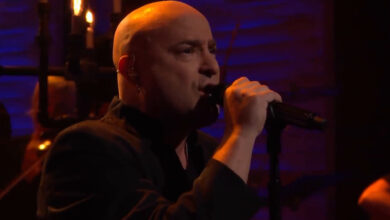
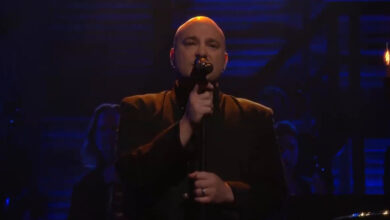
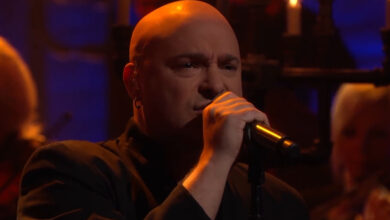
Imagine getting a seat for Conan, taking it, and hearing that the musical guest would be a metal band. On March 28, 2016, that meant Disturbed. The song would have been familiar to plenty of people in the studio, and the first vocal phrase would still have given them a moment to reconsider what they had expected. David Draiman takes “The Sound of Silence” from a hush to a roar from a seated position, with the stage set up around the full length of the song.
A late-night audience has a particular relationship to a musical guest. Some people come with an idea of what they’re about to hear. Others are there for a night of television, and the band gets only one performance to persuade them that the music deserves their full attention. The opening piano is an effective choice in either case. It asks the audience to settle into a different pace from a comedy segment, and the voice enters with enough space around it that they can adjust straightaway.
One thing you can hear early on is how little momentum Draiman borrows from the room. There is a measured relationship between his first lines and the keyboard, and the rest of the arrangement allows him to take his time. The musicians are giving the television audience a close sound. The people in the studio are hearing the same restrained opening with bodies and instruments in front of them. It is easy to see how that difference can make the first verse feel a little more exposed inside the room.
The familiar song helps. Simon & Garfunkel’s melody gives the listener a way into the performance immediately. The television guest is therefore free to take some time before demonstrating what is special about his approach. As the sound grows, the familiar parts become useful landmarks. A person can hear the opening tune, pick up the next line and feel the next change of texture as the strings fill in the space. A band with four minutes can make the journey feel much longer by letting recognition do some of the work.
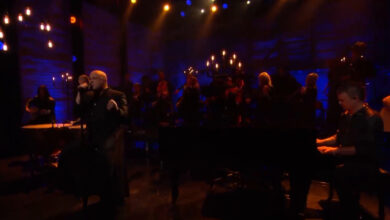
What happens when the louder vocal arrives depends on all that restraint. Draiman can open a vowel, put more edge into the note, and carry it across a backing that has gradually become larger. There is a precise relationship between how much sound he puts into the line and how the arrangement receives it. The wide shots give you some sense of where that weight is coming from. The voice stays at the front, and the stage around it holds more and more of the music.
The listener on YouTube who imagined the ticket holder’s luck was noticing how unusual the moment seems from a distance. People who saw it at the taping heard an entire performance develop in real time. The rest of us can now choose when to get to the final verse. For one play, you can give yourself the same experience as the room and let the piece move on its own clock. The last minute feels different when the preceding minutes have had their say.
Watch the performance
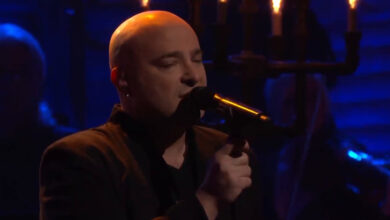
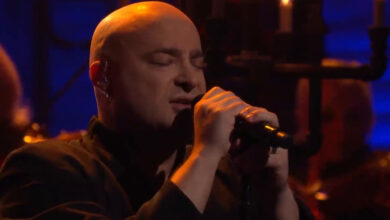
The Conan cameras add a kind of intimacy that a person seated far from the stage might have missed. You can see Draiman take in air and press slightly into a phrase. Then the picture has room for more of the players, and the orchestra becomes a visible part of what you have been hearing. That movement between views translates the scale of a television studio to a much smaller screen. You can feel the perspective change without losing track of the singer.
Disturbed’s music video starts from the same cover and gives its imagery a separate life. It offers a composed visual space for the song, just as the studio recording gives its dynamics a very clear arc. On Conan there’s an added interest in seeing the musicians make those dynamics in front of people. Draiman’s mouth, breath and posture become clues to where the next change might come. The two views offer different reasons to follow a voice you might already know.
Simon & Garfunkel’s Central Park version is another useful companion. An outdoor crowd on that scale can bring a huge history of its own to a song. There, two singers and a familiar accompaniment can make listeners feel that they are hearing part of their own past. Disturbed’s television appearance brings a different kind of immediacy. Some viewers are hearing a familiar melody set in an arrangement they have never heard before, and that can make the song feel newly available within a few lines.
The studio performance also lets you consider the unusual shape of the booking itself. A heavy band had enough confidence in its audience to put a tightly controlled ballad in front of a general television crowd. The musicians build a place to go without relying on an announcement or a long introduction to tell viewers how to feel. By the end, it is easy to remember that there was a television show around the song. For most people seeing this now, the song has become the whole show.
The episode went by, and the isolated clip kept reaching people. That says something about the music guest’s ability to create a complete experience in a limited space. Think again about the seat in the audience and about all the big notes the players could have offered from the start. They gave that room a first line quiet enough to demand its attention. The reward came a verse at a time, which is part of why people who never had a ticket still feel for the ones who did.
For a simple way to hear the room, keep your attention on the space between phrases rather than the loudest note. The broadcasting mix is close enough to feel intimate, and the later shots remind you that the intimacy is happening in a public place. That combination makes this a particularly rewarding piece of television. It gives you the focus of an isolated song and just enough awareness of the studio to imagine how it would have felt to be sitting a few yards away.
Related videos
Disturbed’s official music video
Simon & Garfunkel live in Central Park