A Fan Knew the Words for Years. Disturbed Made Them Sink In.
Rod Fearnley had heard Simon & Garfunkel sing “The Sound of Silence” many times. It took Disturbed for him to hear the words in a different way. He remembered buying their version as soon as he could. His reaction gets at an unusual feature of a familiar song. The better you know it, the easier it can be to anticipate the next line and let it pass. David Draiman’s performance on Conan makes that automatic part of listening give way to a fresh encounter with the words.
The first thing that changes is the speed at which the words seem to arrive. The band leaves plenty of room between phrases, and the singer can let the end of a word hang in the air before he goes on. It gives the listener a fraction of a second to register the idea they’ve just heard. The piano is carefully placed around that space. Its figure goes on quietly enough that it can provide a pulse while the words take a little longer to become clear.
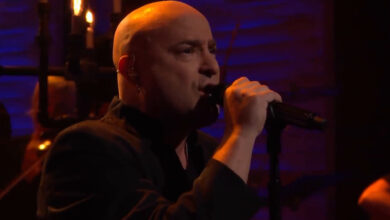
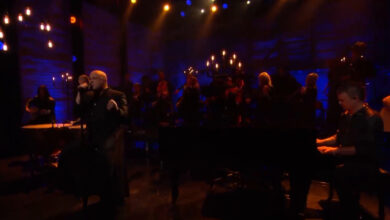
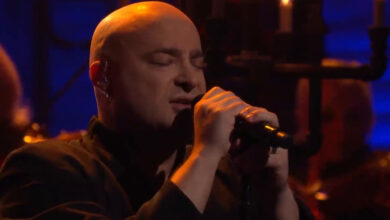
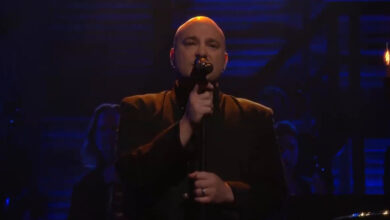
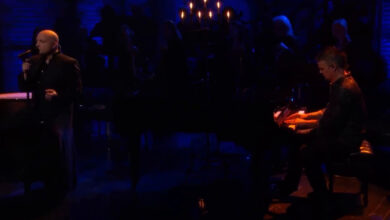
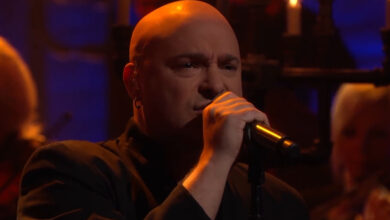
The March 28, 2016 broadcast preserves the space around the opening particularly well. Draiman is singing from a chair and using a sound close enough to feel conversational. The viewer can see when he looks up and when the sound becomes bigger. Those changes draw attention to the action of saying something, and they make it easier to hear the line as a thought. You can know the melody by heart and still find a new point of emphasis in what he does with it.
Which word carries the weight of a phrase can change which part of a lyric seems important. Draiman has a low sound available to give a line a plain, steady entrance. As that same line grows, he can let one vowel get a little rougher or longer than the rest. The word seems to acquire more force without losing its place inside the melody. Disturbed build an arrangement in which such a small change can count early and an enlarged version of it can count toward the end.
In the last verse, the intent starts to sound much more urgent. What can feel like an observation in an understated version becomes an insistence that somebody take the words seriously. The strings are providing pressure by then, and Draiman finds enough edge to keep the lyric on top of them. The point of the arrangement is easier to hear if you’ve followed the words to this stage. It makes a part of the story arrive with a new kind of force.
Fearnley’s purchase is a concrete reaction to an otherwise difficult thing to measure. A person can decide a song means something new while having no reason to describe what changed. The Conan clip gives us a useful place to look. You can go from a low introductory line through the later vocal changes and hear how often Draiman chooses to give the words a distinct entrance. The performance starts with a feeling you might have overlooked and takes the time to turn it into a recognizable point of view.
Watch the performance
Try the comparison using one line you already recognize. In the Simon & Garfunkel performance, work out whether you follow the tune, the balance between the two singers or the words themselves. Then hear the corresponding line on Conan. Both recordings give you the words, and they put the listener’s attention in different places as they arrive. In Disturbed’s version the lower voice and the space between its phrases can make a familiar word stand apart from what you expected around it.
Disturbed’s own studio version is valuable for a third pass. The recorded arrangement makes it easy to hear exactly when instruments come forward and what happens to the shape of a phrase when they do. The Conan performance lets you watch the same person in the process of making the larger sound. There is a point near the end when the tension on his face gives the words a sense of purpose beyond what you can get from following the score or reading the lyrics on their own.
There’s also a reason a person who knows the lyrics can benefit from hearing a voice slow down their attention. First encounters tend to involve learning what a song is saying. Later, the sound of an old recording can be enough to produce a complete feeling of recognition. The Conan arrangement lets familiar things unfold in a different order of emphasis. The song is still available to the memory, and the words have a new chance to be noticed in the time that Draiman gives them.
The official endorsement from Paul Simon gives the moment another layer. His website praised the rendition shortly after the broadcast. That response is a reminder that the person who wrote the song can recognize something worth hearing in a very different delivery. It says plenty on its own. Listeners can make up their minds about which version has a stronger hold on them without turning that endorsement into a ranking Simon never had to offer.
The most revealing comparison may come when you stop trying to decide which recording wins. Pick a line that made you pay attention again and ask which element of the performance gave it room. It might be the piano leaving a gap, the way Draiman opens a vowel, or the extra weight behind the voice by the time he sings it. The cover works as a fresh experience because those small details are available to a listener who has already had the song for a long time.
Fearnley’s comment also captures the speed of that kind of recognition. It can take years for a particular recording to settle into the background of a person’s life, while a cover may need only a few phrases to get their full attention back. Draiman doesn’t have to explain the difference to anyone. He brings a new amount of space, breath and intensity to the words, and the audience can hear for itself where a familiar line begins to carry more weight.
Related videos
Disturbed’s official music video
Simon & Garfunkel live in Central Park