Why Some Fans Choose ‘The Sound of Silence’ on Conan Over the Music Video
Some listeners go back to Disturbed’s Conan performance of “The Sound of Silence” more often than they go back to the official music video. That preference makes sense as soon as the two versions begin to grow louder. The studio recording has a clear arrangement you can hear unfold in layers. On Conan, there is the added experience of seeing the singer commit to a particular sound while the rest of the band is making decisions around him. The last verse gives the comparison a specific place to start.
The music video is a strong version to compare because it presents the cover through a deliberately composed set of images. There is time for its atmosphere to develop outside the singer’s immediate movements. That can keep the story in the lyric alive across the quieter sections and give the crescendo a scene to belong to. The studio recording underneath it puts every instrument at a position and level that remain clear as the arrangement gets bigger. It’s easy to hear the relationship between the low melody and the layers around it.
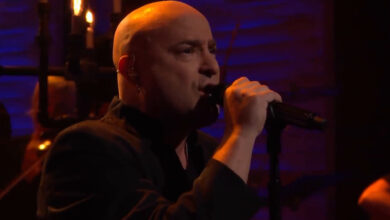
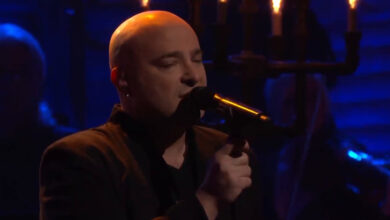
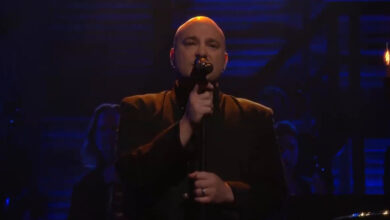
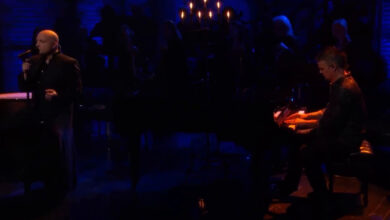
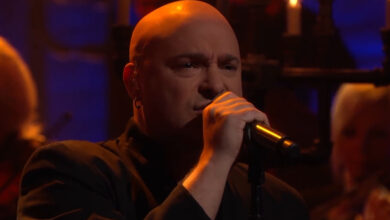
On Conan the picture has a different job. You can see Draiman’s mouth and jaw when a note starts to change, and then the frame can show the instruments taking up the increasing weight behind him. The decisions you hear have visible causes. A slightly longer consonant can read as an adjustment he’s making in the room. In both versions the recording has been shaped for an audience, and the television performance lets the audience recognize which physical gesture belongs to which sound.
The opening sets up a comparison you can hear without paying any attention to the images. Start both takes at an ordinary listening level and keep it there. Each begins with a low voice and an arrangement that gives it room. The amount of warmth that reaches you from the vocal can vary from line to line. Some of the differences become more obvious when you give yourself time to settle into the opening, before loudness makes it tempting to choose a winner immediately.
The stronger vocal in the final verse is the point fans often talk about. One listener on YouTube asked if anybody else thought the performance on Conan was actually better than the music video. The question is easy to test on a single transition. Compare where the vowel starts to pick up a rough edge and how long Draiman holds that character in the sound. As the two mixes fill with more instruments, that small difference can determine which performance feels more forceful to a particular person.
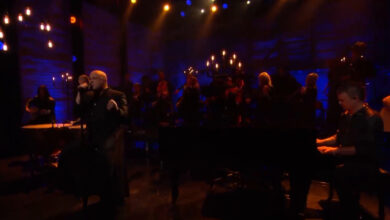
It also matters that the Conan clip has a visible audience and an audible end. The singer moves toward the large sound with people in the room, and they have to hear the buildup at the same pace that he performs it. The live version feels like a single stretch of time you can revisit. The music video offers the experience of a recording that can connect images and sounds at a pace that suits its own story. These are different reasons to care about the same arrangement.
Watch the performance
There’s an easy way to separate what you’re responding to. Play the studio track and the Conan performance without looking at the picture. The question becomes an audible one about singing, dynamics and instrumental balance. Then put the picture back and replay the same passage. You can see whether you were pulled toward something the camera gave you or something already present in the sound. Either way, the preference becomes more interesting once you can identify a small decision that caused it.
The string sound is particularly useful for this experiment. It can get larger over the space of a single vocal phrase, with the next section already preparing behind the current one. A well-mixed studio recording can give the details of that accumulation a lot of definition. On a television stage, a wider camera view can let you follow the scope of the change even while your ear is mostly on the vocal. The whole sound moves from something close into something that feels like it belongs to a room.
There is an older point of reference in Simon & Garfunkel’s Central Park performance. It has the familiar quality of two voices working together and brings out how much Disturbed built around a single lead. If you start there, you can hear where the covers keep their common melody and choose different methods of letting the words grow. The studio cover and the Conan rendition share far more with each other in arrangement. Their differences have to do with how the musicians fill that shape on a particular recording.
A useful clue lies just after a loud phrase. The studio take can give plenty of definition to the detail behind the end of the note. A live camera may stay close enough to show how Draiman releases the sound and gathers himself for the next line. The band also has to make that release register. It is an underappreciated part of the climax, and it helps decide whether a passage feels like one continuous performance or a series of big moments you could cut out and enjoy separately.
The cover was already a compelling arrangement when it appeared on Immortalized. Its late-night appearance in March 2016 brought the performance into a form viewers could share as a small, complete event. The contrast with the video is especially revealing now that both can be found instantly. If the Conan cut is the one you prefer, the most satisfying explanation may be a particular word, string entrance or vocal release. You can go directly back to it and hear how the preference got there.
Finish by playing the two endings at the same level, from enough bars back to hear how each arrives. Take note of when the movement from voice to orchestra feels inevitable, and whether a rougher or clearer line changes your sense of what the words mean. There’s a lot to hear in both. The Conan version gives the comparison an extra charge because the arrival of the sound and the sight of the musicians making it happen belong to the same few seconds.
Related videos
Disturbed’s official music video
Simon & Garfunkel live in Central Park