The Conan Camera Caught the Exact Scale of Disturbed’s ‘Sound of Silence’
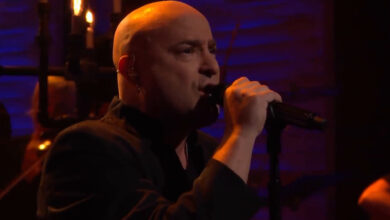
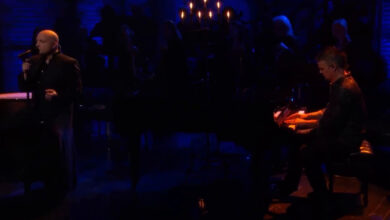
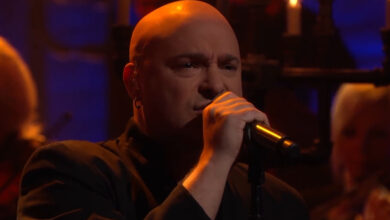
One viewer wondered how little the audience on Conan knew about the performance it was about to see. The broadcast gives people watching much later a way to inhabit something close to that expectation. David Draiman is sitting with a microphone, the stage is dark, and the opening of “The Sound of Silence” is small enough to fit easily in a tight shot. Then Disturbed ask the room and the people at home to adjust to a steadily widening sound. The cameras have to make that growth visible without getting ahead of it.
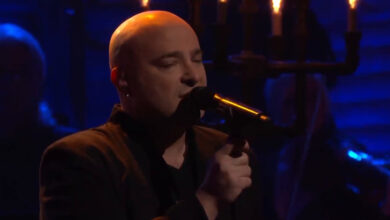
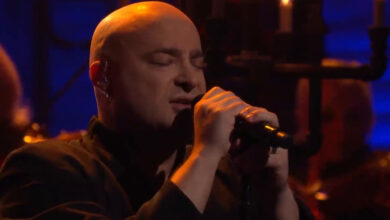
A tight shot at the beginning tells you where to pay attention. The lead vocal comes into a quiet arrangement and has time to make each line fully audible. Draiman’s face can tell you a great deal about the pressure of a word before the music has reached a full sound. Seeing him seated also makes the amount of movement in his upper body unusually clear. A small change in posture has room to register, and it gives viewers a visual reference they can carry into the later parts of the song.
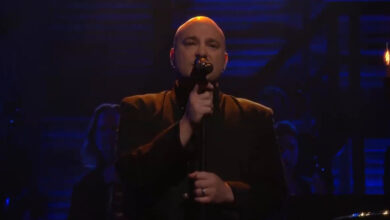
The stage looks different when you can see more of it. Light marks the space around the musicians, and the arrangement has a physical location you can start to put together. The string sound seems more substantial when you know where it is coming from. The piano has a different role at first, with more definition and more space around it. The cut from the singer to a wider view can make those different roles easier to hear without anybody having to describe them.
In a room, people can move their attention around by themselves. A broadcast has to choose when to give them a closer view and when to let a shared field of sound have the whole stage. Disturbed’s performance benefits from how much can happen in a close shot. The audience at home can read an expression or a hand, and it can also notice when the film finally makes more of the room available. That is part of the reason this clip has a feeling of scale that survives a phone screen.
A point to watch closely is the change in Draiman’s delivery as the louder sections approach. His face shows more effort, and the music keeps the words in a place where you can make them out. The orchestra is doing more by then without turning the voice into one color among many. The staging gives you a clear human reference as the layers accumulate. When the image widens, the sound has already made room for what the camera is about to show you.
The performance went out on March 28, 2016, which means the television audience had one chance to follow its progress as the episode aired. The isolated clip allows a person to do a different kind of watching. You can go back and see whether the room seems to get bigger first or the voice does. The answer might be different depending on whether you first followed the singer at the center or the space steadily filling in around him. That question can give the whole recording another pass.
Watch the performance
Try watching the first verse with the sound low enough to let the picture do most of the work. The film still makes the smallness of the opening quite clear. Then restore a comfortable listening level and replay it. Now you can hear how often the piano supplies a reference point to bring the voice back after a pause. The two tracks of information are easy to separate for a moment and satisfying to bring together as the arrangement gets big enough for a wide shot.
The official video for the studio recording carries its own visual story and can place a cut where the images make it meaningful. This television cut draws its meaning from the visible act of performance. You can see the person forming the sound, and the location of the instruments can become part of how you interpret the backing. The differences make the two recordings useful companions. The same opening melody can hold your attention in one version while the slow revelation of the stage becomes your focus in the other.
The oldest comparison below places Simon & Garfunkel outdoors in Central Park. A camera there has an entirely different room to explain. The size of the crowd gives familiar words a sense of occasion, and people can look toward two singers whose voices are already closely associated with the song. On Conan, the audience is close enough that a quiet voice starts at almost speaking scale before the arrangement brings the size of the stage into view. Each recording has a good reason to frame the same tune differently.
People in a late-night audience may arrive knowing who the musical guest is, or they may be there simply for the experience of watching a show made. That range of expectations is part of what the YouTube comment found interesting. The camera preserves an experience that can make sense to somebody who had no idea what to expect from Disturbed. The song starts with a face, a voice and a piano. It provides time for anyone arriving late to the band to understand the scale of what is following.
Notice when the camera lets you see the room again after the vocal reaches its strongest point. It gives the viewer a way to place their own reaction inside the performance. The arrangement has made a change that feels large, and the stage you saw earlier now feels like a place where that change could happen. The distance between those impressions comes from the music. The sequencing of the shots lets a person see where the difference began.
There’s something unusually effective about a popular clip that still works when you follow its smallest details. A hand, a breath and a quiet pause survive as well as the climax everybody talks about. Conan’s cameras kept those moments in proportion to the growing sound instead of leaving them behind when the room got loud. For somebody imagining themselves in the audience, those details make the performance feel close enough to have happened a few yards away.
Related videos
Disturbed’s official music video
Simon & Garfunkel live in Central Park