Two Los Angeles Stages Gave Steven Tyler and Run-DMC Two Ways Into “Walk This Way”
At the Rock & Roll Hall of Fame, Steven Tyler waited just long enough to let the audience recognize “Walk This Way,” then stopped the band. In November 2026 the appearance of Rev Run and DMC had a history before anybody stepped out of the wings. They had already shared another Los Angeles stage with Aerosmith earlier in the month. Seeing the two performances close together makes it easier to hear what a small difference in the setup can do to the same song.
On November 1, Run-DMC joined Aerosmith at the second California, Dream On concert at the Hollywood Bowl. The show grew out of a larger celebration of the band’s music, with guests appearing through the evening and Aerosmith playing their own material. Less than two weeks later, the Rock Hall ceremony at the Peacock Theater placed their shared song at the end of a different kind of event. The audience came with a new set of expectations, even though many of the cues that hold the song together were the same.
By the time “Walk This Way” arrived at Rock Hall, the familiar riff had a second job. It had to establish the song and set up a reason for Tyler to interrupt it. Straight away he had something people could follow. A few notes supplied a recognizable direction, the break took it away, and the space around the band suddenly seemed to be part of the arrangement. One audience could hear what was going to happen as it happened. The other hears the same opening start to behave like a question.
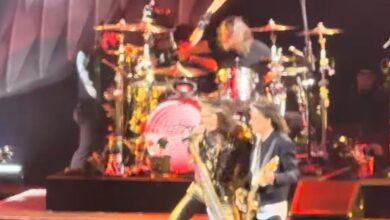
The Hollywood Bowl footage lets you see a reunion embedded in an evening that had room for a long run of Aerosmith songs. It is possible to hear the appearance of the rappers as part of the way that particular concert gathered people around the band. Rock Hall compresses the action. The larger event comes down to a cue everyone in the room can recognize, and the anticipation has to be established and paid off in a much shorter time.
A riff that has been around since 1975 has had years to acquire several meanings. People who encountered the song through Aerosmith have an immediate association with Perry and Tyler. For people who met it through the 1986 version, it can bring Rev Run and DMC to mind just as quickly. That familiarity gives Tyler a great deal of control at Rock Hall. He can stop early, before the words, because the listeners can supply enough of the missing music themselves.
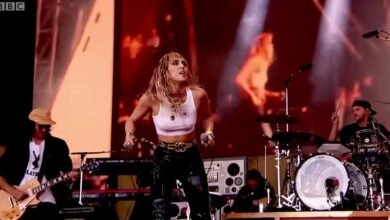
Watch the stage after the break and the result makes sense from the performers’ positions. As Run-DMC appear, the guitar remains an anchor and the space in front of the band becomes a place for the different voices to meet. That is where the familiar “felt like 1986” response comes from. It comes from a reunion the audience can follow beat by beat, and from a riff that serves both groups well.
Watch the performance
The comparison also makes the size and shape of the rooms matter. The Bowl recording sees the song from an outdoor venue, with some distance between the camera and the center of the stage. The Rock Hall footage offers a different sense of the audience’s attention when the opening stops. A pause can travel quite clearly through a room that was just preparing to sing. In the video, moments that might have seemed small elsewhere become easy to read.
The most recognizable parts of the arrangement change very little across those settings. What changes is how long each part is allowed to stand on its own. Give the guitar a few bars with a crowd expecting the whole number and a joke can be made out of the silence immediately afterward. Let the larger evening set the terms and the appearance can feel like one more connection between artists with long memories of the same song.
Drums give the performances another point of comparison. Chad Smith keeps the Rock Hall finale moving after the staged interruption. The Hollywood Bowl recording gives its own view of how the band found the groove in concert. Focus on the beat when the vocal lines trade places. You can hear how each stage gives the singers freedom in slightly different ways while keeping the recognizable shape of the number.
Forty years after the joint record, a connection like this can start to seem inevitable when it is summarized in a few words. The two shows put some of the uncertainty back into it. When Tyler stops the riff, the song has to earn the next few seconds of attention. When the groups finally arrive together, the familiar material shows how much room it still has for a different entrance.
The interval between the two performances also gives the audience’s recognition a useful scale. It was short enough for someone who had seen the Hollywood Bowl show to know what both groups sounded like together already. For someone who caught only the Rock Hall recording, the same November could begin with the silence that Tyler made in the opening. The two recordings let those listeners compare notes. They both get the familiar riff, yet they arrive at the reunion with slightly different expectations about who will be holding the next line.
Two more versions
The November 1 Hollywood Bowl performance lets you see the reunion inside an Aerosmith concert set, with the guitar and the group onstage carrying the context of a full evening. Watch how it reaches the shared vocal sections. Put that performance back to back with the ceremony and the difference in how the two nights build anticipation becomes easier to hear.
The original video makes the encounter clear through the famous wall between the acts. The 1986 cut has its own carefully timed payoff, with the guitar holding the listener’s attention before the scene opens up. Both 2026 stages had that shared memory available, and each found a different way to make it register in front of a live audience.