Miley Cyrus’s “Black Dog” Worked Because Her Band Knew Exactly When to Answer
When Miley Cyrus sings the first lines of “Black Dog” at Glastonbury, the words are in front of almost everything. The band has a very particular reason to leave that space for her. Led Zeppelin built the song around a voice that opens up a gap and an instrumental riff that rushes in to fill it. A strong singer can make the first half of that exchange sound good immediately. The second half needs a band that knows exactly when the gap is over.
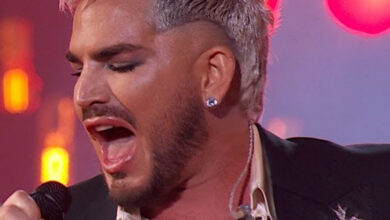
The 2019 festival performance makes that relationship visible. Cyrus is the person most viewers notice when the camera opens on the front of the stage. She has a rough edge in the voice and uses it to make the little stretches without much backing feel like distinct events. When the guitar and bass come back up, you can hear why the space around the vocal matters. The riff takes up the room it has been left, then gets out of the way again.
The effect is different from simply hearing a singer over a well-played rock arrangement. Many familiar live covers keep the backing going so the lead has something to lean on throughout a verse. “Black Dog” asks the players to make a series of small decisions about absence. Every time the vocal comes by itself, the instruments have to remain ready to rejoin it without making the entrance seem tentative. The entire crowd is free to hear any hesitation.
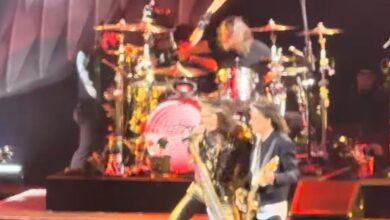
Follow the bass on a replay of the Glastonbury performance. The guitar has the recognizable edge that catches the ear at once, but the lower part helps make the return feel complete. Where the musicians line up, even a short pass through the riff can feel as if it has pulled the field forward. When they drop away, that shared weight helps the gap sound more dramatic than a reduction in volume would on its own.
Cyrus has a way of making the re-entry seem like something the band has had to answer. She can let a line rise or give the end of a word a rougher finish. The players give her enough room to do that and still arrive together when their part comes around. The good feeling in the cover comes partly from how free those moves seem and how consistently the band supplies a place for them to land.
That is one reason the backing musicians stand out in reactions to the clip. They have an important sound even while they are silent. Somebody following the song can hear where they are about to come back, and the performance gets a share of its energy from that expectation. The camera can stay with Cyrus for a vocal phrase. The moment the arrangement opens again, the ear has a reason to follow the other people on the stage.
Watch the performance
Led Zeppelin’s own live version has the same structural advantage. Robert Plant could use the unaccompanied stretches to change the shape of a line, and Jimmy Page, John Paul Jones and John Bonham had to put the riff back into the right space. The exchanges gave the band a way to sound like several musical personalities in a short amount of time. The Glastonbury cover preserves that opportunity. Cyrus is immediately recognizable while her band remains free to make its own sound around her.
It is interesting to hear how little the melody has to change for that to happen. The contour of the tune is clear and the next answering section is rarely far off. Cyrus can move a syllable closer to the beat or make a vowel sound more ragged without asking the band to change the whole design of the song. The give and take becomes especially easy to hear when you follow the same place in the Zeppelin recording and then come back to Glastonbury.
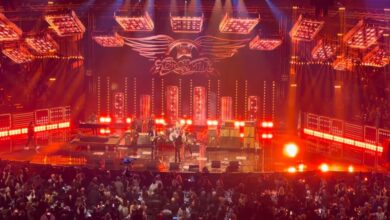
The outdoor setting helps the physical part of the music come through. The field is big enough that a single entrance can feel like it has reached quite a distance. That makes the separation between voice and band useful for a live audience. The shape stays readable even for somebody a long way from the front. A short call from the singer has a different presence from the amplified answer, and the contrast gives the performance a sense of direction.
There are plenty of reasons to watch the singer when the riff is moving. Her reaction to the band is often another useful cue to its timing. Cyrus can make a gesture or turn a little as she prepares for her next vocal, and a listener can hear how the guitars continue to carry the song through that moment. The band keeps the energy in motion until it is time to return the focus to the words.
A version of “Black Dog” can make a strong impression with its first line. This one has enough going on to keep rewarding a replay after the opening surprise is familiar. It helps to follow one instrumental part through a few of the gaps, then hear the same passage again with the voice in the foreground. The direction of the exchange becomes clear. Much of the power that seems to come from one person on a first watch belongs to the way a whole band keeps finding the same beat.
Two more versions
Cyrus’s iHeartRadio performance of “Black Dog” gives the riff another setting and a different view of the musicians waiting for their entrances. Hear how the instrumental answer arrives after one of her open lines. The exchange is recognizable from Glastonbury, with a room and a camera angle that put the rhythm section closer to the foreground.
Led Zeppelin’s Madison Square Garden recording lets you hear the original band prepare the return behind Robert Plant. Follow the lower sound for a few bars, then go back to Glastonbury. The comparison brings out how much of the song’s personality is carried by the part that answers the voice.