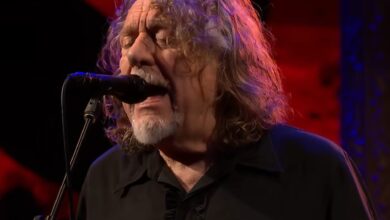
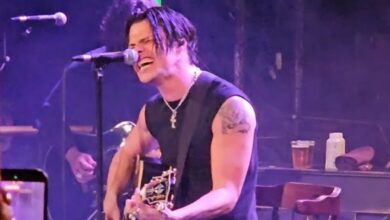
Creed’s Live Performance At The Houston Rodeo March 11, 2026
There was always something slightly surreal about the idea of Creed walking into RodeoHouston, a place more commonly associated with country royalty, crossover pop, and artists who know how to fit their sound into the broad family spectacle of NRG Stadium. On March 11, 2026, that surreal idea turned into something much bigger: a full-scale collision between millennial hard-rock nostalgia and one of the most tradition-heavy entertainment stages in America. Creed’s debut at the Houston Livestock Show and Rodeo was not treated like a novelty booking for long. Once the lights dropped and the band tore into the opening stretch of the set, the conversation changed from curiosity to force. This was not Creed politely borrowing the rodeo stage for a night. It felt more like Creed stormed it, planted a flag, and reminded a massive Texas crowd that post-grunge, when delivered with conviction, can still hit like arena thunder. The night quickly picked up a reputation online as one of the most unexpectedly heavy and emotionally charged performances the event has hosted in years.
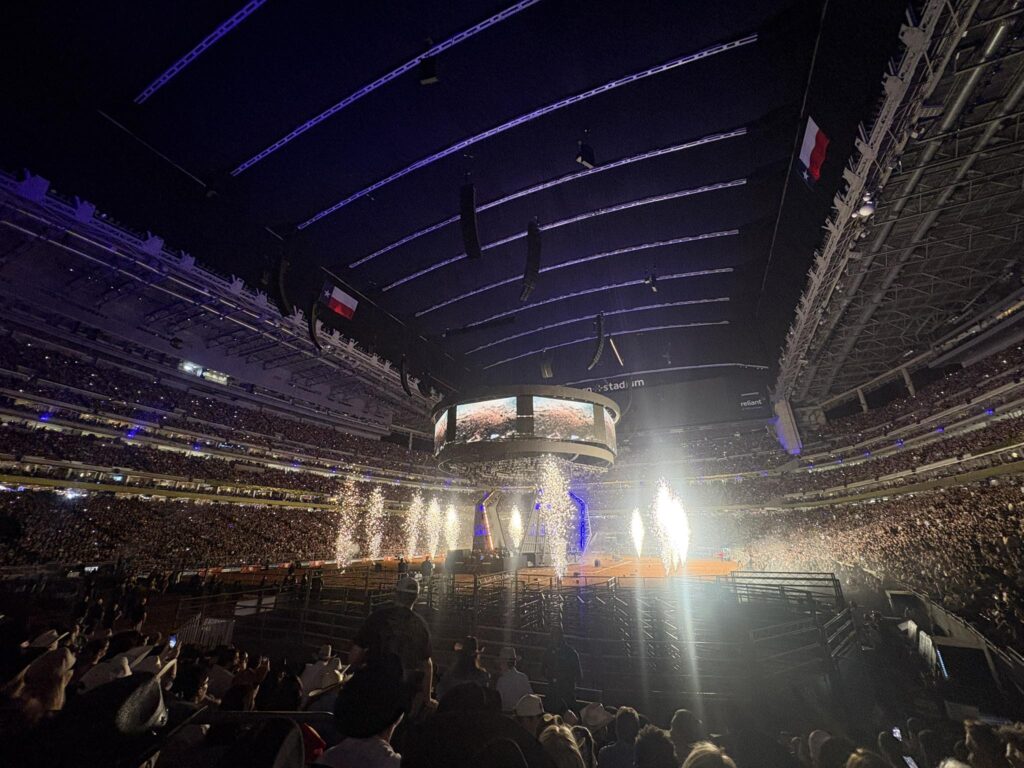
Part of what made the show land so hard was scale. Reports from Houston placed the crowd at 70,007, a massive turnout that gave Creed a setting worthy of the band’s oversized choruses and granite-thick riffs. RodeoHouston’s format is its own strange beast, with artists expected to connect quickly, hold a crowd that ranges from diehards to casual attendees, and make the rotating star stage feel intimate inside a cavernous building. Creed understood the assignment almost immediately. Their set ran a little over an hour, beginning shortly after 9:15 p.m. at NRG Stadium, and they used that window with the efficiency of a band that knows its catalog can still dominate a room. For a group that spent years being mocked for earnestness and excess, there was something almost vindicating about seeing those same qualities become assets in a stadium this large. What once drew eye-rolls now read as commitment, and in a room packed with tens of thousands of voices, commitment won.
The opening mattered, and Creed chose violence. According to set reports and reviews, the band launched the show with “Bullets,” one of the hardest-charging songs in their catalog, before continuing into a run that included “Torn,” “Are You Ready?” and “My Own Prison.” That opening sequence told the audience exactly what kind of night this would be. Rather than easing into the set with one of the more universally familiar ballads, Creed came out determined to sound aggressive, tightly wound, and unapologetically loud. In a rodeo environment, where artists sometimes lean toward accessibility first, that decision gave the performance its identity. It framed the show less as a nostalgia package and more as a live statement. The guitars were distorted and muscular, the rhythm section felt heavy enough to rattle the upper reaches of the stadium, and Scott Stapp carried himself like a man who knew the crowd had come not just to reminisce, but to feel something huge. That decision helped explain why so many reactions afterward focused on weight, force, and sheer impact.
Another reason the performance stood out was that Creed did not simply rely on volume. They leaned into presentation, and the reviews make clear that pyro and fireworks played a major role in shaping the visual drama. More than half of the 10-song set was reportedly punctuated by bursts of fire and spectacle, which is exactly the sort of production choice that can push a solid stadium concert into something more memorable. At the rodeo, where theatricality is often part of the bargain, Creed found a way to make their flavor of spectacle feel different. Their visuals were not slick pop polish or country-pageant gloss. They felt blunt, elemental, and combustion-driven, like an extension of the music itself. Fire answered riffs. Explosions accented choruses. The stage picture gave weight to songs that were already built for big emotional release. Creed’s music has always lived in that space between bruising and uplifting, and the production amplified both sides at once. The result was a show that felt appropriately oversized without ever seeming artificial.
Scott Stapp’s presence was one of the most fascinating parts of the night because it pushed the performance beyond standard hard-rock muscle. Multiple reports described him speaking to the audience with the cadence of a revival preacher or motivational speaker, bringing themes of shame, self-worth, faith, perseverance, and destiny into the middle of a rock set. That kind of approach could have gone wrong in less confident hands, or with a less receptive crowd. Instead, in Houston, it seems to have connected. Stapp has always been a frontman who works in grand emotional gestures, and on this stage that instinct became a feature rather than a liability. He did not try to underplay the band’s identity or sand down the spiritual undertones that have long run through Creed’s music. He leaned into them. In a rodeo setting full of giant symbolism and communal energy, that gave the show a strange but effective hybrid character: part rock concert, part public testimony, part shared catharsis under stadium lights.
That emotional side of the show is a big part of why the heaviest moments hit even harder. Creed has never been “heavy” in the pure metal sense, and yet the Houston performance seems to have triggered that exact kind of language from listeners because heaviness here was not only about tuning or tempo. It was about emotional density, about the feeling of thousands of people hurling their voices into songs that were already oversized with longing, redemption, struggle, and release. “My Own Prison” in particular was introduced with a sermon-like reflection, which gave the song added dramatic weight before the band drove into it. When music built on guilt, searching, and escape is played in a stadium to a crowd this large, the impact becomes physical. The heaviness is communal. It sits in the chest. Creed’s Houston set apparently turned that emotional mass into a live weapon, which is why fans describing it as the heaviest thing the rodeo had ever seen does not read like exaggeration so much as live-report shorthand for a very particular kind of intensity.
Then there was the contrast factor, which cannot be ignored. RodeoHouston is built on a broad cultural mix, but Creed’s presence still carried a slight sense of disruption, and that helped the performance feel eventful before a note was played. Their debut at the rodeo was not just another stop on a routine schedule. It was the first time the band had stepped into that tradition-heavy institution, bringing with them a catalog tied to late-1990s and early-2000s radio dominance, years of public backlash, separation, reunion, and a recent wave of younger fans rediscovering them through internet culture and nostalgia. That long arc gave the concert a built-in storyline. Creed were not arriving as the cool new thing. They were arriving as a band that had been dismissed, memed, defended, revived, and re-embraced. Houston gave them a giant stage on which to turn all of that baggage into momentum. There is something especially satisfying, from a rock-history perspective, about seeing a band once ridiculed for being too earnest now winning over a stadium because they refused to become cynical.
By the time the set moved into its late run of “With Arms Wide Open,” “Higher,” “One Last Breath,” and “My Sacrifice,” the structure of the night had become clear. Creed had front-loaded the heaviness, then used the second half to convert that brute force into lift, familiarity, and massive singalong release. Reviews singled out “Higher” as the night’s best moment, which makes perfect sense. That song was practically built to test whether a live crowd can become one living organism for four minutes. In Houston, it seems to have done exactly that. The earlier aggression gave “Higher” an even greater sense of arrival, and the crowd’s response reportedly validated it as the peak of the evening. Meanwhile, the phone-light moment during “With Arms Wide Open” turned into one of the night’s most striking visual scenes, a sea of lights filling the arena while Stapp reframed the gesture as something about memory, growth, loss, and what people pass on. Whatever one thinks of Creed in the abstract, that is stadium craft.
Watching fan-shot footage from the Houston performance helps explain why the live reaction became so strong so quickly. Even through the imperfections that always come with audience video, the essentials are obvious: the songs are huge, the crowd is locked in, and the stage production gives the whole thing a scale that comes across even on a phone recording. That matters because some performances are praised more in print than they actually feel on replay. This one appears to survive the translation. The audience perspective emphasizes the communal part of the experience, the thing that professional reviews can describe but never fully reproduce. You hear how the choruses travel. You see how the crowd responds to each familiar turn. You understand why a band whose songs were once inseparable from radio and MTV culture still works in a giant room. Most of all, the footage shows that Creed did not win Houston through irony or retro novelty. They won it by sounding like they meant every note.
The official “Higher” video is useful as a comparison point because it reveals how much the Houston version depends on scale and shared emotion rather than simple song recognition. The studio-era version is iconic for a reason. It distills Creed’s late-1990s identity into one towering single: a song of upward push, spiritual hunger, and arena-sized release wrapped in one of the era’s most immediately recognizable riffs. But in Houston, that song apparently moved from artifact to event. The rodeo context changed its meaning. What began as a radio giant became a stadium declaration inside an institution that is not automatically built for post-grunge catharsis. That is part of the achievement here. Creed did not just replay the hit. They re-situated it in a place where it could feel newly improbable and newly powerful at the same time. A familiar song can become fresh when the surrounding setting changes enough, and Houston gave “Higher” exactly that kind of second life.
There is also a Texas angle that adds a nice layer to the story. Coverage ahead of the show noted Creed’s broader Houston-area connection through their 2009 concert film recorded at the Cynthia Woods Mitchell Pavilion in The Woodlands. That history does not make the rodeo appearance inevitable, but it does make it feel less random. Creed have a preexisting relationship with large Texas crowds, and there is something fitting about the band returning to the area in a different phase of their story, older, steadier, and playing to a crowd that reportedly became the largest of their headlining career. That kind of full-circle framing often feels forced in music journalism, but here it actually works. The Houston rodeo show carried the energy of a debut and a homecoming at the same time. It was new because the venue and event were new for the band, yet familiar because Creed’s big-room instincts have long found a willing audience in this part of the country.
A good comparison is recent Creed footage from the revived touring era, because it shows that the Houston show was not just a one-off fluke generated by a novelty setting. The band has plainly been reconnecting with live crowds in a major way over the past couple of years, and the more recent fan-shot performances show the same basic ingredients: Tremonti’s thick, authoritative guitar work, Stapp’s measured but commanding delivery, and an audience that knows these songs better than anyone used to admit. What Houston added was concentration. The rodeo condensed Creed’s strengths into a shorter, sharper package, eliminating filler and leaving only the songs most likely to flatten a giant audience. In that sense, the March 11 show may have benefited from format. Instead of a longer arena set with room for ebb and flow, the band had a focused hour to make maximum impact. That discipline helped make the performance feel extra heavy, because almost every section had a purpose and a payoff.
Another useful parallel is Disturbed’s famous “The Sound of Silence” performance on Conan, which became one of those rare live clips that escapes its original context and starts circulating as a standalone cultural moment. The sonic profile is obviously different from Creed at the rodeo, but the mechanism is similar. In both cases, a band associated with a certain type of heavy-rock identity stepped into a setting where expectations could have boxed them in, then used total conviction to overwhelm the room. Disturbed did it with restraint and dramatic control. Creed did it with stadium-scale uplift, riffs, and the unapologetic grandeur of songs built to be yelled back by tens of thousands. The comparison helps clarify why Houston mattered. Great live rock performances often become memorable when they create surprise without sacrificing identity. Creed did not soften themselves to suit the rodeo. They bent the rodeo atmosphere toward themselves, and that reversal is exactly what makes people remember a night as historic.
If there is one musician whose presence subtly hovers over any discussion of Creed’s live power, it is Mark Tremonti. Houston seems to have benefited enormously from the fact that his playing has always given the band a harder edge than many of their critics wanted to admit. Compare that rodeo set to other Tremonti-associated live moments, including Alter Bridge’s great arena performances, and the common thread becomes obvious: he knows how to make large spaces feel even larger. He writes and plays riffs that arrive with architecture. They build, they frame, they support melody without becoming mere backing material. At the rodeo, that mattered because the environment could easily have swallowed a less muscular guitar approach. Instead, the band sounded structurally solid. The songs did not blur into the room. They occupied it. That kind of command is one reason Houston felt heavier than a standard nostalgia reunion. The musicianship underneath the singalong hooks is still powerful enough to dominate a giant live setting.
By the end of the night, the setlist itself looked almost like a blueprint for how to win over a mixed mega-crowd. It started with impact, worked through tension and identity, then detonated into the massive closers everybody came to hear. “Bullets,” “Torn,” “Are You Ready?,” “My Own Prison,” “What If,” “One,” “With Arms Wide Open,” “Higher,” “One Last Breath,” and “My Sacrifice” is not just a list of songs. In the rodeo format, it becomes a narrative arc from confrontation to release. The crowd reportedly sang throughout, and that is important because communal singing is one of the surest measurements of whether a performance actually crossed over from fan service to shared event. Creed did not merely fill their time slot. They created one of those nights where an audience seems to realize, in real time, that the show is going to become part of the event’s lasting lore. For a first rodeo appearance, that is about as emphatic as it gets.
The larger significance of the concert is that it further confirms a change in Creed’s cultural position. For years, they were one of the easiest bands in rock to caricature. Yet age, distance, and the brutal filtering effect of time have a way of clarifying what really works. These songs survived. Their choruses survived. Their emotional directness survived. Their ability to fill large spaces with a weird mix of heaviness, sincerity, and release survived. Houston did not erase the old jokes, but it made them look smaller than the actual live reality. A sold-out crowd of 70,007 responding this strongly to Creed at RodeoHouston says something broader about rock memory in the 2020s. It says that once the internet finishes turning a band into a punchline, it can also bring them back around as a rediscovered giant. That arc is not guaranteed, but Creed are now living it in public.
What ultimately made the March 11, 2026 performance feel special was not only that it was loud, heavy, or dramatically staged. It was that the night fused several kinds of force into one. There was musical force in the opening run. There was visual force in the pyro. There was emotional force in the crowd-wide participation and in Stapp’s between-song rhetoric. There was historical force in the setting, with a band long treated as a relic suddenly sounding fully alive inside one of the country’s biggest annual entertainment institutions. When fans say it was the heaviest thing the rodeo has ever seen, they are not just talking about decibels. They are talking about mass, conviction, and presence. Creed walked into a venue built for spectacle and somehow made their very specific brand of earnest, riff-driven arena rock feel like the biggest thing in the building. That is not easy to do. On that Wednesday night in Houston, they did it anyway.