AC/DC’s “Shoot to Thrill” Live in Buenos Aires 23 March 2026 Crowned One of Their Most Explosive Performances in Recent Years
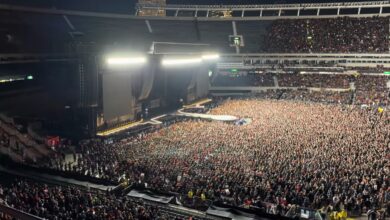
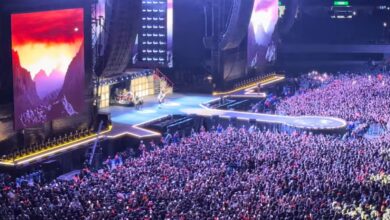
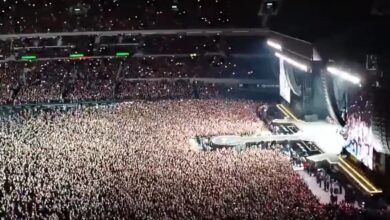
During AC/DC’s blistering performance of “Shoot to Thrill” on March 23, 2026, the band once again turned Buenos Aires into one of the loudest places on earth. The show marked a major moment in their Power Up era, with a crowd pushing toward 80,000 and an atmosphere that felt closer to a football final than a rock concert. From hours before the gates opened, the city was already vibrating with anticipation, as fans gathered, sang, and built a sense of unity that would later explode inside the stadium.
The significance of this setting runs deep in the band’s history. Buenos Aires has long been one of AC/DC’s most passionate strongholds, a place where every chorus is shouted louder, every riff feels heavier, and every moment becomes larger than life. That legacy hung in the air as the lights dropped, creating a sense that this wouldn’t just be another performance, but a continuation of something that had been building for decades.
“Shoot to Thrill,” originally released in 1980, has always carried a certain danger in its DNA. It’s a song built on tension and release, driven by a groove that feels both controlled and explosive. In a live setting, that balance becomes even more unpredictable, and on this night, the band leaned into that unpredictability, stretching the song into something far more aggressive than its studio version.
When the opening riff hit, it sliced through the stadium with a sharp, unmistakable edge. Angus Young delivered it with absolute precision, but there was also a looseness in his playing that made it feel alive. Each note seemed to land with purpose, yet nothing felt mechanical. It was the sound of a musician fully in control, but still willing to let the moment guide him.
Brian Johnson’s entrance brought an immediate surge of energy. His voice, still carrying that signature rasp, cut through the massive wall of sound with surprising clarity. Rather than holding back, he pushed into the grit, turning each line into something raw and direct. It gave the performance a sense of urgency, as if every lyric needed to be shouted, not just sung.
The rhythm section provided the backbone that allowed everything else to hit harder. The drums were relentless, locking into a groove that never wavered, while the bass added a thick, grounding presence underneath the guitars. Together, they created a foundation that kept the performance tight, even as the energy around it threatened to spill over.
The crowd quickly became part of the performance itself. From the first chorus, tens of thousands of voices rose together, turning the song into a massive, unified chant. That interaction fed back into the band, pushing them to extend moments, emphasize transitions, and ride the wave of sound coming from the stands.
As the song progressed, Angus Young stepped forward for the solo, and the intensity shifted again. He extended the section slightly, adding variations that made it feel unique to that night. His movements across the stage mirrored the unpredictability of the guitar lines, creating a visual and sonic focal point that held the entire stadium’s attention.
The fan-shot footage captures the raw scale of the moment in a way that polished recordings rarely can. The shaking camera, the distorted audio, and the constant movement all reflect the reality of being inside a crowd that large and that engaged. It feels chaotic, but in a way that perfectly matches the energy of the performance.
Hearing the studio version alongside a performance like this highlights just how much the song evolves on stage. The original recording is tight and controlled, built with precision, while the live version breathes and expands, shaped by the environment and the crowd’s reaction.
Looking back at earlier performances in the same city, it becomes clear that Buenos Aires consistently brings out something different in the band. There is a level of intensity and connection that seems to elevate even the most familiar songs into something new and unpredictable.
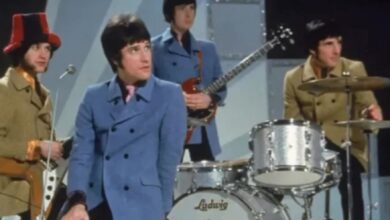
Comparisons to other live eras of the band show just how consistent AC/DC has remained over time. While stages have grown larger and production has become more elaborate, the core of their sound and performance style has stayed remarkably unchanged.
What ultimately sets this performance apart is its authenticity. There is no sense of routine or repetition, despite the song being played countless times over the years. Instead, it feels immediate, driven by the energy of the moment rather than the structure of the setlist.
By the final chorus, the energy had reached its peak. The crowd roared back every word with a force that seemed to shake the stadium itself, and the band responded by pushing even harder, refusing to let the moment fade.
In the broader context of their career, this performance stands as another reminder of AC/DC’s enduring power. Decades after their rise, they continue to command massive stages without relying on reinvention, instead doubling down on what they do best.
The night didn’t feel like a nostalgia act or a look back at past success. It felt current, alive, and fully present. That is what makes performances like this stand out—not just the scale, but the sense that the band is still fully engaged in what they are doing.
Long after the final note faded, the energy of the performance lingered. It wasn’t just another show added to a tour schedule—it was a moment that reinforced why AC/DC remains one of the most powerful live acts in rock history.