Ann Wilson Sang From a Wheelchair as Heart Turned “Straight On” Into Bowie’s “Let’s Dance”
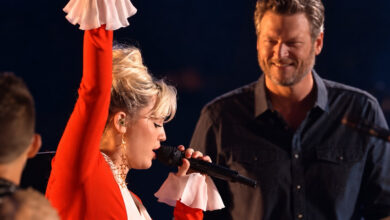
Ann Wilson is framed by red curtains and pink stage light when Heart settles into “Straight On” in Los Angeles. She’s singing from a wheelchair, leaning into the microphone as the bass and drums establish the song’s steady pulse. The camera stays close long enough to catch the concentration in her face and the small movements she makes with the beat. Her delivery is so assured that when David Bowie’s “Let’s Dance” arrives a few minutes later, it feels like the band has been heading there all along.
The chair was a practical decision. Wilson explained on her podcast that she had fallen shortly before the Royal Flush tour and fractured her elbow. Singing seated let her concentrate on her voice while her arm healed. Heart had already postponed shows during her cancer treatment, so the sight of her returning to the stage carried its own weight. The details of that return help explain why a close-up from this performance can be so striking. The full recording gives you another reason to keep watching. There is a lot of thought in the way the band plays these two songs together.
“Straight On” has always made room for the singer to do something with the beat. Ann and Nancy Wilson wrote it with Sue Ennis, and it appeared on Heart’s Dog & Butterfly. The studio version has an easy, springy movement that carries through even as the chorus grows. In Los Angeles, that movement is there in the space between Ann’s lines. She gives the ends of phrases a little time to settle, and the rhythm section keeps moving underneath them. The song’s confidence comes through in how comfortably she can let those spaces stand.
Behind her, Nancy and the rest of the band keep the guitar parts close to the rhythm. Short accents answer the vocal. They land, clear the way for Ann’s next line, and then pick the conversation back up. As the chorus opens out, that exchange remains audible. It lets the track grow without losing the sense that there’s a small group of players reacting to one another in real time. The guitars add size to the sound while the bass gives it someplace to go.
That balance is the reason Bowie’s song fits. Bowie and Nile Rodgers built “Let’s Dance” around the physical pull of a dance rhythm, something “Straight On” already brings to this stage. The hooks come from different records and different eras, but the band can carry the audience from one to the next on the strength of that shared pulse. You can follow the change through the instruments before the vocal makes it unmistakable. Heart leaves the groove in place long enough for the new song to announce itself.
Ann changes her phrasing when she gets to Bowie. There’s a little more room around the words, and the invitation at the center of the song sounds especially direct in her voice. Then the band brings the sound back up around her. The camera keeps pulling your attention to the microphone, where you can see how much of the effect comes from the timing of a breath or the end of a line. Catch the last stretch of “Straight On” and stay through the changeover. That’s where you can hear the whole band make the idea work.
Watch the performance
How Heart makes the transition land
“Straight On” gives Ann a line she can push forward with a little bite. Bowie’s melody gives her open space to hold a syllable and let the band fill in around it. The combination makes the difference between those two ways of singing easy to hear. One moment she’s keeping close company with the rhythm section, and a few lines later she’s stretching across it. If you only know the studio recordings, the surprise is how easily a single singer can make that change of feel sound conversational.
The clip also rewards a second pass with your attention on the bass and drums. They keep the same sense of forward motion through the point where a listener might expect applause or a pause. A medley can ask the audience to make a quick mental jump from one song to another. Here there’s enough continuity in the playing that you can stay with the groove while you recognize the new melody. It takes some restraint for a band to leave that much of a transition to the rhythm, especially in an arena.
There’s a human detail in the Los Angeles footage worth coming back to. Ann often has very little room to move within the frame, so the alignment between her voice and the instruments is especially apparent. You can see her give the microphone a little more space, then hear the band catch the end of the phrase. The arrangement depends on that kind of listening. It’s one reason the performance holds up as a piece of music long after the initial impression of seeing her under those pink lights.
Two more versions
The Phoenix recording drops you into the medley about 22 minutes into the set. The wider concert view makes it easier to follow the players behind Ann through the switch to Bowie. Focus on the bass while the guitars change what they’re doing around it. The Los Angeles close-up makes the vocal timing easy to catch, and this angle gives you a better sense of the group effort that carries her into the next song.
In Vancouver, the concert recording marks the beginning of “Straight On” and the move into “Let’s Dance” as separate chapters, so you can jump between those points and hear how the band connects them. Start with the first chapter and give the opening groove time to sink in. By the time the Bowie melody surfaces, you can hear how much of what the band established in the first song is still underneath it. That familiarity is a big part of why the switch feels so easy in Los Angeles, too.