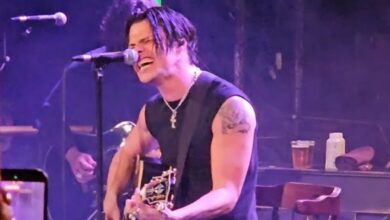
Bryan Adams, Nancy Wilson, Simon Kirke & Joe Perry Perform “Can’t Get Enough” at Rock Hall 2025 Induction
The night Bad Company finally took their place in the Rock & Roll Hall of Fame didn’t feel like a simple victory lap. It felt more like a reckoning—equal parts celebration, survival, and reflection. On November 8, 2025, inside Los Angeles’ Peacock Theater, the atmosphere carried a rare kind of electricity, the kind that only appears when a band’s legacy has grown far larger than any single moment, and when the people onstage are holding decades of history in their hands.
For longtime fans, the emotions were already layered before a single note rang out. Bad Company’s story in 2025 wasn’t only about recognition at last; it was also about loss. Guitarist Mick Ralphs, whose riffs shaped the band’s unmistakable identity, had passed away earlier that year after long health struggles. Bassist Boz Burrell had been gone since 2006. Even Paul Rodgers, the iconic voice at the heart of the band, was absent from the stage.
Rodgers’ absence wasn’t framed with drama or mystery—it was addressed honestly. Health concerns kept him from attending, not because he couldn’t sing, but because of the physical and emotional strain surrounding the event. That context instantly changed how the tribute felt. This wasn’t a flashy reunion or a nostalgia showcase. It became an act of stewardship, with other musicians stepping in to protect and honor a catalog that still hits with raw force.
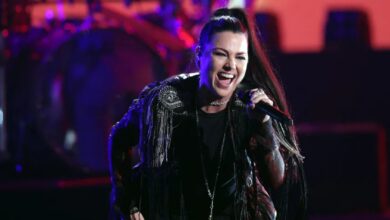
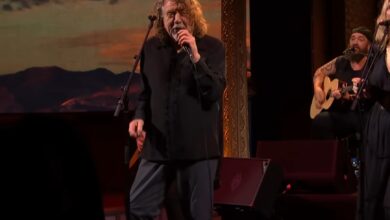
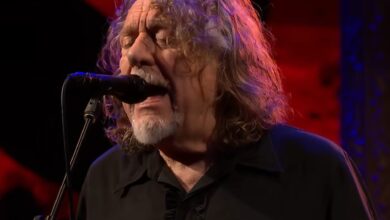
When the lineup for “Can’t Get Enough” was revealed—Bryan Adams, Nancy Wilson, Simon Kirke, and Joe Perry—it felt intentional rather than random. Each artist brought a distinct rock identity, yet none of them approached the song as impersonators. This was about honoring the spirit of Bad Company, not recreating it note-for-note. “Can’t Get Enough” is a song that demands confidence, groove, and instant commitment, and the lineup was built to deliver exactly that.
The structure of the tribute mattered just as much as the names involved. The segment reportedly began with “Feel Like Makin’ Love,” before transitioning into “Can’t Get Enough,” with Bryan Adams taking over lead vocals. That shift turned the moment into an escalation rather than a continuation. The first song set the tone; the second kicked the door open. It was the jolt of adrenaline the room needed.
Simon Kirke, the only founding member present, anchored everything from behind the drum kit. His playing was steady, grounded, and unshowy—exactly what the song requires. Later in the evening, when it came time to accept the honor, that same steadiness became emotional weight. Kirke spoke about his bandmates, doing his best to hold composure while carrying the memory of those who weren’t there to share the moment.
One detail that gave the performance its edge was how little rehearsal reportedly went into it. Kirke himself has noted that “Can’t Get Enough” was played with minimal preparation, which somehow made it feel even more authentic. That lack of over-polish suited the song perfectly. Bad Company was never about perfection; it was about feel, chemistry, and confidence, and the performance reflected that spirit.
Joe Perry’s role carried particular symbolism. Mick Ralphs’ guitar work is inseparable from Bad Company’s sound, and stepping into that space is no small task. Perry didn’t attempt imitation. Instead, he delivered the riff with authority and respect, understanding that the goal wasn’t replacement, but continuity. The riff didn’t belong to any one guitarist that night—it belonged to the room.
Nancy Wilson added a layer of control and texture that elevated the arrangement without softening it. Her presence wasn’t about flash; it was about precision and feel. Wilson has always been a master of serving the song first, and in this setting, that instinct mattered. She locked into the groove, reinforced the rhythm, and gave the performance balance.
Bryan Adams taking the lead vocal felt like a natural choice. His voice is built for straight-ahead rock—clear, driving, and emotionally direct. “Can’t Get Enough” doesn’t require vocal theatrics; it demands conviction. Adams delivered that with ease, pushing the song forward and giving it the sense of momentum that made the performance feel alive rather than ceremonial.
What makes “Can’t Get Enough” such a perfect Hall of Fame moment is how completely it captures Bad Company’s identity in just a few minutes. It’s riff-driven, blues-rooted, radio-ready, and unapologetically confident. The song doesn’t ask permission. It announces itself. That balance between grit and accessibility is exactly why the band’s music has endured for decades.
The induction speech that framed the performance reinforced that idea. Bad Company was described as a band grounded in the blues but gifted with an instinct for unforgettable melodies. That combination—earthy and anthemic at the same time—was on full display during the tribute, even without the original lineup intact.
One of the often-overlooked aspects of Rock Hall performances is how they collapse time. Studio recordings live in the past, frozen and perfect. A live tribute forces the music into the present tense. Watching the performance later, fans could see the chemistry, the imperfections, and the human moments that don’t exist on record—and that’s what made it resonate.
Zooming out, the Bad Company induction in 2025 reads like a classic rock narrative with no soft edges. Recognition arrived late. Key figures were missing. One surviving member stood in the spotlight carrying the weight of everyone else. And yet, the music still landed hard enough to command the room, proving its relevance without explanation.
In the end, the performance didn’t try to modernize Bad Company or sanitize its edges for television. It delivered the song straight, loud, and honest. A legendary track, played by legendary musicians, assembled for one reason: to honor a band whose work outlived the chaos around it. Watching the audience rise, it became clear that “Can’t Get Enough” wasn’t just a title—it was a statement, still true decades later.