Layla Clark’s ‘Thunderstruck’ Has a Listener Cheering for Band Kids
‘I love band kids. They are the absolute best.’ A listener’s response to Layla Clark playing AC/DC’s ‘Thunderstruck’ quickly becomes a celebration of the students who make a school band work. The focus is on talent, preparation and the ability to hold an audience’s attention.
The comment describes the practice and dedication behind that effect, then makes an emphatic comparison with the athletes on the field. It is an expression of admiration from a viewer, not a measurement of whose activity is more demanding.
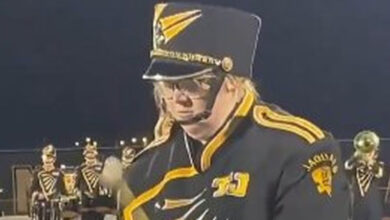
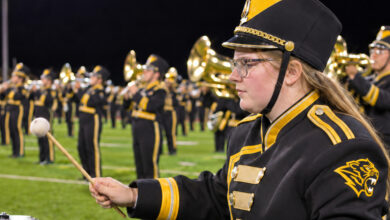
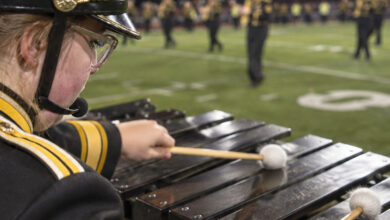
The recording gives the admiration something specific to follow. Clark stands at the mallet instrument in school uniform, repeating the opening figure while the band remains visible behind her. The recognizable tune draws listeners in; the sustained playing gives them a reason to stay.
A riff can be familiar and still look surprising. In this setting, the audience can watch the preparation for each strike, the distance between notes and the movement back through the pattern. A line often associated with an electric guitar takes on a different physical shape.
The band’s entrance changes the scale of the sound. The close-up has introduced one player, but the arrangement rewards attention to the people around her. Her part creates anticipation that the larger ensemble can answer.
That is the musical relationship behind the comment about controlling a crowd with a pair of sticks. A pulse gives listeners something to follow. A well-timed entrance gives them a moment to respond to. The visible playing and the larger sound meet in the same short performance.
Look beyond the nearest player
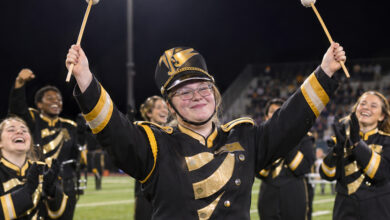
The Jaguar Marching Band’s separate Trinity halftime recording offers a wider look at the group. More of the field is visible, so attention can move between the players rather than staying with a single pair of hands. It is useful context for a comment that celebrates band students collectively.
School performances bring several kinds of coordination together. Individual parts have to sit within a shared pace, while the group’s visual presentation has its own demands. The wider recording makes it easier to notice those layers without turning the occasion into a contest between musicians and athletes.
The strongest part of the listener’s response is its recognition of work that can disappear inside a polished result. When an entrance lands, the audience hears the effect immediately. The playing that gets the group to that moment is already under way.
A school show from another evening
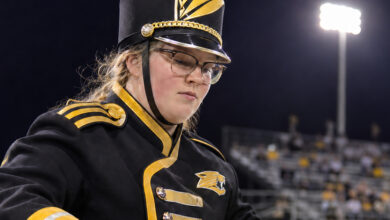
A separate program against McKeesport provides another chance to watch the Jaguars as an ensemble. Different recordings let viewers change the scale of their attention: first a distinctive opening, then a full show, then the students around the player who caught their eye.
The long reaction ends by describing the excitement of having a crowd respond to music. That is the connection worth watching for here. Listen for the pulse that invites participation, and the point where the sound grows beyond the opening part. Clark has the camera’s attention, while the band gives the moment its larger shape.