Why a Drum Major Felt Proud Watching Layla Clark’s “Thunderstruck”
“Why am I so proud of a complete stranger?!” The question, posted beneath Layla Clark’s performance of AC/DC’s “Thunderstruck,” captures a response that goes beyond recognizing the song. The YouTube viewer, @ZippityDooDaa33, identified themselves as an old drum major and described being in awe of the student in the recording.
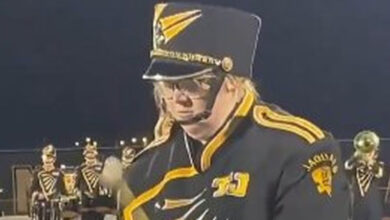
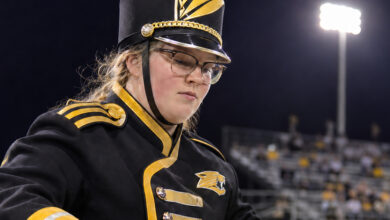
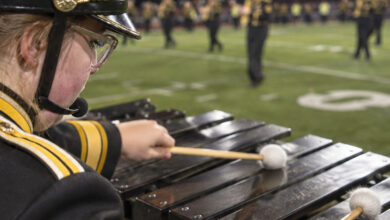
Clark stands at the front of a Thomas Jefferson High School marching-band performance, her mallets carrying a figure familiar to generations of rock listeners. The camera gives that opening an unusually close view. You can follow her hands between the bars while the school’s black-and-gold uniforms fill the space behind her.
The repeated pattern gives the audience time to settle into the performance. Recognition arrives quickly, but the part keeps going. A listener can begin by identifying an AC/DC song and then start paying attention to the student maintaining its pulse in front of the band.
The recording also has a family connection of its own. KDKA Radio reported that Clark’s mother filmed the circulating footage during the 2025 marching season, when Clark was a junior. Its renewed circulation has brought a wider audience to a performance from the previous school year.
That audience includes people who recognize something from their own musical lives. The drum major’s comment names a marching-band background, then turns immediately to pride in someone they have never met. The recording offers them a clear person to support: a student concentrating on a part as her classmates prepare to join.
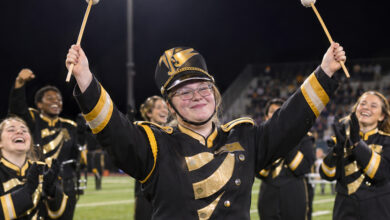
Listen through the transition into the larger arrangement. Clark holds the foreground at the beginning; the Thomas Jefferson Jaguars expand the sound around the mallet line. The change gives the close-up a musical destination and gives the applause a whole school ensemble to reach.
A close view of work that usually shares the field
The camera’s position is central to the recording’s appeal. A spectator in the stands takes in formations, uniforms and the sound of many players at once. This view makes the movement of the mallets easy to follow, letting an individual part become the way into the larger performance.
The opening repeats long enough for the viewer to anticipate its return. The familiar riff supplies a reference point, while the struck bars give it a different sound and a visible route between notes. The student’s continuing attention becomes part of what the audience watches.
The other performers remain important even when they occupy less of the picture. Their entrance changes what the opening means: it becomes the preparation for a band arrangement. Clark’s featured part and the musicians around her belong to the same payoff.
Hearing from the student behind the uniform
CBS Pittsburgh’s report offers another way to encounter Clark, with an interview alongside the school setting. The performance introduces a pair of hands and a recognizable song; the report gives viewers a chance to hear from the person whose playing has drawn their attention.
Seen beside the close-up, that local perspective makes the supportive response more specific. The listener’s pride is directed toward a school musician doing something in public with her classmates. The band remains part of the story as the recording reaches people far from the original football crowd.
A different recording shows the Jaguars’ wider rock program
The Jaguar Marching Band channel has a separate postgame recording against Ringgold dated October 10, 2025, uploaded the following day. Its description lists “Welcome to the Jungle,” “Enter Sandman,” “Crazy Train,” “Thunderstruck,” “Back in Black” and “Hey Baby.” It is another performance to watch alongside the close-up.
The longer view lets the ensemble occupy more of the picture. It is useful for following how familiar rock material works within an entire school program, rather than encountering only the passage that first caught the internet’s attention.
Return to the original clip after those wider views. The repeated figure is still immediately recognizable, but the student and her school now have more context. The drum major’s question about feeling proud starts with a stranger and ends with a musician the viewer wants to cheer for.