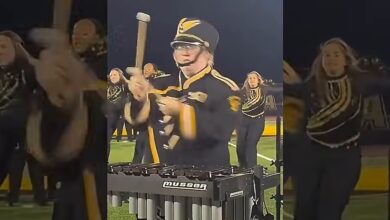
The Hard Part of Layla Clark’s ‘Thunderstruck’ Is Getting the Next Note Right
The opening of Layla Clark’s “Thunderstruck” can look like one continuous rush of motion. A viewer who described themselves as an old percussionist heard something more specific. The speed was impressive, but the precision of the repeated strokes was the hard part they recognized.
On a mallet instrument, every attack has to happen on a bar. The player has to place each strike and lift away in time to make the next one. When a repeated figure changes pitch, the hand has to travel far enough to get to the next bar while the listener still hears the same pulse.
That helps explain why the close-up is worth replaying with the sound on. The hands seem to move different distances, but the space between the notes stays familiar. At that speed, a single conspicuously late note would be easier to hear than to see.
The riff has to be recognizable from the start. There’s no long musical introduction to hide behind. The bars give the guitar figure a bright attack, and the pattern has to make sense immediately in that sound. Clark’s playing lets listeners recognize the song while they are still getting used to the instrument.
Her part also has a job beyond the camera’s frame. The rest of the Jaguars need a clear pulse to hear where the opening is going. A stable tempo is one of the things that allows a solo-sounding passage to lead into something louder and more crowded without the entrance feeling sudden in the wrong way.
On the first play, follow the musical line all the way to the group entrance. On the replay, choose a brief run of notes and watch where the mallets go after each strike. The small recovery movements make the performance’s control easier to see.
The second circulating clip offers another chance to look at those movements without the surprise of the song choice. Once you already know it’s “Thunderstruck,” listen for the notes that lead into the change of pitch. That is where the change in physical movement and the constancy of the pulse are easiest to compare.
The wider Ringgold show puts the effect in an ensemble setting. An audience member at field level can see more players waiting to come in. From that distance it becomes clear why the pulse of the opening matters to students who are preparing their own entrances.
The old percussionist’s comment gives people a way to watch the footage after the first shock has passed. Clark makes the pattern sound predictable in exactly the right way. The players behind her can use that predictability, and the audience hears the reward when the sound gets bigger.