An ’80s Slow Clap for Layla Clark: The ‘Lucas’ Comparison Behind a Warm Reaction
A listener reached for an unmistakably eighties kind of applause after watching Layla Clark play ‘Thunderstruck’: ‘100% deserving of an 80’s slow clap and a “Lucas” style chant.’ The response imagines the kind of recognition that grows from one person’s appreciation into a room full of it.
‘Lucas’ is David Seltzer’s 1986 film, starring Corey Haim. Here, the movie reference works as shorthand for shared applause and recognition. The commenter is proposing a reaction to Clark’s playing, rather than describing a welcome that has already happened at her school.
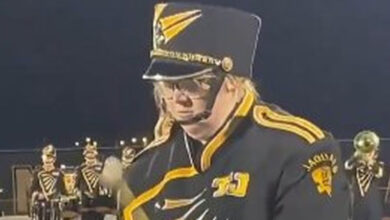
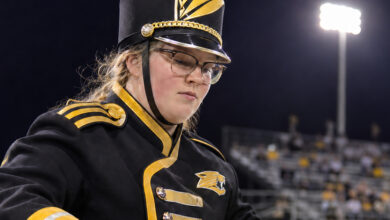
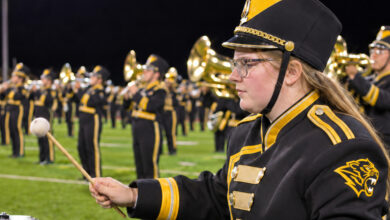
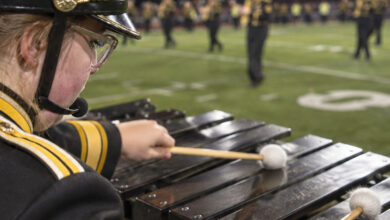
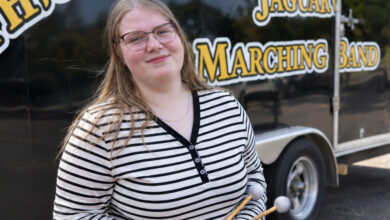
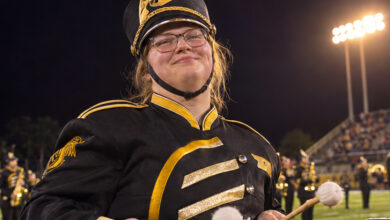
The performance gives that warm wish a clear focus. Clark stands behind the mallet instrument in marching-band uniform, with the other students visible around her. Her opening part gives the camera a sequence of movements to follow before the band’s sound expands.
An audience familiar with AC/DC can recognize the line quickly. Staying with the recording adds something more: the sustained pulse, the repeated returns through the figure and the anticipation of the ensemble’s entrance. Recognition of the tune becomes interest in the person keeping it moving.
The slow-clap image describes that change in attention. It is the point at which a viewer stops treating the clip as background entertainment and wants the player to know that they noticed the work. The reference gives the feeling a little cinematic scale.
Watch the actual school performance first. Its strongest payoff is already musical: a distinct opening leads into a group entrance. The listener’s imagined applause is a response to that visible and audible progression.
See more of the students around the moment
The Jaguar Marching Band’s separate Laurel Highlands halftime recording offers a wider view. It lets the audience take in more of the program and more of the musicians at once, restoring the ensemble around the player who attracted the close camera’s attention.
That group setting suits the comment’s image of shared recognition. A slow clap is imagined as something other people join. A marching-band arrangement also depends on relationships between parts, with an exposed opening gaining meaning from the bigger entrance it prepares.
The comparison does not need to turn Clark’s life into a movie plot. Its useful point is the wish that a student’s accomplishment should be recognized by people around her. The footage gives that accomplishment a concrete setting, with uniforms, mallets, a field and a band ready to enter.
The person behind the performance
CBS Pittsburgh’s video featuring Clark supplies a second perspective after the school footage. It gives viewers a chance to hear from the musician whose playing prompted the reaction, rather than leaving her as a face in a short performance clip.
The three views belong together: the close-up that caught the listener’s attention, the wider school program and the conversation with Clark. They explain why a comment about a cinematic welcome can feel affectionate. The viewer has heard something they enjoyed and wants the musician to receive the applause in person.