Why “Thunderstruck” Feels Like a Different Challenge on Layla Clark’s Marimba
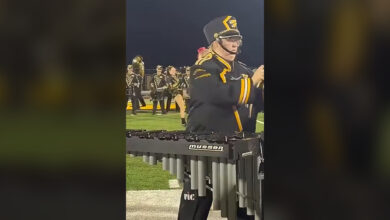
After watching Layla Clark play “Thunderstruck,” an X commenter joked that the part was “3,000X harder” on mallets than on a stringed instrument. The reply had 404 likes when recorded on November 8. There is no meaningful multiplier for comparing two instruments, but the two recordings make it easy to see why the viewer reached for a big number.
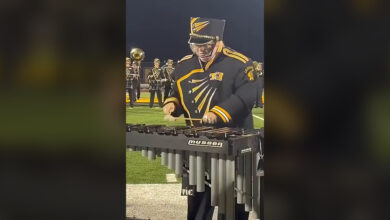
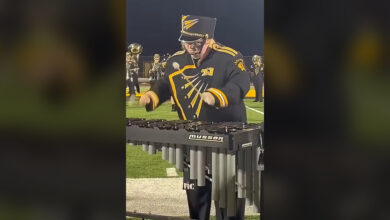
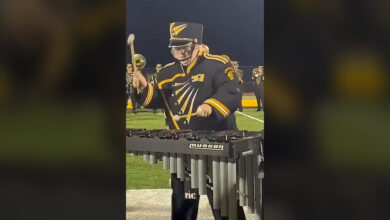
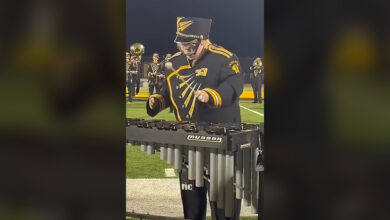
Angus Young builds the original figure around the repeated movement between notes on a guitar string. On the marimba, each pitch has its own bar. Clark has to send the mallet head to the right place and lift it in time to get ready for the next strike. The camera catches the preparation as clearly as it catches the notes.
The comparison gets more interesting once you listen past the opening burst. With the original recording as a reference, you can hear how the group retains the shape of the figure while changing the character of each attack. The bars give it a wooden tone and a more sharply defined beginning to each note.
That physical difference changes what a player can prepare in advance. A guitarist can set fingers over frets that are close together and use the string itself to keep the figure moving. A marimba player has to put each strike in the right place across a keyboard of separate bars. The camera makes those small changes in direction particularly clear.
The repeated notes also give the two versions a different texture. A guitar can let the sound ring while the fretting hand moves. A mallet produces a fresh attack each time it meets the wood. In the field clip, the strikes are easy to pick out even when the hands move too quickly to follow one at a time.
Listen to the pace before making a judgment about difficulty. The opening establishes a pattern the listener can predict, which makes a late or early note especially noticeable. Clark has to keep making the same distances and accents feel consistent while she and her section set up the band’s entrance.
What changes between the strings and the bars
On the official AC/DC video, pay attention to which notes make the figure feel anchored. That reference note is what gives the changing pitches something to pull against. In Clark’s clip the same shape comes through with a more percussive sound, so it can help to listen for the return to that note instead of watching how fast her hands go.
The original AC/DC music video
The River Plate performance offers a second way to hear what the guitar does live. Angus Young has to hold the shape of the opening in an arena before the full band comes in. It gives you a point of comparison for both the movement and the way a crowd learns to anticipate the entrance.
Angus Young plays the opening live at River Plate
The most revealing comparison is the first stretch of each performance. Follow the same part through the studio version, the concert and the school arrangement. You can hear how a small sequence of pitches survives changes in the instrument, the attack and the size of the room around it.