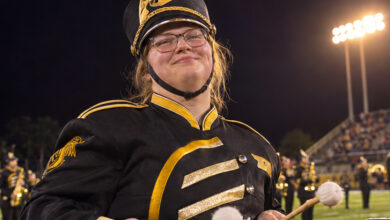
The Hard Part a Viewer Noticed in Layla Clark’s ‘Thunderstruck’
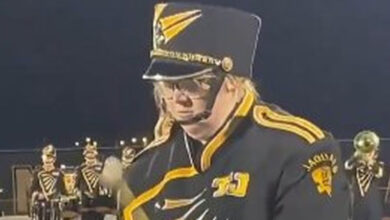
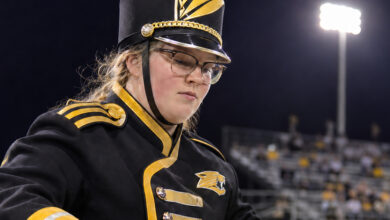
A viewer watching Layla Clark play ‘Thunderstruck’ had a point for anyone who has never stood behind a percussion instrument: ‘People who don’t play percussion have no clue how hard it is what she’s doing.’ The response directs attention toward the work inside the familiar tune.
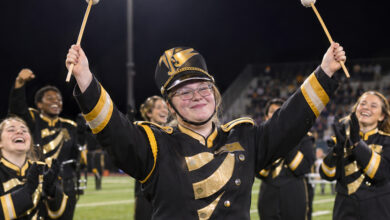
The listener immediately shares the praise with the group: ‘Whole marching band absolutely killed it and she rocked.’ Together, the two sentences describe the relationship that makes the recording worth replaying: a visible individual part and a larger ensemble ready to join it.
The opening is easy for an AC/DC listener to identify. That recognition can make the movement look more automatic than it is. Watch the mallets instead of anticipating the next famous phrase, and each return through the figure becomes another sequence of strikes to follow.
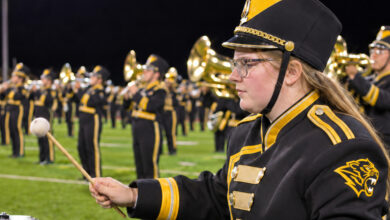
A bar gives a mallet a particular target. The next note may require a different movement, followed by a return to an earlier position. The line has to keep its pulse while those changes happen. The camera is close enough to make that process part of the listening experience.
The exposed opening also has a role in the arrangement. It holds the foreground while the band’s bigger entrance is still ahead. Repetition builds anticipation because the audience knows the line and can feel that more sound is coming.
The comment is a viewer’s assessment, rather than a technical credential or a formal ranking. Its useful invitation is simple: look closely at the part that seems familiar, then listen to what happens when the rest of the group arrives.
The riff changes with the instrument
2CELLOS’ official live ‘Thunderstruck’ performance offers a comparison in another instrumental setting. The phrase remains recognizable, while the physical work of producing it looks different. Watching the two versions together can make the relationship between a musical line and the movements behind it especially clear.
That comparison does not need a winner. It asks the audience to notice how a recognizable pattern survives a change of attack, tone and technique. Clark’s mallets make each strike distinct, and the school-band arrangement gives the opening a larger destination.
The viewer’s second sentence keeps that destination in view. Praise for the group belongs alongside praise for the close-up, because the band’s entrance is one of the main changes the listener is waiting to hear.
Widen the view of the Jaguars
The Jaguar Marching Band’s separate Chartiers Valley halftime recording restores the wider field. More of the students and the program can be seen at once. It is another performance, giving context to the ensemble rather than pretending to be additional footage of the same moment.
Return to the close-up after that wider view. The repeated figure now has both a physical detail and a place within a group. That is the most useful way to hear the comment: admiration for the hands nearest the camera, followed by recognition of the musicians who help the whole arrangement land.