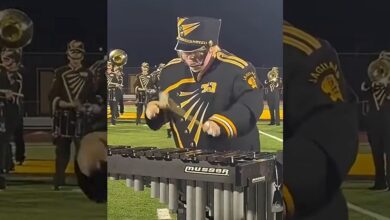
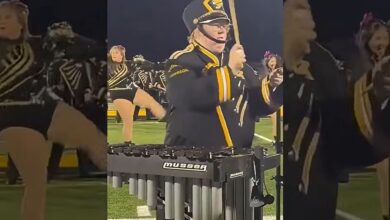
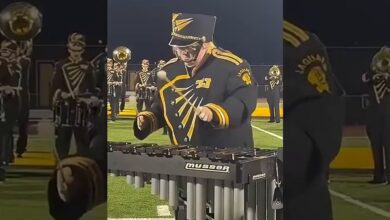
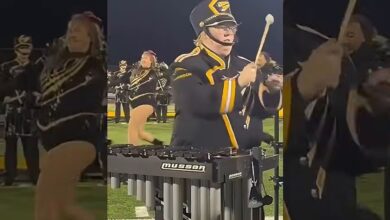
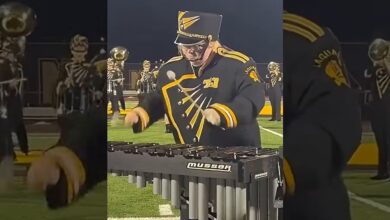
Layla Clark Made One Viewer Hear Mallet Percussion Differently
One comment under the clip has a little change of heart in it. The viewer had never enjoyed the instrument they called a xylophone, then they heard Layla Clark play the AC/DC figure and gave that sound a second chance. The recording makes the shift easy to understand.
The marimba Clark plays has wooden bars and resonators underneath. Its sound has a rounded attack with enough definition for the notes to stay clear in quick succession. When the opening is familiar, you have an easy point of reference for hearing what changes.
Try listening to the first few repetitions without watching the video. The speed and the recurring note keep the riff recognizable. Put the picture back and you see where that different tone comes from, right at the front of a school marching band.
The best part of the comment is that it describes a particular listening experience. One short clip let somebody hear a sound they thought they already knew in a musical setting they hadn’t expected.
What the bars actually contribute
A bar struck with a mallet announces itself immediately. The start of the note is clear, and the space between attacks stays audible even when the melody moves quickly. That clarity is one reason this arrangement can keep the shape of the AC/DC intro without borrowing the sound of an electric guitar. The difference is especially noticeable when a phrase repeats. Instead of listening for the rough edge of an amplified string, you start to hear the timing of each new impact. A tone you might have found too bright in another setting becomes exactly what helps the tune come through here.
Fans commonly describe the instrument in the clip as a xylophone. Marimbas and xylophones share the visual grammar of rows of bars and mallets, but their sound worlds can differ substantially. A marimba generally has a fuller, more resonant character, particularly lower in its range. A xylophone is commonly heard as brighter and more sharply defined. The tubes visible beneath many mallet instruments help reinforce the bars’ sound. For a listener following the video on a phone, the clearest distinction may simply be that the attack and the sound after it are two separate things worth hearing.
That separation gives an arranger options. A short, focused attack can keep a busy passage legible. A fuller tone underneath can help carry the music as more players come in. Musicians can also change the result through the choice of mallet, how the bar is struck and where the line sits in the instrument’s range. The same collection of pitches can sound sharp, soft or somewhere between the two. In Clark’s clip, the opening has enough definition that the ear can follow it while the larger band begins to claim more space around her.
The guitar original already has a strong silhouette. Most listeners can recognize it before there is much other information to work with, which gives a cover room to experiment. This arrangement keeps that sense of recognition and lets the percussion bring a different kind of momentum. On the second listen, try noticing how much of the identity survives between the notes. The recurring pattern establishes a rhythm of anticipation. Even with an unfamiliar tone doing the work, you know enough about the shape of the phrase to lean into the next strike.
How an arrangement changes what you hear
If your first association with mallet percussion comes from an exercise, a short flourish in an orchestra or a sound effect, there may never have been much reason to listen to the instrument for a whole phrase. Here, the part has time and space to make its own impression. Clark is given a line people care about, and the audience can hear what the instrument does as the music grows around it. That shift in context matters. The instrument gains a role in the story of the arrangement, and its tone becomes part of what people remember.
The football setting adds another contrast. A band performing at halftime has to make sense to people who may be watching from far away, talking to friends or looking across an entire field. The camera puts the audience unusually close to one of the sounds carrying the arrangement. On a screen, the mallets are easy to follow. In the stands, the bigger picture includes the other players and the movement of the show. Both views tell you something about the effectiveness of the piece, and each can draw your ear toward a different part.
Listen once with the screen turned away. You may find that the phrase is still just as recognizable, but that your attention goes to the entrances behind it sooner. Then watch the clip again and see how quickly your focus returns to Clark’s hands. The difference is a small demonstration of how an audience hears performance footage. A good picture can show where a part comes from. It can also make a single musical voice seem more isolated than it feels when you listen to the whole sound without a close-up.
There is a reason the change of mind in the card resonates. A familiar song makes it easier to give an unfamiliar sound a fair hearing. You enter with a melody you can follow, and before long you are paying attention to how the new player shapes it. Clark’s performance gives that process a clear starting point. The line is exposed long enough to become its own sound, then the rest of the band gives it somewhere to go. By the time the larger ensemble takes over the frame in your mind, the mallet part has already made its case.