The School-Band Talent That Usually Stays in the Bleachers
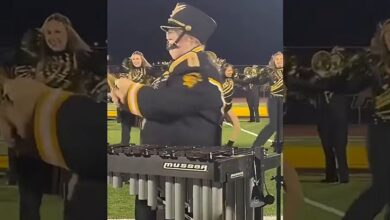
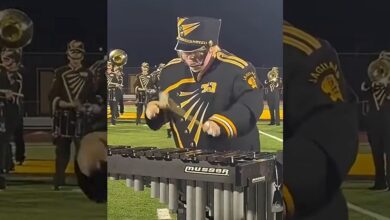
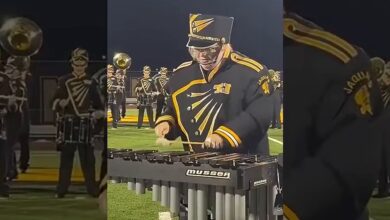
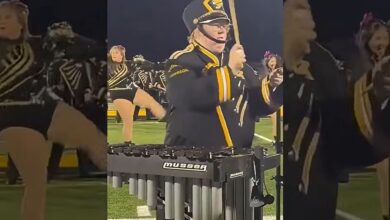
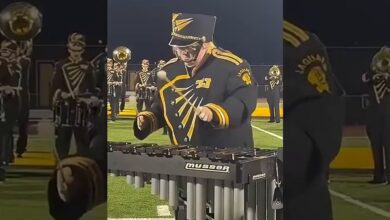
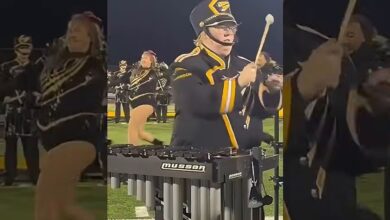
Before people started forwarding the clip, it was something you could hear if you were at a Thomas Jefferson football game. Layla Clark was playing a part in a school halftime show, and the people closest to the field were the ones who could see how much was going on at the marimba.
One viewer who found the video later wondered how many students play this well without ever being heard outside their schools. The path of this recording makes that question concrete. It was filmed in 2025 by Clark’s mother and drew another wave of attention after it was shared the following year.
Clark told interviewers she wanted the other players to get their share of that attention. The riff in the foreground gives the phone camera an obvious subject, while the next entrance shows what the larger group contributed. A wider recording lets you look past the player the clip made famous.
There’s a good reason to watch both versions. One catches the fine work of the mallets. The other lets you see what a student ensemble had already made for the people sitting in the bleachers.
What the phone captured and what the field already had
The viral story can give the impression that discovery and achievement happened together. This one has a clear break between the two. The performance was filmed in the 2025 marching season. By the time it drew another wave of attention the following year, the students had long since played the notes and finished the show. The audience on the night already had something worth hearing. A later share changed who could hear it and how many people thought to look for the musicians behind it.
That is part of what makes the viewer’s question uncomfortable in a productive way. Nobody can tell how many good school performances go unwatched outside their towns. You can see why many of them would. Halftime happens once, the crowd has a limited view, and the person with a camera may be there to follow one member of the band. A solid arrangement could sound excellent across the field and still have little chance of reaching anyone beyond the people sitting in the stands.
This particular clip got a combination of details in the frame that a stranger could understand quickly. The song is familiar. The marimba is visible. The phone is close enough to hear the strike of each mallet but far enough back to show part of the field. One can imagine a different recording of the same performance where the riff was buried in the crowd noise or the camera arrived too late to show where the sound came from. The players would have done the same work either way.
Clark’s decision to credit the other mallet percussionists brings that point inside the recording. The instrument filling the shot belongs to one player, but five people helped establish the opening. The rest of the band also had a place in the arrangement that a narrow video can make hard to appreciate. It’s possible to be impressed by the person you can see and still understand why other students who played well may have received much less attention.
What a wider view makes easier to notice
The next place to look is the rest of the Jaguars. A whole-field angle makes it possible to follow a player who never comes into the phone close-up. You can watch people get ready for their entrance, see a group move while the mallets are still carrying the melody, and hear the balance of the different sounds as the piece grows. The popular clip tells you that this ensemble has a standout moment. The wider shot lets you look for the decisions that give that moment somewhere to go.
The question about unnoticed school talent applies even to the part Clark plays. The spectacular thing to a new viewer is the speed of the familiar riff. A fellow percussionist may be more impressed by the repeatability of the strikes and the fact that the pulse holds when the pattern becomes demanding. Different listeners bring different ways of recognizing good work. A clip that catches the attention of one group can give another group a chance to point out a detail everybody else would have missed.
That exchange is one of the useful things a widely shared recording can do. A person who has never been around school percussion can see why somebody would spend time learning a passage like this. A former band student can remember the effort that comes before the visible part. The comments bring those ways of hearing together around a single minute. They also make it possible for the people who enjoyed the clip to go back and hear it with a little more information.
The distinction between attention and quality is worth holding onto on the next replay. The short video is one well-placed window on the show. The wider version puts the same section back in a place where you can hear the other musicians. If the first version makes you glad that Layla was heard, the second gives a practical answer to the viewer’s broader question. There was already more good playing on the field than the first camera could show.
School performances happen at a particular place and time. That is one reason they can mean a lot to the people who get to be there. A recording can stretch that circle without changing what the performance was made for. This one still sounds like a school band playing for the people in front of it, even when you listen far from Pennsylvania and long after the field lights have gone out.