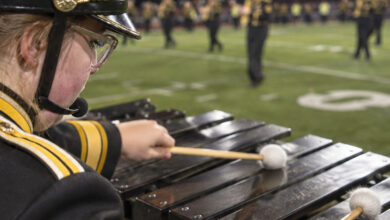
A Standing Ovation in the Comments for Layla Clark’s “Thunderstruck”
“I’m giving you a standing ovation!” That was one viewer’s response after watching Layla Clark play AC/DC’s “Thunderstruck” with the Thomas Jefferson Jaguars. Posting beneath the performance on YouTube, @deidrehuckabee2933 offered an enthusiastic salute to the student carrying the recognizable opening on mallets.
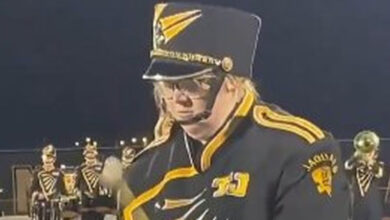
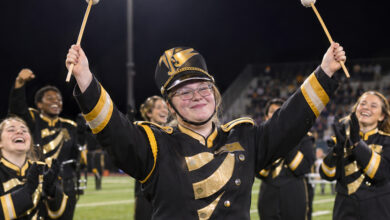
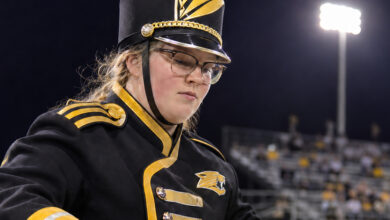
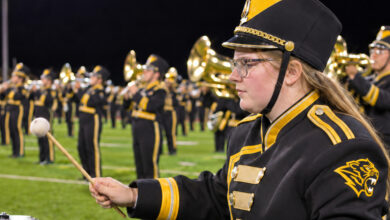
The recording starts with a close view of a part many rock listeners associate with electric guitar. Clark is in her school’s black-and-gold uniform, the instrument placed at the front of the field. The repeated strikes give the audience something to hear and to follow with their eyes.
The camera stays long enough for the opening to develop. A listener first recognizes the song, then has time to notice the movement between the bars and the continuing return to the figure. The attention is on the student as well as the familiar notes.
The musical setting gets larger when the Thomas Jefferson Jaguars enter around the opening. The mallet figure has already established the line the audience recognizes. The ensemble brings the change in sound that turns the featured passage into the start of a full-band performance.
KDKA Radio reported that Clark’s mother recorded the circulating footage during the 2025 marching season, when Clark was a junior. Its renewed audience has arrived during her senior year. The school performance is finding listeners well beyond the crowd for which it was originally played.
The applause in this response comes through the comments: a viewer expressing what the recording made them want to do. Watch the original performance through the band’s entrance to hear the moment behind that reaction. Clark gives the close-up its focus, and the Jaguars give the opening its larger destination.
Recognition reaches the person in the frame
A phone recording can carry a familiar song far beyond its original setting. Here the school uniform, the instrument and the musicians behind Clark keep the performance connected to the student doing the work. There is a person for viewers to encourage as the opening continues.
The standing-ovation message belongs to that supportive response. The listener celebrates a school musician whose playing has held their attention. The recognizable AC/DC riff provides the first connection, and the unfolding band arrangement gives the viewer a reason to stay.
Following the same clip again changes what is easiest to notice. Watch the strikes on one pass; watch the musicians behind Clark on the next. The featured part and the ensemble’s arrival are connected, and both contribute to the impact of the recording.
A separate field view of the Jaguars
The Jaguar Marching Band channel offers a wider perspective in its halftime program against Mars on October 31, 2025. The listed selections include “Crazy Train,” “Thunderstruck,” “Back in Black” and “Hey Baby.” This is a separate recording that places the familiar rock material within a larger school show.
That wider view shifts attention toward the ensemble. The close-up lets the audience follow one player’s movements, while the field recording gives the other musicians more of the picture. Together, the two views show how a featured opening belongs to a group performance.
Hearing from Clark beyond the performance
CBS Pittsburgh’s report brings the attention back to Clark and her school with an interview accompanying the performance story. It gives viewers another way to encounter the student whose mallet playing has become the center of so many supportive responses.
The report is useful beside the music because the audience can hear from Clark beyond the repeated opening figure. The clip introduces the player through a task in progress. The local reporting puts the student and the school around that task back into view.
The original close-up remains the place to hear the transition that makes the performance work: a familiar line carried on mallets, followed by the arrival of the Jaguars. The standing-ovation comment is one listener’s way of celebrating the effort and the moment those students have already created.