The Unexpected Rock Hero in Layla Clark’s ‘Thunderstruck’ Performance
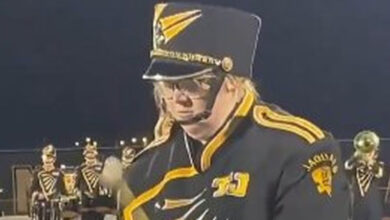
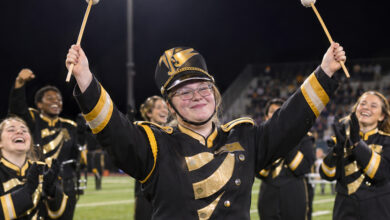
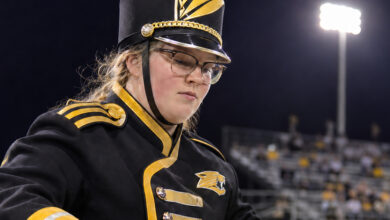
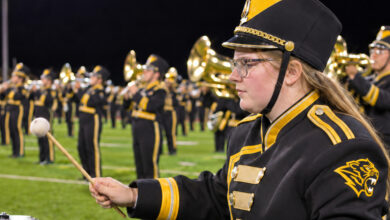
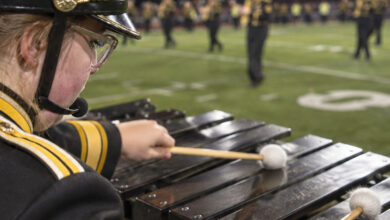
The hero in this rock clip is standing behind a mallet instrument on a school football field. Layla Clark is wearing the Thomas Jefferson Jaguars’ black and gold, working through AC/DC’s “Thunderstruck” while the musicians around her prepare to carry the arrangement forward. It is an ordinary school setting with an unexpectedly gripping opening.
“She may not be the hero we want, but she’s the hero we need” is a playful way of describing the response. The appeal is more immediate than celebrity: someone has been given a demanding part, she is absorbed in playing it, and strangers find themselves wanting her to succeed.
The close camera position is important. Instead of presenting the group as a distant formation, the recording puts the movement between the bars in view. You can recognize the tune and follow the physical task at the same time. The famous guitar opening becomes a succession of visible strikes.
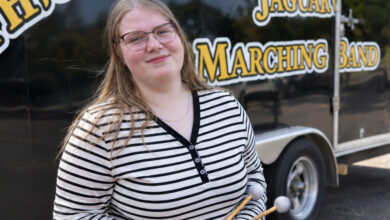
Clark is a student at Thomas Jefferson High School in western Pennsylvania. A recording shared by her mother has carried the performance beyond the football crowd and into a much larger audience. The uniform and field remain visible reminders that the music comes from a school program, rather than a touring production.
Her expression changes the tone of the footage, too. Concentration and enjoyment sit close together. The pleasure comes from watching the passage continue, then seeing how much life there is around it. The camera has found a recognizable personality inside an ensemble performance.
Keep watching past the first recognizable phrase. The opening creates expectation; the band’s contribution gives that expectation a payoff. Clark supplies the close-up that draws the audience in, while the Jaguars make the sound bigger than the individual frame.
The appeal of an unexpected lead
A mallet player is not the obvious image most listeners attach to AC/DC. That mismatch gives the recording an effective first few seconds. The notes are familiar, but the person and instrument delivering them invite a second look. There is no need to know percussion terminology to understand what is happening.
The repetition helps, rather than weakening the surprise. Each return makes the pattern more recognizable, while the movement stays visible. Viewers can wait for the next phrase and anticipate the moment when the arrangement opens out. The performance has a direction, even for someone discovering the song through this clip.
The local performance recording below offers another encounter with Clark and her school musicians. Seen beside the circulating close-up, it gives the response a concrete setting: a student, an instrument and an ensemble making music together. That context explains why the supportive reactions often sound closer to cheering for someone than simply reviewing a cover.
A whole field around the close-up
For a wider view, the Jaguars’ recording against Laurel Highlands shows the band within a complete halftime program. It is a separate recording, not a second camera angle synchronized to the viral clip. The wider framing makes the surrounding players and the scale of a school show easier to appreciate.
That distinction changes the way the opening lands on a replay. The mallet line is memorable on its own, but the arrangement is built to lead somewhere. Listen for how the surrounding sound changes the weight of the phrase without making it unrecognizable.
Calling Clark a hero is affectionate exaggeration. The real achievement on screen is more specific: a student gives listeners a reason to stop scrolling, follow a musical part and celebrate the people playing it. The combination of recognizable rock and visible enjoyment does the work.