The Handoff That Makes Metallica’s Elton John Tribute Hit So Hard
The best place to start listening to Metallica’s Elton John tribute is a little before James Hetfield sings. For several minutes in “Funeral for a Friend/Love Lies Bleeding,” the band has to hold the room with the instrumental part of a piece Elton John and Bernie Taupin made famous. Everything Metallica can do with the faster half depends on how well they set it up.
The original opens Goodbye Yellow Brick Road on a striking scale. The first movement gives its instruments time to develop an atmosphere. The second turns that accumulated energy into a song with a singer out front. Even if the audience knows the record, the simple question of when the vocal will arrive can carry a surprising amount of tension.
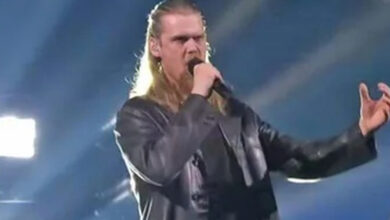
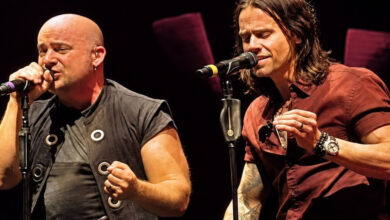
At the 2024 Library of Congress Gershwin Prize tribute in Washington, D.C., Metallica put their own physical weight behind those changes. The quieter side of the piece still asks the musicians to hold a line back. The familiar sound of a band able to hit the arena-sized passages has to be present without releasing all its energy at once.
By the time the guitars and rhythm section reach the full rock stride, the listener has heard where the stride came from. Changes that might feel abrupt in the middle of another cover have been prepared through the shape of the instrumental. The strong attack of the full band makes that shape legible from the other side of the room.
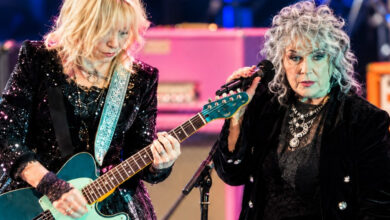
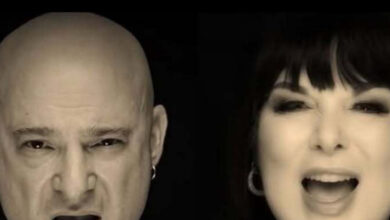
The concert honored John and lyricist Bernie Taupin together. The camera’s view of them in the audience gives the clip another dimension because it puts the writers and the people playing their song in the same record of the evening. The writing is visible here in the distances a band can travel while the underlying structure stays recognizable.
Hetfield’s entrance is worth hearing twice. The first pass delivers the obvious satisfaction of an arriving singer. On the second pass, the setup tells you why the first words feel earned. The band brings a considerable piece of music to a point at which a single voice can take it somewhere new.
Watch the performance
What the band has to carry before the words arrive
On the original record, the opening depends on layers and a gradual lift. Translating the sound from the record to a Metallica performance starts with an arrangement question. The group has to give the long notes enough space to establish the mood, then get the shorter figures in motion without making the two parts feel like separate assignments.
The guitars can hold a long sound and still have a sharp front when the next phrase arrives. That ability is especially useful in the middle of the handoff. The ear can follow the old melodic outline while the character of the attack becomes unmistakably Metallica. The timing change then feels like part of the original idea coming into focus.
Listen, too, for the way the rhythm section starts to give the listener a more definite floor. A slow, spacious idea can leave you floating through the notes until a clearer pulse arrives. Robert Trujillo and Lars Ulrich can make that arrival physical. It prepares a place for the voice before the audience even hears it.
Why Hetfield’s first phrase matters
Hetfield brings an accent and shape to the words that are his own, in a melody with an already established emotional history. After the substantial instrumental approach, the alive quality of that first entrance gives the track a human scale again. A large band sound turns suddenly into a person telling a story.
There is another payoff in the way the band keeps moving underneath him. The riff and drums have spent the introduction announcing their own momentum. The lead vocal now gives them a role in a verse while they keep some of the force they earned. The two sections stay linked even when what you listen for changes.
It explains why the artist shot and the audience shots can both work in a filmed tribute. It’s enjoyable to catch how the writers take in something they have lived with for decades. The musical reward is still available with your eyes closed. Between the long opening and the first vocal line, a song built for dramatic movement has found musicians with a real appetite for it.
The difference between an arrangement and a reenactment
Elton John’s original recording gives the long introduction its own identity. For listeners hearing the album in order, it has to lead into the first actual vocal on the record, and the change amounts to a first impression of what can follow. In the tribute, the long opening changes function slightly. The audience has come to hear a well-known band apply its sound to an already familiar structure.
The way notes decay is part of the change. The tone of a sustained electric guitar leaves a different space behind it from the sounds in the original opening. That new texture gives the audience the sensation of moving toward a heavier passage early on, while the pace of the introduction still allows the song to announce itself gradually.
You can hear the importance of leaving a bit of room for Hetfield. If the full energy of the ensemble arrived at the first possible moment, his entrance would have to compete with an introduction that had already reached its loudest point. The arrangement preserves enough direction for the sung part to feel like the next event.
One way to hear the two halves as parts of the same piece is to stay with the underlying pulse through the transition. The words and the increasingly sharp attack tend to attract attention at the same time. Following the pulse instead reveals the continuity that allows the band to change the texture so dramatically.
Two more versions
Elton John’s Madison Square Garden performance puts his piano and his own vocal delivery at the center of the live sound. Listen to the span between the sustained opening and the first words. The change has a different feel when you can hear John lead the band into it from the piano.
Elton John’s original studio medley has all the space of an album opener. Hear how the central transition is prepared through sustained sounds and then finished by a clearer beat. John’s first words give the same shift a different vocal color from the one Hetfield brings to the tribute.