Miley Cyrus Gives Hole’s ‘Doll Parts’ a Raw, Full-Throated Reinvention
Miley Cyrus’s version of Hole’s “Doll Parts” builds its force through contrast. Quiet, exposed phrases give way to a rougher, full-throated delivery, turning her Howard Stern Show appearance into a striking showcase for the emotional weight of her rock voice.
The performance took place at the SiriusXM Garage in Los Angeles during her December 2, 2020 visit to the show. The official video, published the following day, captures Cyrus with her live band in a close studio setting.
Cyrus arrived during the release period of Plastic Hearts, but this song gave the appearance a different focus. Rather than simply promoting new material, she stepped into a piece of Hole’s catalogue and made its shifting intensity the centre of attention.
Her restraint matters as much as the louder passages. The lower phrases leave space around the voice; when the arrangement opens up, the rasp feels like an extension of the emotion already present rather than a separate display of vocal force.
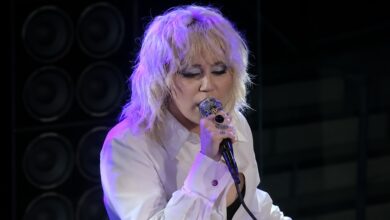
The camera makes that change unusually immediate. In the final stretch, eyes closed and microphone close to her face, Cyrus appears absorbed in the performance. The plain rehearsal-room equipment behind her keeps attention on the delivery rather than an elaborate stage production.
Viewers responded to that commitment. Among the highly liked YouTube comments, a self-described devoted Hole fan praised the cover for honouring the song and ranked it above every other Hole interpretation they had heard. That is a personal verdict, but it captures the enthusiasm surrounding the recording.
The Stern Show’s own account adds a revealing detail: Cyrus told Howard that she had only just worked up her version, and that nobody had heard her perform it. What viewers see is therefore an early public outing for the arrangement, delivered with the confidence of a singer comfortable taking a risk.
The band gives that confidence a foundation. Stern’s report lists Mike Schmid on keyboards, Stacy Jones on drums, Chris Chaney on bass, and Jamie Arentzen and Max Bernstein on guitars. Their presence lets the performance move between tension and release without losing its shape.
The appeal is not confined to listeners who already follow Cyrus. A familiar song can make the voice newly legible to an audience that associates her with a different part of her career. Here, the grain in her tone and the commitment of the final passages provide a direct introduction.
“Doll Parts” also rewards a return listen. Beyond the climactic moments, the smaller changes in phrasing explain why the performance holds together: the quieter sections establish the feeling that the louder ones eventually release.
For comparison, Hole’s official “Doll Parts” video returns the song to its original band. Listening to the two versions alongside each other highlights the familiar emotional structure and the different vocal textures each performance brings.
Cyrus’s live “Zombie” cover offers another point of comparison. It is a separate performance of The Cranberries’ song, with another opportunity to hear how her darker vocal colour works inside a rock arrangement.