Phil Collins Gets Emotional as He Enters the Rock & Roll Hall of Fame Again
Phil Collins had barely reached the microphone before he reassured the audience. He had walked onto the stage at the Peacock Theater with two canes, and he told the room he was doing better than it might look. Then he turned to the reason he was there. On November 14, 2026, the Rock & Roll Hall of Fame inducted Collins as a solo performer, sixteen years after honoring him with Genesis.
The introduction came from someone who understood why the drums had to be part of the story. Blink-182’s Travis Barker recalled hearing the enormous drum break in “In the Air Tonight” and recognizing a sound that changed what he thought drums could do on a record. By the time Barker finished, Collins was visibly moved.
At the podium, Collins traced his career back to a modest ambition. As a boy he wanted to play the drums. Singing, fronting a band and building a career under his own name came later. He talked about those turns with the bemusement of someone who could still remember the original plan.
Collins also recognized people who had helped him find his footing. He thanked his longtime manager Tony Smith and remembered Atlantic Records executive Ahmet Ertegun, who had backed him early in his solo career. He acknowledged friends including Robert Plant and Eric Clapton and thanked his family.
The distinction between the two inductions runs through the music itself. With Genesis, Collins went from the drummer’s seat to the lead microphone and stayed behind the kit on records that made the band a fixture far beyond prog. His 1981 solo debut, Face Value, gave him an outlet for a different kind of recording, where a spare vocal could carry several minutes before the drums arrived.
Near the end of his remarks, Collins looked beyond the award. “You haven’t heard the last of me,” he told the room. It was the line people carried out of the theater, and it lands with more force when you hear him say it.
The drum break came back that night
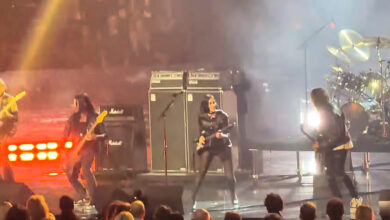
Cynthia Erivo and Barker offered their own version of “In the Air Tonight” during the ceremony. Erivo stretched the slow buildup, giving the vocal room to rise. Barker waited for the familiar break before bringing the full kit in. Hearing it after his introduction gave that moment a second purpose. He was playing the part he had just told the audience about hearing as a young drummer.
The first induction recognized what Collins helped create with Genesis. The second gave Barker and Erivo a chance to show how far the work he made under his own name had traveled. Collins had spent part of his speech talking about the boy who wanted to play the drums. By the time the tribute reached its break, the audience could hear what became of that ambition.