How Prince Built His ‘While My Guitar Gently Weeps’ Solo One Bend at a Time
Prince starts with a bend. There is a little space after it, enough to hear the pitch settle before he answers it. By the time the faster runs come, he has already given the audience something to follow. That small opening choice helps explain why his “While My Guitar Gently Weeps” solo still works even when you know exactly how the clip ends.
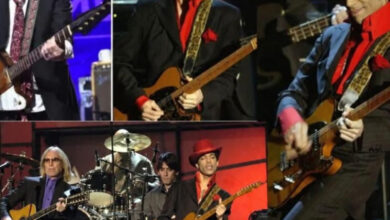
It was March 15, 2004, and the Rock & Roll Hall of Fame was inducting George Harrison as a solo artist. Prince was being inducted that night too. For the tribute, Tom Petty and Jeff Lynne sang Harrison’s song, with Steve Winwood and Harrison’s son Dhani among the musicians onstage.
The original recording on the Beatles’ White Album already gives the lead guitar room to say what the voice leaves hanging. In this live arrangement, the handoff is especially clear. The singers let the final lines go, the band stays on the progression, and Prince keeps the melody moving without another word.
Listen to the way he changes the length of his phrases. A bend that seems to hang in midair can be followed by a quick answer several notes long. He gives both gestures the same weight. There are pauses in the playing, too, even as the crowd starts to realize how far the solo is going.
The others give him a steady surface to work against. Without the pulse behind him, the changes in speed would mean a lot less. Prince can push a run across the beat because the band gives the listener a way to find the beat again.
The famous finish arrives almost as an afterthought. He sends the guitar upward, turns and leaves the stage. Watch the full performance once for the exit, then try stopping it before the throw. The musical ending is already there.

Watch the same ending from another angle
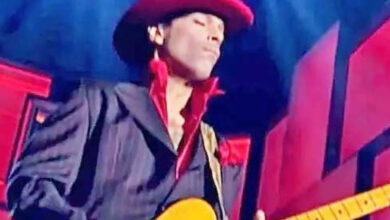
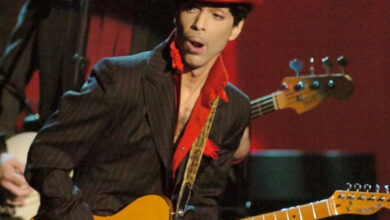
In Joel Gallen’s later edit, the changes in camera angle give a better sense of where Prince is standing as the solo builds. You can see him use the space at the edge of the stage, then turn back toward the other musicians as the band carries the song home. It also makes the solo’s smallest moments easier to catch: a glance across the stage, a pause between phrases, and the quick decision to move again.