Heart Turns Back the Clock in Las Vegas With a Breathtaking “Going to California” Tribute (November 14, 2025)
On November 14, 2025, Fontainebleau Las Vegas briefly stepped outside of time as Heart returned on their Royal Flush Tour and delivered a moment that felt almost unreal. As the lights softened and the room fell into a quiet expectancy, word had already spread through the crowd that a Led Zeppelin cover was coming. When the opening notes of “Going to California” finally emerged, the atmosphere shifted instantly. Inside the intimate BleauLive Theater, every breath, every glance, every pause felt magnified, as if the audience collectively agreed to hold the moment still.
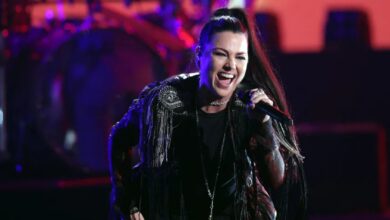
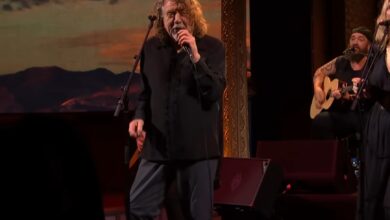
The song began without spectacle. An amber glow revealed Nancy Wilson seated with her acoustic guitar, Ann Wilson standing calmly at the microphone beside her. There was no dramatic entrance, no attempt to dress the moment up — just two artists stepping gently into a piece of music that carried decades of history. As Nancy traced the familiar progression and Ann delivered the opening line, the room leaned forward together. The silence between phrases said more than applause ever could, charged with attention and reverence.
Ann Wilson approached the vocal not as imitation, but as interpretation shaped by time. Her voice unfolded patiently, restrained at first, then gradually deepening with emotion. Each line felt lived-in, colored by experience rather than nostalgia. This wasn’t the sound of youthful escape, but of reflection — a seasoned voice revisiting themes of longing, distance, and warmth with new gravity. The lyrics no longer sounded like a dream of leaving; they felt like a meditation on everything carried along the way.
Nancy’s acoustic playing anchored the entire performance. Clean, deliberate, and unembellished, her guitar work allowed the song’s fragility to remain exposed. Nothing was overplayed. Gentle accents — a faint keyboard presence, restrained percussion — hovered quietly in the background, framing the song rather than reshaping it. The restraint was the point. In stripping the song back, Heart revealed its emotional core, letting vulnerability take center stage.
For longtime followers, the moment felt like a conversation between legacies — Heart acknowledging their roots while standing firmly within their own history. For newer listeners, it served as an entry point into rock’s deeper lineage, carried by performers who have spent a lifetime honoring the form. In that sense, the cover moved beyond tribute. It became connection: between generations, between influences, between past and present sharing the same breath.
The reaction inside the theater was striking in its restraint. For several seconds after the final notes, no one spoke. Phones were raised, yet hands remained still, as if movement itself might fracture the spell. Then came the release — not just applause, but something closer to appreciation. It sounded like thanks: for the honesty, for the memory, for the reminder that moments like this still exist.
This performance reframed nostalgia as something meaningful rather than sentimental. Heart didn’t lean on their own greatest hits or revisit familiar triumphs. Instead, they reached back to a formative influence and used it to tell a story about endurance, respect, and creative continuity. The result wasn’t a backward glance, but a reaffirmation — that the music still matters, and so does the feeling it carries.
Hearing “Going to California” that night felt like watching history fold inward. A song born in the early 1970s resurfaced in 2025 as something alive, shaped by time rather than diminished by it. The venue, the audience, the shared stillness — all became part of the performance, blurring the line between observer and participant.
In a city defined by excess and spectacle, this quiet acoustic moment stood out as something rare. No visuals competed for attention. No production overwhelmed the song. What remained was music in its most human form — fragile, sincere, and timeless — proving that restraint can be more powerful than volume.
After the show, fans drifted onto the Las Vegas Strip beneath glowing neon, many carrying the same expression of quiet disbelief. Some replayed clips on their phones. Others said nothing at all. But the shared understanding lingered: they had witnessed a performance that honored the past without being trapped by it, one that spoke clearly about what rock still means in 2025.
For Heart, the song represented more than a setlist choice. After years marked by personal trials and long pauses, performing it that night felt like a declaration. Rock wasn’t tied to youth, trends, or spectacle. It lived in memory, in voice, in intention — qualities untouched by age.
For those listening, the moment became something personal. A reminder that the most affecting music isn’t always loud or dramatic. Sometimes it arrives quietly, catches you off guard, and leaves you feeling every memory, every scar, every hope — carried gently within a single, unguarded chord.