The Night “Fade to Black” Became One of Metallica’s Greatest Live Moments
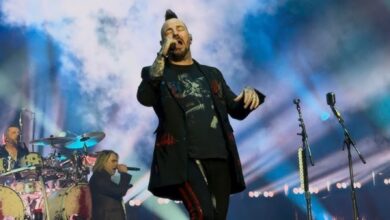
No one walked into Lusail International Circuit on November 30, 2025 expecting “Fade to Black” to become the emotional center of the night. The atmosphere was already charged from the Qatar Grand Prix weekend, lights washing the venue in that post-race glow where adrenaline still lingers in the air. But when Metallica shifted the mood and let that familiar intro breathe, it felt like the entire crowd suddenly realized they were about to witness something different: not just a hit, but a moment.
This show carried a special weight before a single note was played, because it was Metallica’s first-ever concert in Qatar. That alone changes the energy in the room. First-time crowds don’t just watch; they lean forward, hungry, almost protective of the experience they’ve waited for. You could feel it in the way people reacted to every transition, every pause between riffs, like they didn’t want a second to slip away. It wasn’t routine. It felt like arrival.
As the set built momentum, the band didn’t come in gentle. They opened with the kind of material that grabs a stadium by the collar and refuses to let go. The early run was pure ignition, the type of sequence designed to turn a massive space into one unified pulse. You could sense the crowd getting louder, more confident, like each song was permission to get wilder. And then, right when the night could’ve stayed in that relentless lane, they chose to pivot.
That pivot is where “Fade to Black” becomes such a gut punch in a live setting, especially at a show like this. The song doesn’t just sit in Metallica’s catalog as a classic; it sits in people’s personal histories. It’s the track fans attach to late-night drives, hard years, private battles, and that strange relief of feeling understood by a song that doesn’t flinch. In a place where Metallica had never played before, that connection felt amplified, like the band was meeting the crowd on a human level.
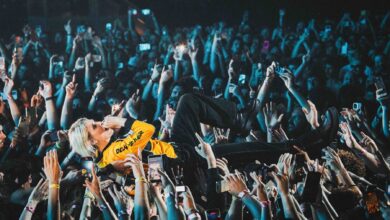
When the opening guitar lines landed, the performance instantly tightened the air. It wasn’t dramatic in a flashy way; it was dramatic in the way a room goes quiet when something honest starts happening. Even from far back, you could see phones rise, not just to record, but because people knew they’d want proof later that this really sounded the way it did in the moment. The intro didn’t rush. It hovered, letting anticipation do half the work.
James Hetfield’s approach in this kind of song is always the difference between a good version and an unforgettable one. In Doha, the delivery felt controlled but heavy, like he was aiming for clarity over aggression, letting the lyrics carry their own gravity. Instead of treating it as “the ballad slot,” the band treated it like a centerpiece. The phrasing had space. The timing felt deliberate. And that choice made the emotional impact hit harder than any extra volume ever could.
Kirk Hammett’s lead work is where the song’s heartache turns into something almost cinematic, and in this performance, the lead lines didn’t feel like decoration. They felt like a second voice, answering the vocal in a way that made the whole thing feel conversational, almost intimate, despite the scale. The notes were sharp, singing, and patient. Nothing sounded like it was being forced through a schedule. It sounded like they were living inside the song.
Lars Ulrich’s role in “Fade to Black” is underrated because it’s not about showing off. It’s about building the lift, knowing when to hold the tension and when to let the floor drop out. The transition from the softer sections into the heavier surge is where the crowd either stays with you or slips away, and in Doha, it stayed locked. When the drums and guitars thickened, it didn’t feel like a “gear change.” It felt like the moment the story finally exhaled and turned into thunder.
There’s a reason people call certain performances “the best” even when the band has played a song a thousand times: it’s the alignment of conditions. The crowd is ready, the band is sharp, the sound is right, and the emotional timing is perfect. Doha had that alignment. Because it was a first-time show in the country, every reaction felt slightly more intense, every chorus slightly more personal. That kind of electricity doesn’t happen on command. It happens when a night is simply meant to be remembered.
What made this version stand out even more is how it sat inside the broader setlist. This wasn’t a deep-cut theater show; it was a high-impact, greatest-hits-style set built for a massive event crowd. That context matters because “Fade to Black” had to cut through a lineup of stadium destroyers. And it did. It didn’t just survive among giants; it shifted the tone of the entire night, becoming the part people talked about afterward like it was the real headline.
Right after “Fade to Black,” the band didn’t let the mood dissolve into softness. They kept the energy moving, stacking huge songs that reminded everyone why Metallica are still the benchmark for live heavy music. But the emotional imprint of “Fade to Black” lingered, like the crowd carried it forward even as the riffs got heavier again. That’s the sign of a performance that landed: it follows you through the rest of the set without needing to be mentioned.
In the days after, the moment didn’t just live in shaky fan footage. Official pro-shot video from the Doha performance was released, and that’s where the wider world got to see what the crowd felt. Pro-shot releases can sometimes flatten the chaos of a live event, but here it did the opposite: it highlighted the precision, the pacing, and the way the song’s dynamics filled the space. It also confirmed what fans were saying: this wasn’t hype. It was real.
Another detail that adds to the legend is that this concert wasn’t just a standalone tour stop. It was tied to a global sports weekend with a huge international audience, and that kind of visibility changes the stakes. Metallica weren’t only playing to the people in front of them; they were playing to the eyes and ears that would find the performance afterward. That pressure can make a band play safer. In Doha, it seemed to do the opposite: it made them play with focus.
If you look at the structure of the show as a whole, it reads like a carefully engineered arc. Thirteen songs, no filler, designed to deliver impact fast, then hit emotion, then finish with anthems that leave no doubt. “Fade to Black” sits right in the zone where a set can become more than entertainment and turn into something personal. That’s why fans label it “the best” so quickly. They’re not only judging notes. They’re judging how it felt to be there.
Even the runtime of the live track tells you something about how it was handled. This wasn’t a rushed, chopped version squeezed into a tight slot. The performance had room to breathe, stretching out long enough to let the dynamics fully land, and letting the build reach its proper peak. That extra patience is what separates a respectable rendition from a definitive one, especially with a song whose power depends on tension and release rather than constant volume.
By the time the night closed, it was clear that November 30, 2025 in Doha had entered the personal highlight reels of the people who witnessed it. Some shows are remembered for spectacle. Others are remembered for one song that feels like it unlocked the entire night. “Fade to Black” did that here. It turned a first-ever Qatar concert into something more than a milestone. It turned it into a shared memory that will keep traveling, replay after replay.