Metallica Honors Elton John With A Stunning “Funeral For A Friend / Love Lies Bleeding” At Gershwin Prize
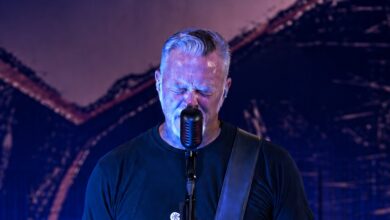
When Metallica stepped onto the stage at DAR Constitution Hall in Washington, D.C. on March 20, 2024, the audience had no idea they were about to witness one of the night’s defining moments. The evening was meant to celebrate Elton John and Bernie Taupin with the Library of Congress Gershwin Prize, but what unfolded was far more than a routine tribute. Metallica delivered a powerful and deeply moving version of “Funeral for a Friend/Love Lies Bleeding,” leaving the entire room stunned.
This wasn’t a straightforward cover—it was a full transformation. The 1973 original, known for its sweeping prog-rock emotion and layered complexity, was reinterpreted through Metallica’s lens. What began as a delicate, atmospheric introduction soon surged into crushing riffs and intense vocals, seamlessly merging glam rock, progressive elements, and heavy metal into something bold and unforgettable.
James Hetfield approached the microphone with a sense of sincerity rather than dominance. His performance felt grounded and heartfelt, shifting away from his usual aggressive delivery and leaning into the storytelling aspect of the song. There was a clear respect in his voice, reflecting the deep influence the original track has had on him over the years.
At the same time, Kirk Hammett transformed the instrumental passages into a stunning guitar-driven reinterpretation. His solos carried both precision and emotion, reshaping Elton John’s iconic piano movements into expressive, soaring guitar lines. It didn’t feel like imitation—it felt like a dialogue between two generations of musical icons.
This performance marked a rare and bold move for Metallica. Having never played the song live before, the band stepped outside their comfort zone, embracing a slower, more theatrical arrangement. It demonstrated their willingness to evolve and take creative risks, even after decades at the top of their genre.
The visual presentation elevated the experience even further. The lighting design shifted dramatically throughout the performance, moving from subdued, almost somber tones into vivid reds and warm golds as the song intensified. The transformation mirrored the structure of the music, turning the stage into something closer to a live theatrical production than a standard concert performance.
The audience, made up of dignitaries, musicians, and longtime fans, reacted with overwhelming enthusiasm. Even those unfamiliar with Metallica’s heavier catalog found themselves drawn into the emotional weight of the performance. It quickly became one of the most talked-about highlights of the entire evening.
The performance also reflected the genuine admiration between Metallica and Elton John. Years earlier, Elton had openly praised “Nothing Else Matters” as one of the greatest songs ever written. This tribute felt like a meaningful response—a powerful gesture of respect delivered through music rather than words.
Lars Ulrich’s drumming added another layer of depth to the performance. He held back during the quieter opening, allowing the melodies to breathe, before driving the song forward with force as it reached its peak. The contrast between restraint and intensity gave the performance a dynamic, evolving feel.
Robert Trujillo anchored the entire arrangement with a steady, grounded bassline, adding subtle rhythmic variations that enriched the overall sound. His presence ensured that even during the most expansive moments, the performance remained tight and cohesive.
Sharing the stage lineup with artists like Joni Mitchell, Annie Lennox, and Garth Brooks, Metallica stood out by taking the biggest creative risk. Their willingness to reinterpret such a complex piece demonstrated not only their versatility but also their ongoing curiosity as musicians.
Once the performance aired and circulated online in April, the reaction was immediate. Fans praised the band for stepping outside expectations and delivering something genuinely surprising. Many highlighted it as one of their most memorable live reinterpretations in years.
What made the moment even more unique was its context. This wasn’t part of a tour or a recurring setlist—it was a one-time tribute performance. That rarity added to its impact, making it feel like a special, unrepeatable event rather than a routine show.
In the days that followed, Elton John himself acknowledged the performance, reinforcing the mutual respect between the artists. It became more than just a tribute—it became a shared moment of musical recognition between two iconic forces.
Looking back, Metallica’s performance in Washington stands as one of those rare instances where everything comes together perfectly. It proved that even the heaviest bands can deliver elegance and emotional depth, blurring genre boundaries and creating something truly extraordinary.