Ann Wilson’s “Dream On”: A Stunning Display of Raw Power and Dramatic Emotion
During her 2021 solo tour, Ann Wilson stepped onto the stage of the Hampton Beach Casino Ballroom in Hampton Beach, New Hampshire, on August 18, delivering a performance that moved effortlessly across the many eras of her musical life. The show unfolded like a curated journey, blending beloved Heart favorites with bold reinterpretations of rock staples that had shaped generations. The venue’s intimate, lived-in charm added an emotional closeness to every moment, transforming the night into one of the most memorable stops of her late-summer tour—where nostalgia, reinvention, and pure vocal power met in an atmosphere filled with deep connection.
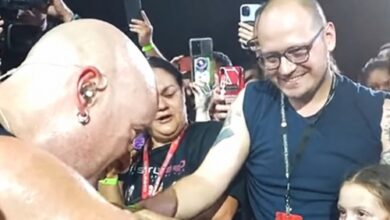
Among the evening’s most compelling highlights was Wilson’s striking interpretation of “Dream On,” the enduring Aerosmith classic that has long symbolized both vulnerability and ambition in rock history. Her approach drew a quiet reverence from the crowd, whose reactions—captured in various audience-shot clips—reflected total immersion in the moment. What she delivered was far more than a tribute; it was a vibrant reinvention shaped by her unique phrasing, emotional intelligence, and instinct for storytelling, reshaping a familiar anthem into something hauntingly her own.
Her performance offered a lesson in controlled power and nuance. Rather than rushing toward the big notes, Wilson allowed the early verses to unfold with gentle restraint, giving listeners time to settle into the emotional landscape she was creating. As the arrangement gradually intensified, she shifted seamlessly from soft contemplation to an increasingly potent vocal presence. Each rise in intensity carried purpose, revealing how decades of artistry had taught her to channel emotion not through sheer volume, but through authenticity and refined control.
The instrumental framework surrounding her voice played an enormous role in shaping the song’s dramatic arc. Clean guitars provided a spacious harmonic bed, while the piano added rich undertones that softened and warmed the arrangement. As the performance built, the rhythm section moved from a subtle pulse to a bold, driving force that mirrored Wilson’s growing intensity. This careful layering gave the song a cinematic quality, turning familiar lyrics into an unfolding narrative about perseverance, hope, and the enduring human need to keep reaching higher.
Supporting her throughout the tour was her group, The Amazing Dawgs—a seasoned ensemble whose chemistry elevated every song. With Tom Bukovac’s expressive guitar work, Tony Lucido’s grounded bass lines, Paul Moak’s dual role on guitar and keys, and Sean Lane’s dynamic drumming, the band brought both polish and spontaneity. Their responsiveness allowed Wilson to stretch phrases, adapt pacing, and explore emotional tones without ever losing cohesion. Their collaborative approach made each performance feel alive, balanced, and shaped by instinct as much as preparation.
Documentation from that night’s setlist reveals just how intentionally Wilson shaped the emotional arc of the show. Alongside foundational Heart classics like “Crazy on You,” “Magic Man,” and “Barracuda,” she interwove reinterpretations of rock and singer-songwriter staples, including Led Zeppelin’s “Black Dog,” Queen’s “Love of My Life,” John Lennon’s “Isolation,” and Steve Earle’s “The Revolution Starts…”. Within this carefully assembled mosaic, “Dream On” stood out as the emotional centerpiece—a moment where her personal artistry met the deep musical heritage she has long honored.
The significance of the performance grew even further later in 2021 when high-quality, professionally recorded footage emerged from the same evening. These multi-angle recordings revealed details hidden in fan-captured clips: subtle visual cues between musicians, elegant lighting shifts, and the intricate pacing that shaped the performance’s gradual rise. When paired with the rawness of the audience-shot video, these official visuals created a fuller picture of how Wilson and her band crafted the song’s ascent from quiet introspection to unrestrained emotional release.
The acoustics of the Casino Ballroom contributed an additional layer of intimacy, shaping the performance into something deeply resonant. Its reflective surfaces and compact layout allowed even the softest nuances of Wilson’s voice to travel clearly through the room. “Dream On” began almost in a hush, with piano and vocals weaving a quiet spell that held the audience completely still. As the arrangement expanded, the transformation felt both natural and gripping, a gradual swell that never lost sight of its emotional center.
Her vocal phrasing that night blended discipline with instinct in a way that distinguished her rendition from countless others. Wilson followed the song’s structural rise but infused each phrase with her own interpretive choices—soft rhythmic bends, lingering pauses, and subtle melodic shifts that gave familiar lines a renewed sense of depth. Rather than imitating Steven Tyler’s iconic delivery, she reshaped the melody with her own emotional experiences, turning the song into a personal meditation rather than a stylistic replica.
The Hampton Beach performance sat within a focused stretch of Northeastern tour dates, during which “Dream On” became a recurring emotional anchor. Repetition allowed the band to refine its approach, adjusting dynamics, timing, and the emotional pacing of each rise and release. By the time they reached Hampton Beach, the piece had taken on a polished yet exploratory character, revealing a version of the song that felt both deeply lived-in and freshly rediscovered with each performance.
Fan accounts from that evening painted a vivid picture of admiration and gratitude. Many praised Wilson for her composure in the upper register, noting how she sustained demanding notes with a mixture of strength, clarity, and emotional depth. Her decision to avoid flamboyant imitation and instead focus on authenticity resonated powerfully with listeners. The performance stood as testament to how age and experience can enrich an artist’s interpretive range, transforming challenging material into something profound and enduring.
Because both fan-filmed and official footage circulated widely afterward, audiences far beyond the venue were able to reconstruct the emotional flow of the concert. Each rendition of “Dream On” followed a deliberate arc: a gentle opening that invited introspection, followed by a steady climb into full dramatic release. The band’s small but meaningful gestures—glances, nods, carefully controlled dynamics—translated beautifully on camera, preserving the unity and tension that characterized the live experience in a way that felt immediate and enthralling.
Placing “Dream On” within a set dominated by Heart’s defining works gave the performance a unique resonance. It acted as a connective thread between Wilson’s own storied legacy and the larger lineage of rock music she has helped shape. For longtime fans, it reaffirmed her relationship with the rock tradition that raised her. For newer listeners, it served as an introduction to the emotional honesty woven throughout her catalog. In this way, the performance created a shared musical bridge across generations.
The song’s impact was further strengthened by the thoughtful sound design that underpinned the performance. Instead of overwhelming the mix, guitars added textured layers while keyboards softened the edges of the harmony. Drums shaped the movement rather than dominating it, and the bass anchored the arrangement with warmth and restraint. These decisions ensured that Wilson’s climactic notes felt like emotional revelations rather than technical showcases, giving the entire piece a sweeping sense of purpose and inevitability.
All these elements—the musicianship, the intimacy of the venue, the careful setlist construction, and the preservation of the performance on video—combine to make the August 18, 2021 concert a defining snapshot of Wilson’s artistic voice in the modern era. Her interpretation of “Dream On” went beyond the boundaries of a typical cover, instead becoming a reflection on endurance, creativity, and the passage of time. In leaning into subtlety over excess, she demonstrated that true expressive power often lives in restraint, space, and emotional transparency.
Months after the show, as footage continued circulating online, the performance kept attracting new viewers who were struck by its honesty and dramatic depth. These recordings served as reminders of how remarkable live moments extend beyond the walls of a venue, taking on new life through retellings, revisits, and quiet rediscoveries. In Wilson’s hands, “Dream On” became more than a song—it became an affirmation of legacy, resilience, and the enduring bond between artist, music, and audience, carried forward long after the final notes faded.