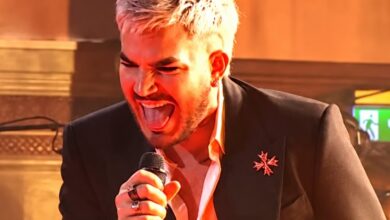
Yungblud Performs “Zombie” Live on The Howard Stern Show – December 15, 2025
On December 15, 2025, Yungblud walked into The Howard Stern Show studio in New York with the kind of restless energy that always feels one heartbeat away from either laughter or a breakdown. It wasn’t a stadium, and it wasn’t a festival field. It was something sharper: a room built for honesty, where a microphone hears everything you try to hide. That setting made “Zombie” hit differently before he even sang a note, because the whole point of the track is what happens when you can’t pretend you’re fine anymore.
Stern’s studio has a way of stripping the paint off an artist’s image. The lights are clean, the space is tight, and there’s nowhere to run when the emotion comes up. That’s why this performance didn’t feel like a routine promo stop. It felt like a moment picked for impact. Yungblud has always thrived on chaos and movement, but “Zombie” asks for the opposite: stillness, control, and the courage to let the sadness be quiet instead of dramatic.
What made it even heavier is the timing. Around this period, “Zombie” was being talked about as one of his most personal songs, and the narrative around it wasn’t “look how big the chorus is,” but “look what he’s willing to admit.” The song’s subject matter is rooted in deterioration and the fear of becoming unrecognizable to the people you love. It’s the kind of theme that doesn’t need fireworks. It needs a voice that can stay tender without collapsing.
Before “Zombie,” the day carried another emotional thread: Yungblud also performed “Changes,” the Black Sabbath classic, which he had already tied to a larger public tribute moment earlier in the year. In that context, the Stern appearance wasn’t just “two songs for radio.” It was like a small, deliberate set built around vulnerability—first, a song associated with paying tribute and humanizing rock legends, then an original track that turns the lens inward and refuses to look away.
There’s also something poetic about him bringing “Changes” into that room at all. He’s spoken about wanting to send reassurance to Ozzy Osbourne ahead of a massive farewell moment, wanting Ozzy to feel the crowd’s love and know everything would be okay. That impulse—trying to comfort someone you admire, trying to hold someone up when they’re scared—connects directly to “Zombie,” which lives inside the fear of becoming a burden and the instinct to shut people out rather than let them see you breaking.
When “Zombie” finally began, it didn’t come off like a song trying to win anyone over. It came off like a confession that already knows the outcome, and that’s what made it gripping. The performance felt designed to be close-up, like the camera and the microphones were invited into the space between the words. Instead of pushing the edges, he leaned into clarity. Every phrase landed like he meant it right then, not like he’d rehearsed the feeling into something safe.
The studio format also changes how his band chemistry reads. On a big stage, energy can mask details. In a broadcast studio, you feel the arrangement choices, the pacing, the restraint. “Zombie” benefits from that, because the track’s emotional engine isn’t speed—it’s dread, love, guilt, and that hollow moment where you realize someone you adore is slipping away from themselves. A performance like this works when everyone involved respects the silence between lines as much as the sound.
And that’s the part people don’t always expect from Yungblud: he can be loud, theatrical, and chaotic, but he can also be careful. In this setting, he sounded like an artist who understands that softness can be confrontational. “Zombie” doesn’t scream the truth; it sits with it. The performance made it clear he wasn’t using heartbreak as an aesthetic. He was treating it like a real place he’s been, and he’s inviting listeners to admit they’ve been there too.
The song’s backstory is one reason it punches so hard. Yungblud has explained that it was written about his grandmother experiencing serious injury and trauma, becoming different from who she used to be. That kind of pain is especially brutal because it doesn’t always look dramatic. Sometimes it’s just a slow, relentless shift where love stays the same but the person changes. On Stern, the performance carried that weight without overacting it, which made it feel more human and harder to shake.
There’s a specific fear “Zombie” names that a lot of people recognize instantly: the fear of becoming “ugly” in a way that isn’t about looks, but about needing help, losing independence, or feeling like your presence is exhausting to others. The song speaks to shutting out the world and pushing away the people you love because you’re terrified of embarrassment. In a small studio, those lines don’t feel like lyrics. They feel like something someone said to you once in a kitchen, late at night.
That’s why this version resonated as more than a performance clip. It plays like a document of where he is as a writer right now. The louder Yungblud persona has always been easy to spot, but the songwriter who can frame grief without melodrama is the one who sticks around. If rock survives another generation, it won’t just be because of distortion and attitude. It’ll be because someone made space for honesty that doesn’t require you to dress it up.
The Stern debut also framed him in the bigger conversation about what “modern rock” even means in 2025. He’s been labeled all kinds of things—future-of-rock, industry plant, savior, nuisance—depending on who’s talking. A song like “Zombie” is his strongest answer because it doesn’t argue. It doesn’t posture. It just tells the truth in a way that’s hard to dismiss, and it proves he can carry emotional gravity without leaning on volume.
It also helps that the timing around “Zombie” wasn’t only about a live performance. An acoustic version of the track was released around the same window, reinforcing the idea that this song can stand without production armor. That matters, because stripping a track down is the quickest way to expose whether the writing holds up. “Zombie” does. In fact, the softer it gets, the more it hurts, because there’s less distance between the listener and the subject.
Watching people react to this performance, you could feel how it crossed typical fan boundaries. Metalheads, pop listeners, casual radio audiences—anyone who has watched a loved one change and felt helpless can connect. That’s the quiet power of the Stern studio: it’s not asking for a mosh pit reaction. It’s asking whether you believe the singer. And with “Zombie,” the belief comes fast, because he sounds like he’s singing from a memory he can’t turn off.
If you zoom out, the setlist itself reads like a statement. “Changes” and “Zombie” side by side is a pairing about aging, mortality, and the emotional cost of loving people through transformation. One song carries legacy and tribute; the other carries personal grief and the fear of deterioration. Together, they show why Yungblud keeps pulling attention even from people who don’t normally like “new rock.” It’s not about fitting a genre. It’s about making the feeling undeniable.
By the time the last note faded, the performance left the kind of aftertaste that doesn’t need replay value to matter. It didn’t feel like a clip engineered for quick engagement. It felt like a reminder that rock is still at its best when it tells the truth in public and doesn’t apologize for how messy that truth is. “Zombie” on Stern wasn’t just a live rendition. It was a small room capturing a big, uncomfortable human reality—and that’s why it lingered.