Creed Turned RodeoHouston Into A Roaring Confessional With “My Own Prison” At NRG Stadium On March 11, 2026
Creed’s March 11, 2026 appearance at RodeoHouston felt like one of those unlikely cultural collisions that somehow makes perfect sense the moment it happens. A band once treated as a symbol of turn-of-the-millennium post-grunge excess stepped onto one of America’s biggest mainstream stages and found itself not mocked, not treated as a novelty, but embraced by a massive Houston crowd that was ready to sing every word. The setting mattered. NRG Stadium is not a cozy theater built for introspection, and RodeoHouston is not usually where a song like “My Own Prison” becomes the emotional center of the night. Yet that contrast is exactly what made the performance hit so hard. Creed’s rodeo debut drew 70,007 people, and the sheer scale of that number gave the song an entirely different weight. In a room that large, “My Own Prison” stopped sounding like a private confession and started sounding like a shared reckoning.
What made the moment even more striking was the context of the set itself. Creed did not wander into Houston with a bloated marathon show or a nostalgia package padded with filler. Reports from the night describe a compact, 10-song set, with “My Own Prison” arriving early enough to establish the emotional thesis for everything that followed. That placement is important because it meant the song was not treated like an afterthought or a deep-cut indulgence for older fans. It was central to the band’s identity on this stage, right there among bigger crossover staples and late-set arena anthems. The set opened with force, moved through “Torn” and “Are You Ready?,” and then landed on “My Own Prison” as a defining pivot point, the moment where the concert shifted from loud nostalgia into something more reflective, more dramatic, and a little more dangerous. In a stadium environment, that kind of tonal confidence says a lot about how Creed sees the song now. (Houston Chronicle)
Part of the fascination with this performance comes from how naturally the song fits Scott Stapp’s current stage persona. In Houston, several reviews noted that he addressed the crowd with the cadence of a revival preacher, a motivational speaker, and an arena frontman all at once. That could easily have come off as too much, especially in a venue where attention spans can be scattered and energy often depends on instant hooks. But “My Own Prison” thrives on that exact intensity. It is a song built on guilt, entrapment, judgment, and the longing to break free, so when Stapp framed it with a sermon-like introduction, he was not distorting the material. He was leaning into what has always been there. The difference now is that age, survival, and distance from the band’s peak years make those themes sound less theatrical and more lived-in. In Houston, the performance reportedly carried that sense of conviction, turning the song into one of the most emotionally charged parts of the night.
That is why this version stood apart from a routine festival-style run-through. “My Own Prison” has always been one of Creed’s heaviest emotional statements, but inside NRG Stadium it also became a test of how well the band could hold tension in a room built for spectacle. They had the pyro, the giant stage, the roving visual scale that RodeoHouston demands, but the song itself is strongest when it feels psychologically boxed in. The tension between those two realities created the drama. Instead of trying to reshape the track into a broad crowd-pleaser, Creed appears to have trusted the darkness in the writing. That trust matters because it gave the performance texture. It was not simply another singalong moment in a set full of recognizable hooks. It felt like the band asking a stadium crowd to sit inside discomfort for a few minutes, and the fact that tens of thousands stayed with them says a great deal about both the song’s durability and Creed’s surprising second life as a live draw.
RodeoHouston itself added another layer to the story. This is an event with its own rhythms, traditions, and expectations, and artists often succeed there by leaning into broad accessibility, regional charm, or instant communal uplift. Creed did deliver large-scale crowd moments elsewhere in the set, especially with songs like “Higher,” “With Arms Wide Open,” “One Last Breath,” and “My Sacrifice,” but “My Own Prison” represented something less obvious and therefore more memorable. It was the song that reminded everyone that Creed was not just a band built on radio choruses and early-2000s nostalgia. They came from a darker, more spiritually conflicted place, and this performance restored that dimension in front of a crowd that likely included diehards, curious newcomers, ironic attendees, and people simply caught up in the event’s energy. In that sense, the song functioned almost like a statement of seriousness, proof that beneath the meme-era comeback talk, there is still a band with an appetite for intensity.
The visual side of the performance seems to have supported that intensity rather than softening it. Coverage from Houston described fireworks, pyro, fog, and a stark all-black stage look from the band members, especially Scott Stapp, Mark Tremonti, Brian Marshall, and Scott Phillips. That aesthetic sounds simple, but simplicity was exactly the right move. “My Own Prison” does not need flashy costumes or an overcomplicated production concept to land. It needs focus. Black clothing, controlled aggression, and a direct physical style onstage allow the song’s themes to do the heavy lifting. The reviews suggest that Stapp moved with deliberate intent and that Tremonti’s presence added muscle and clarity, which is crucial because Creed’s best material depends on the balance between spiritual heaviness and hard-rock architecture. The Houston version appears to have preserved that balance, making the song feel sharp rather than bloated and urgent rather than nostalgic for its own sake.
There is also something fascinating about how a song from the late 1990s can suddenly feel relevant again in a giant public setting. “My Own Prison” was born from inner conflict, but in 2026 that kind of emotional directness may actually be one of Creed’s secret weapons. Contemporary audiences are surrounded by irony, distance, and calculated cool, so a song that dares to sound tormented without apology can feel refreshing. Houston seems to have responded to that sincerity. Reviewers noted that even younger fans who were not around for the band’s original peak were present and singing along, which suggests that Creed’s appeal now is not just legacy-driven. There is a new audience hearing these songs less as artifacts of a mocked era and more as unusually blunt emotional documents. That is why “My Own Prison” hit differently at RodeoHouston. It sounded less like a relic and more like a piece of unfiltered feeling dropped into one of the largest live environments imaginable.
Another reason the performance mattered was its contrast with the more triumphant songs surrounding it. In a set that ultimately climbed toward uplift and mass catharsis, “My Own Prison” carried the burden of shadow. That is an essential role in any great Creed show because without the darkness, the later release does not feel earned. A song like “Higher” can lift a crowd skyward, but only if something earlier has dragged them through doubt. “My Own Prison” did that work in Houston. It gave the set moral gravity. It reminded listeners that Creed’s best songwriting has always lived in the tension between suffering and transcendence, not in one or the other alone. Within the architecture of this particular rodeo set, the song seems to have served as the hinge between the band’s raw beginnings and its full-scale arena instincts, making it one of the clearest windows into why the night resonated so strongly.
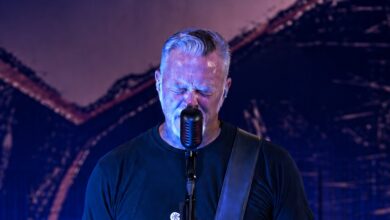
Seeing the fan-shot footage from Houston matters because it captures the atmosphere that formal reviews can only partially describe. Professional writeups can tell you the attendance figure, the set time, the stage production, and the setlist order, but a fan-filmed clip of “My Own Prison” reveals the grain of the night: the way the crowd reacts in real time, the pacing of the intro, the size of the sound as it bounces around the stadium, and the physicality of the band when they hit the chorus. That kind of footage is especially valuable for RodeoHouston shows because the venue has its own acoustical and visual character, and artists have to project not just to a crowd but across a rotating-stage tradition that changes how space is experienced. In this case, the fan-shot angle reinforces how impressive it was that such an inward-looking song could command a building this large. It is one thing to imagine the scale from a headline. It is another to watch the performance and feel how confidently Creed occupied it.
Returning to the original official video after the Houston performance highlights just how much the song’s identity has expanded over the years. In its studio form, “My Own Prison” is claustrophobic, brooding, and locked inside the emotional pressure that made Creed’s debut album stand apart in 1997. The official version remains essential because it preserves the song in its raw narrative shape, before decades of reinterpretation, before reunion narratives, before social-media rediscovery, and before a giant Texas rodeo crowd turned it into a live event centerpiece. Listening to it after hearing the Houston rendition makes the evolution clear. The studio cut is the confession itself. The 2026 stadium version is the confession spoken outward, amplified by history, failure, recovery, and public ritual. That difference is what makes the Houston moment so compelling. It did not replace the song’s original meaning. It widened it.
A 1998 live performance offers one of the best comparisons because it shows Creed much closer to the song’s point of origin, before years of backlash, breakups, reunions, and retrospective reevaluation altered the band’s public image. In those early performances, “My Own Prison” often felt like a band trying to prove itself through seriousness and force, leaning hard into the conviction that made them stand out from many of their peers. There is a hunger in those older versions that comes from proximity to the song’s creation. By contrast, the Houston performance carried a different power: not youthful urgency, but accumulated meaning. The rough edges of the early era may have softened in some ways, yet the emotional authority arguably deepened. That is the interesting trade-off. The 1998 version burns with arrival energy, while the 2026 RodeoHouston version feels like testimony from survivors who know exactly what they are reviving and why it still matters.
A 2002 live version is another useful marker because it captures Creed in a period when the band had become a mainstream giant and had to translate its darker early material into even larger venues. That era helps explain why the Houston rendition worked so well. By 2002, Creed had already learned how to make songs like “My Own Prison” function in a more overtly arena-sized format without stripping away their core intensity. Comparing that period to the 2026 Houston show reveals a continuity in how the song is staged and delivered, but also a shift in emotional temperature. Earlier big-stage versions can feel more aggressive, more caught up in the moment of peak fame. The RodeoHouston take feels calmer in execution but heavier in implication. It sounds like a song that has lived through public overexposure, private collapse, and cultural reassessment and somehow emerged even more durable on the other side.
A more recent live performance such as “One Last Breath” from the current comeback era helps clarify why the Houston “My Own Prison” struck such a nerve. Songs like “One Last Breath” showcase Creed’s talent for grand, emotionally accessible release, where melody and vulnerability join hands in a way that almost invites a crowd to heal together. “My Own Prison,” however, asks for a harsher kind of engagement. It is less comforting, more accusatory, and more interested in spiritual confinement than emotional rescue. Watching recent live material alongside the Houston clip underscores how effectively Creed still navigates both sides of its identity. They can still deliver the soaring catharsis that made them one of the era’s biggest bands, but they can also sink back into the gravity that made their earliest work memorable. That duality is what gave the RodeoHouston performance its shape and prevented it from becoming just another retro rock singalong.
In the end, the real achievement of Creed’s “My Own Prison” at RodeoHouston was not that it sounded exactly like the record or that it generated the biggest reaction of the night. Its achievement was that it preserved the song’s moral weight inside one of the most public, commercial, and oversized settings imaginable. That is not easy. Plenty of songs collapse under that kind of scale, becoming flatter, shinier, and less distinct. This one did not. Instead, it became more dramatic precisely because the setting threatened to overwhelm it. Creed answered that challenge by playing the song straight, trusting its themes, and letting Scott Stapp’s sermon-like framing push the tension even further. The result was a performance that felt larger than nostalgia and more revealing than a routine rodeo booking.
There is a reason this Houston moment is likely to linger in Creed’s current run of reunion-era highlights. It captured almost every layer of the band’s strange and enduring appeal at once. There was the spectacle of a massive RodeoHouston debut, the proof of serious crowd-drawing power, the familiar arsenal of hits, the fire and fog, the all-black presentation, and the unapologetic earnestness that once made Creed easy to ridicule and now makes them oddly compelling again. But at the center of it all stood “My Own Prison,” a song too dark and too direct to be mere comfort food for aging fans. At NRG Stadium, it became the performance that grounded the whole evening. It reminded everyone that beneath the giant choruses and cultural comeback headlines, Creed still has a songbook built to wrestle with the hard stuff in public.
That is why this version felt different. It was not simply good because the band played tightly or because the crowd was big or because the venue made everything look enormous. It was special because it placed one of Creed’s most spiritually burdened songs in front of 70,007 people and somehow made it feel intimate without shrinking it. That is a rare trick. The performance did not ask the audience to laugh at the band’s legacy or treat the whole thing as a millennial joke. It asked them to take the song seriously, and Houston apparently did. In an age where sincerity is often filtered through layers of irony, that kind of direct emotional exchange can feel almost radical. “My Own Prison” at RodeoHouston was a reminder that sometimes the biggest live moments are not the ones that escape darkness, but the ones that stare directly into it and keep singing anyway.