David Gilmour Returns To Pompeii With A Hauntingly Powerful Performance That Revives History And Emotion
It had been centuries since the ancient amphitheatre of Pompeii last welcomed a true audience—its final gathering dating back to AD79, when Mount Vesuvius erupted and buried the city beneath layers of ash. For generations, the site remained frozen in time, only to be rediscovered centuries later. Yet on a warm July evening, as dry grass shimmered under the fading sunlight, the historic venue prepared to host something entirely different. Not a spectacle of combat or ancient ritual, but a concert led by English rock legend David Gilmour, transforming the ruins into a living stage once again.
This performance carried a deeper resonance, marking Gilmour’s return to Pompeii after his iconic 1971 appearance with Pink Floyd. Back then, the amphitheatre stood empty, serving as the haunting backdrop for a filmed performance that would later become Pink Floyd: Live at Pompeii. Now, decades later, the silence was replaced by anticipation. Fans from across the globe gathered outside the gates, waiting through the long afternoon heat for a moment that felt both historic and deeply personal, bridging past and present in a way few concerts ever could.
Rather than choosing massive arenas for his tour, Gilmour deliberately selected venues rich in history and atmosphere. From Rome’s Circus Maximus to the amphitheatres of Verona and Nîmes, each location was chosen not for capacity but for character. Pompeii, with its modest crowd size compared to modern stadiums, offered something far more meaningful: an intimate experience shaped by centuries of history. The decision reflected Gilmour’s belief that a performance should leave a lasting emotional imprint, rather than simply impress through scale.
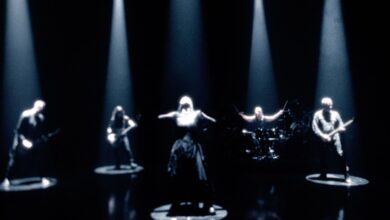
Lighting designer Marc Brickman unleashes lasers so bright the band are forced to wear shades
Bringing a modern concert into such an ancient setting came with unexpected challenges. The uneven terrain posed risks, with crew members navigating hidden gaps and fragile ground. Facilities were limited, and even essential elements like pyrotechnics required careful approval. As the final permissions were granted, firefighters stood ready along the upper tiers, hoses in place as a precaution. In the distance, Mount Vesuvius loomed silently, a powerful reminder of the history that defined the landscape, adding an almost surreal tension to the preparations.
Despite the historical weight of the setting, the performance itself was firmly rooted in the present. Gilmour assembled a remarkable lineup of musicians, blending long-time collaborators with internationally acclaimed performers. Familiar faces like Guy Pratt and Steve DiStanislao were joined by Chuck Leavell, Greg Phillinganes, and others, creating a band capable of capturing both the spirit of Pink Floyd and the evolution of Gilmour’s solo work. This fusion of experience and fresh energy gave the show a dynamic edge without losing its emotional depth.
As the evening settled into a soft peach glow, the atmosphere inside the amphitheatre shifted. The hum of conversation gave way to anticipation as smoke drifted across the stage. Then, without warning, lights cut through the gathering dusk and the opening notes of “5am” echoed through the ancient stone. The sound felt almost otherworldly, as if the venue itself was awakening after centuries of silence, responding to the music with a quiet, reverent energy.
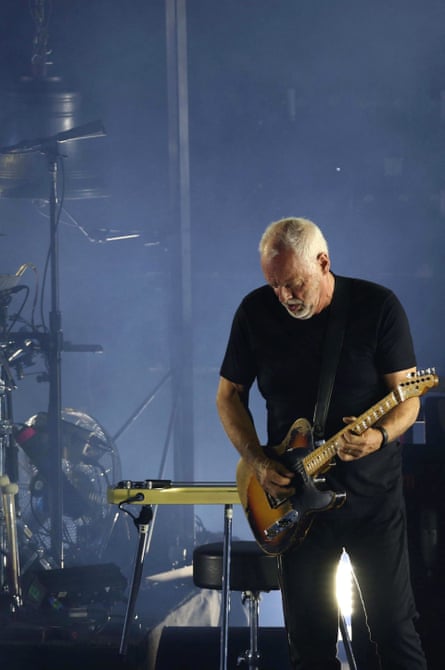
The first half of the set unfolded with a sense of quiet grandeur. Rather than explosive energy, the performance leaned into atmosphere and emotion. The crowd listened with a kind of reverence, absorbing each note as it filled the amphitheatre. When “The Great Gig in the Sky” arrived—performed solo by Gilmour for the first time—it triggered a powerful emotional response, rippling through the audience and carrying forward into classics like “Wish You Were Here” and “Money,” building steadily toward the soaring conclusion of “High Hopes.”
After a brief intermission, the band returned with renewed intensity, opening the second set with “One of These Days,” the only track from the original 1971 Pompeii performance. The moment felt symbolic, connecting two eras across decades. The circular screen, the curve of the amphitheatre, and the crescent moon overhead all contributed to a sense of completion, as if history itself had come full circle. Gilmour’s presence remained unchanged—his voice still rich and textured, his guitar work as expressive and evocative as ever.
Standing within the ancient walls, it was impossible to ignore the weight of memory. Gilmour acknowledged this directly during “A Boat Lies Waiting,” his tribute to Rick Wright. The performance carried an undercurrent of reflection, with “Shine On You Crazy Diamond” taking on added significance. The date itself marked a decade since Syd Barrett’s passing, lending the song an emotional gravity that resonated deeply with both the band and the audience.
The audience, though deeply moved, maintained a respectful restraint, as if aware of the significance of the moment. Gilmour’s understated stage presence reinforced this tone, offering quiet gratitude rather than dramatic gestures. Even during the explosive finale of “Run Like Hell,” followed by bursts of golden fireworks, the performance retained its sense of elegance. It was not about overwhelming the audience, but about creating a shared experience that lingered long after the final note.
Much of the visual impact came from the extraordinary lighting design. Marc Brickman’s work transformed the amphitheatre into a canvas of color and motion, with beams of light stretching across the sky in intricate patterns. During “Comfortably Numb,” the interplay of turquoise, green, and red lasers created a breathtaking finale, blending modern technology with ancient architecture in a way that felt both surreal and perfectly fitting. As the lights faded and darkness returned, the amphitheatre reclaimed its silence, leaving behind a memory that seemed almost timeless.