Marilyn Manson Ignites Yaamava’ Theater with a Dark and Intense “(s)AINT” Performance on April 23, 2026
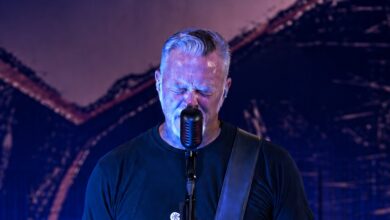
On April 23, 2026, Marilyn Manson returned to the stage at Yaamava’ Theater in Highland, California, for the second night of a tightly packed two-show run that quickly became one of the most talked-about stops of his 2026 tour. The venue’s intimate layout created a setting where every detail mattered, from the smallest movement on stage to the way the lighting carved through the darkness. It wasn’t just a concert—it felt like a controlled, immersive experience from the moment the crowd settled in.
Night two carried a different kind of tension compared to the first evening. Fans who had seen the opening night came in expecting evolution rather than repetition, and there was a clear sense that something heavier, more refined, and more unpredictable was about to unfold. Conversations buzzed through the crowd before the show, with anticipation building around how the set might shift and what moments would define the night.
As the lights dropped, the stage disappeared into near-total darkness before slowly revealing silhouettes through dim, moody lighting. The opening wasn’t explosive—it was patient. The atmosphere built gradually, drawing the audience inward instead of overwhelming them. This slow, deliberate pacing immediately set the tone, creating a sense of tension that lingered in the air before the first full wave of sound hit the room.
Once the music began, the performance leaned heavily into contrast. Quiet, almost restrained passages gave way to sudden bursts of intensity, with the band delivering a tight and powerful backbone that allowed Manson to move freely between controlled vocals and more aggressive moments. This push and pull became one of the defining elements of the night, making each transition feel purposeful rather than routine.
As the set unfolded, the structure revealed itself to be carefully arranged rather than random. Familiar tracks were placed alongside newer material in a way that created flow, allowing the energy to rise and fall without ever losing momentum. It wasn’t a simple run-through of songs—it felt more like a narrative, guiding the audience through different emotional tones while maintaining a consistent sense of tension.
Midway through the show came one of the most anticipated moments of the night: “(s)AINT.” As the opening notes emerged, the lighting shifted sharply, cutting through the darkness with harsher tones that instantly transformed the atmosphere. The stage became more defined, more intense, and the crowd’s focus narrowed completely onto what was unfolding in front of them.
Manson’s approach to the song was controlled and deliberate. Rather than overwhelming the moment with chaos, he leaned into the rhythm, allowing the tension of the track to build naturally. Every movement felt measured, every pause intentional. It created a sense of precision that made the performance feel more dangerous, as if everything could break at any second but never quite did.
The audience response during “(s)AINT” was different from the usual explosive reaction. Instead of constant motion, there were moments of stillness, where the crowd seemed locked in, watching closely and absorbing the performance. That stillness added weight to the moment, turning it into something more immersive and less predictable than a typical high-energy peak.
Visually, the performance relied on minimalism rather than excess. Lighting and shadows were used to shape the stage, creating depth without distraction. This stripped-back approach allowed the focus to remain on the performance itself, enhancing the atmosphere rather than competing with it. It felt intentional, reinforcing the idea that less could often create more impact.
As the song built toward its peak, the tension finally began to release. The band pushed harder, the sound grew heavier, and the audience responded with a surge of energy that felt earned rather than forced. It was the kind of release that only works when the build has been handled with care, and in this case, it landed with full impact.
Beyond that moment, the set continued to move through different eras of Manson’s catalog, blending older material with more recent work in a way that felt cohesive rather than fragmented. The transitions between songs were smooth, maintaining the flow and preventing the energy from dropping. It kept the audience engaged from start to finish.
What stood out most about the night wasn’t just the selection of songs, but the way they were delivered. There was a clear sense of intention behind every shift in tone, every pause, and every transition. It felt curated, as though the performance had been designed to guide the audience through an experience rather than simply entertain them.
The band’s performance played a major role in that impact. Their tightness and control allowed the dynamics of the set to shine, giving each moment the space it needed. Subtle changes in tempo and intensity added layers to songs that fans already knew, making them feel fresh without losing their identity.
As the show moved toward its final stretch, the energy didn’t fade—it evolved. The closing portion leaned into heavier, more aggressive material, pushing the intensity higher while maintaining the atmosphere that had been built earlier. By this point, the audience was fully engaged, no longer just watching but actively responding to every shift on stage.
When the final notes echoed through the theater, there was a brief pause before the reaction hit. The applause wasn’t just loud—it was sustained, as if the crowd needed time to process what they had just experienced. It felt less like the end of a concert and more like the conclusion of something carefully constructed.
Looking back, Night 2 at Yaamava’ Theater stood out because it wasn’t about scale or spectacle—it was about control, atmosphere, and precision. It showed how a performance could evolve within the same venue, turning expectation into something new and unexpected.
In the end, what made this night special was the balance between restraint and intensity. It was the way tension was built slowly, released deliberately, and sustained throughout the entire set. And within that structure, “(s)AINT” emerged not just as a highlight, but as a defining moment that captured everything the performance was trying to achieve.