The Night Metallica Played Master of Puppets in Full for the First Time: Seoul, August 15, 2006
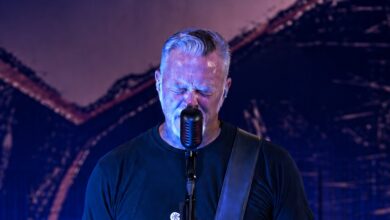
On August 15, 2006, Metallica walked onto the stage of the Seoul Olympic Stadium in South Korea — the same stadium that had hosted the 1988 Summer Olympic Games — and did something they had not done in twenty years. They played the title track to “Master of Puppets,” and they did not stop there. “Battery.” “The Thing That Should Not Be.” “Welcome Home (Sanitarium).” “Disposable Heroes.” “Leper Messiah.” “Orion.” “Damage, Inc.” Eight songs. The entire 1986 album. In the order it was recorded. For the first time in the band’s history, end to end, in front of 30,000 South Korean fans.
For two decades, Master of Puppets had existed as a sacred document in heavy metal — an album so widely regarded as the high point of thrash that the United States Library of Congress had selected it in 2016 for permanent preservation in the National Recording Registry, citing its cultural, historical, and aesthetic significance. But the band that had recorded it in 1985 and 1986 had never performed it in full. They had played the famous tracks live thousands of times. They had skipped over others — “The Thing That Should Not Be,” “Leper Messiah” — for so long that they were almost forgotten in the live setting.
Twenty years after the album’s release, on a fifteen-date European and Asian tour they had named “Escape from the Studio ’06,” Metallica finally did it. Seoul was one of the stops where they delivered.
To understand why the Seoul show carried the weight it did, you have to understand what Master of Puppets meant — and what had to happen before the band could finally bring it back to life as a complete piece.
Master of Puppets was released on March 3, 1986. It was the third studio album by a band of California thrash kids who had spent the early 1980s living in basements, sharing rehearsal spaces, and sleeping on each other’s floors. James Hetfield. Lars Ulrich. Kirk Hammett. And the bassist who would, in retrospect, be remembered as the soul of that record — Cliff Burton. The album sold half a million copies in its first three months. Critics in the metal press called it the most ambitious heavy metal album ever made. The eight songs ran an hour. They explored themes of addiction (“Master of Puppets”), warfare (“Disposable Heroes”), institutional religion (“Leper Messiah”), and madness (“Welcome Home (Sanitarium)”). The instrumental “Orion,” driven by Cliff Burton’s bass, would later be played at his funeral.
Because on September 27, 1986 — exactly six months and twenty-four days after Master of Puppets was released — the band’s tour bus rolled over on a Swedish highway between Stockholm and Copenhagen. Cliff Burton was thrown out of his bunk through a window and crushed beneath the bus when it landed. He was 24 years old.
The band continued. They had to. Jason Newsted joined as bassist within weeks. The next album, …And Justice for All, arrived in 1988. The Black Album in 1991. The grunge years. The Load and Reload polarization. The Newsted departure in 2001. The St. Anger crisis. The arrival of Robert Trujillo in 2003. Through every era, through every controversy, Master of Puppets remained the album that fans circled back to as the band’s defining work. But Metallica themselves rarely played its less famous tracks live, and they had never, across twenty years and thousands of concerts, played the entire record in sequence.
By 2006, the band had reasons to want to look back. They had survived. They had stabilized. Robert Trujillo had been with the band for three years and had earned his place. St. Anger was behind them. The band had begun jamming on what would eventually become Death Magnetic — an album the entire metal world was hoping would mark a return to the thrash roots of the Master of Puppets era. James Hetfield had been sober since his rehabilitation in 2002. The four members were healthier and more cohesive than they had been in years.
The 20th anniversary of Master of Puppets gave them an excuse. The Escape from the Studio ’06 tour was named in deliberate contradiction to the fact that they were supposed to be in the studio, writing what would become Death Magnetic. Instead, they routed a fifteen-date tour that would take them across European festivals — Donington, Werchter, Rock am Ring — and into Asia, with stops in Tokyo, Saitama, and Seoul. At every single show on the tour, they would play Master of Puppets in full. It would be the centerpiece of the set. The entire reason for going on the road.
By the time they reached Seoul on August 15, the routine had been refined across two months of European shows. They had also begun debuting two completely new songs — songs no one had heard before — that would later be reworked into material on Death Magnetic. “The New Song,” eight minutes long, with Hetfield repeatedly singing the line “Death Is Not the End”. And “The Other New Song,” which had debuted in Tokyo three days before the Seoul show. Pieces of both would eventually find their way into “All Nightmare Long” and “The End of the Line” on Death Magnetic.
Seoul was the third time Metallica had played the city. They had first arrived in 1998 on the Poor Re-Touring Me tour with Jason Newsted. The 2006 show would be their last visit until 2013. The 1988 Olympic Stadium, with its capacity of around 70,000, was reduced for the concert configuration to roughly 30,000 — a stadium-scale show on the same ground where, eighteen years earlier, the world had watched Ben Johnson run the 100 metres and Florence Griffith Joyner break records. Now it was full of South Korean Metallica fans, many of whom had never seen the band perform a complete Master of Puppets before, and many of whom would never have the chance again.
The show opened, in the band’s familiar pattern, with the Ennio Morricone “Ecstasy of Gold” intro tape — the music from Sergio Leone’s The Good, the Bad and the Ugly that Metallica had been using to open concerts for fifteen years. Then “Creeping Death” detonated across the stadium. Then “Fuel.” Then “Wherever I May Roam.” Then the unreleased “The New Song,” with its long instrumental passages and Hetfield’s repeated “Death Is Not the End” hook.
And then came the moment.
After “The Unforgiven” closed the first act of the show, the stage went dark. The opening acoustic notes of “Battery” began to ring out across the stadium. And what followed was Master of Puppets, in its entirety, in sequence, performed by the band that had recorded it twenty years earlier — minus the bassist who had played on it.
That last fact was the unspoken weight of the entire performance. Every time Metallica played “Orion” live in 2006, every time Robert Trujillo played the bass line that Cliff Burton had written and recorded in 1985, every time the band stepped through the back half of the album that had been Burton’s last full statement as a Metallica member, the absence was present. Trujillo, by every account from the band and from fans, played those parts with a reverence that you can hear in the live recordings from that tour. He was not trying to imitate Cliff Burton. He was trying to honor him.
After “Damage, Inc.” closed the album sequence, the band returned to a more standard career-spanning setlist. “Sad But True.” “Nothing Else Matters.” “One.” “Enter Sandman.” “The Other New Song” — the unreleased Death Magnetic-era piece that would never appear on a studio album. “Last Caress.” “Seek & Destroy.” Twenty-three songs in total. Just over two and a half hours of music.
The show closed with the giant beach balls dropping from the rafters that had become a Metallica tradition by the mid-2000s, the four members standing on stage together as the lights came up, fans throwing picks and drumsticks, the South Korean crowd refusing to leave.
Footage of the night circulated for years afterward as a fan recording titled Live At Seoul, Korea 2006, eventually released as an unofficial bootleg compilation. The Master of Puppets sequence in particular — the entire eight-track album played live, captured in clean fan-shot HD video — became one of the most-watched Metallica live recordings on YouTube across the next two decades. The “Master of Puppets” performance from that night, posted to YouTube, has accumulated tens of millions of views and is widely considered one of the great live performances of the song in the band’s catalogue.
Two years after Seoul, in September 2008, Metallica released Death Magnetic. It debuted at number one in 32 countries. It became the first album in U.S. chart history to give a band five consecutive number-one studio releases on the Billboard 200. The thrash roots that the Escape from the Studio ’06 tour had been built around — Master of Puppets in its entirety, every night, for two months — turned out to be the bridge that brought Metallica back to the sound their fans had been waiting for since the eighties.
Seoul was just one stop on that tour. But the recording of that night remains one of the cleanest, most powerful documents of what Metallica achieved by doing something they had never done in twenty years.
Sometimes the greatest tribute a band can pay to its own past is simply to play it from beginning to end, in front of the people who never thought they would hear it.